Purpose
What this drill trains, and why it matters.
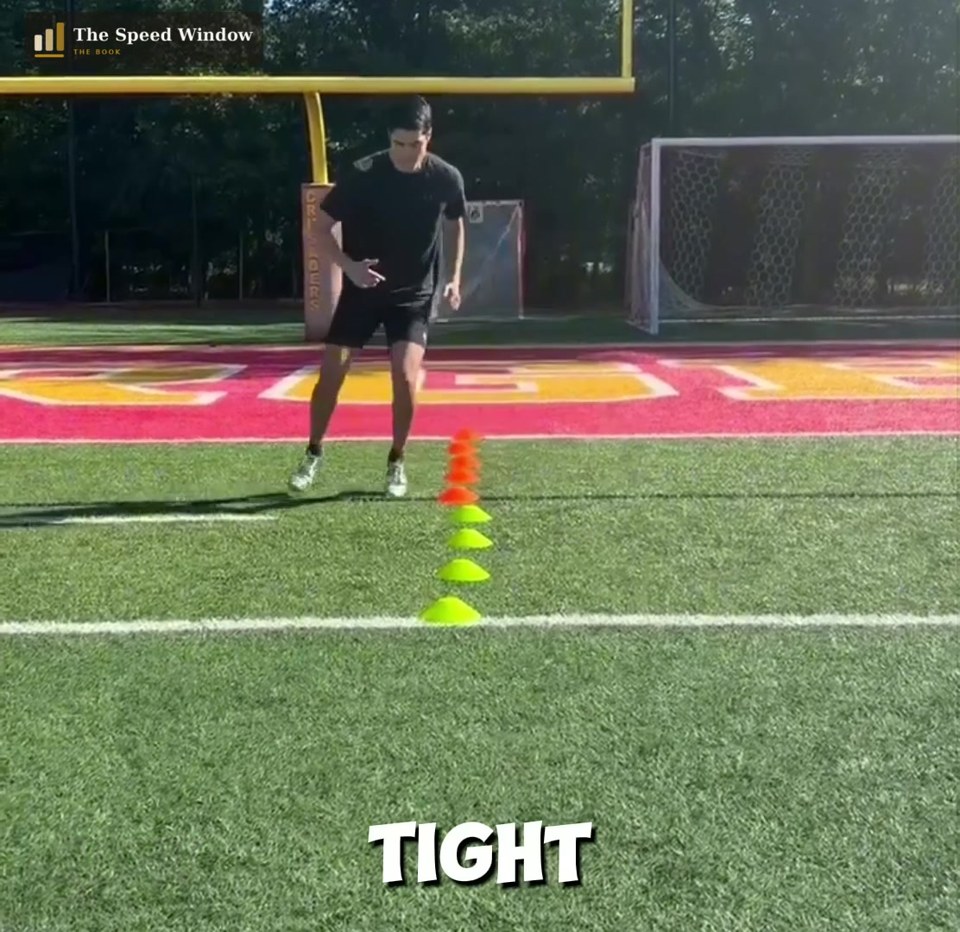
The Zigzag Cone Drill is the bridge between ladder coordination and open-field agility. Five cones are staggered on alternating diagonals, and the athlete runs cone to cone, planting the outside foot at each one and cutting onto the new angle. No reaction, no opponent: just the cut itself, repeated at a controlled angle and a controlled speed.
The outside-foot plant is the skill. Every real change of direction in sport runs through it: the foot lands outside the body's line, the ankle and hip absorb the angle, and the push redirects the run. The zigzag isolates that plant and gives the athlete five of them per run, alternating sides, at an angle gentle enough to learn from.
For Neural Window athletes this drill also introduces the idea of speed management: slowing slightly into the cone and accelerating out of it. Learning that a cut has an entry speed and an exit speed, and that they are different, is a concept many athletes never get taught. Here it is built into the geometry.
Setup
How to position your athlete before the first rep.
Stagger five cones on alternating diagonals
Place cones roughly 3 yards apart on a zigzag: each cone about 2 yards laterally offset from the last, alternating sides, covering about 15 yards total. Wider offsets sharpen the angle; keep it gentle at first.
Walk the path once
The athlete walks the zigzag, touching each turn, so the shape is known before the first run. Uncertainty about where to go destroys mechanics faster than any physical fault.
Start in a two-point stance at the first cone
Athletic base, slight forward lean, ready to accelerate onto the first diagonal.
Execution
The drill, step by step.
Run the diagonal at a controlled pace
Roughly three-quarter speed for learning. The diagonal is short: two to four accelerating steps, staying on the balls of the feet.
Read the cone and shorten the last step
Slightly shorten and quicken the final step into the cone. That small adjustment lowers the hips and prepares the plant. Do not chop into a stutter; one adjusted step is enough.
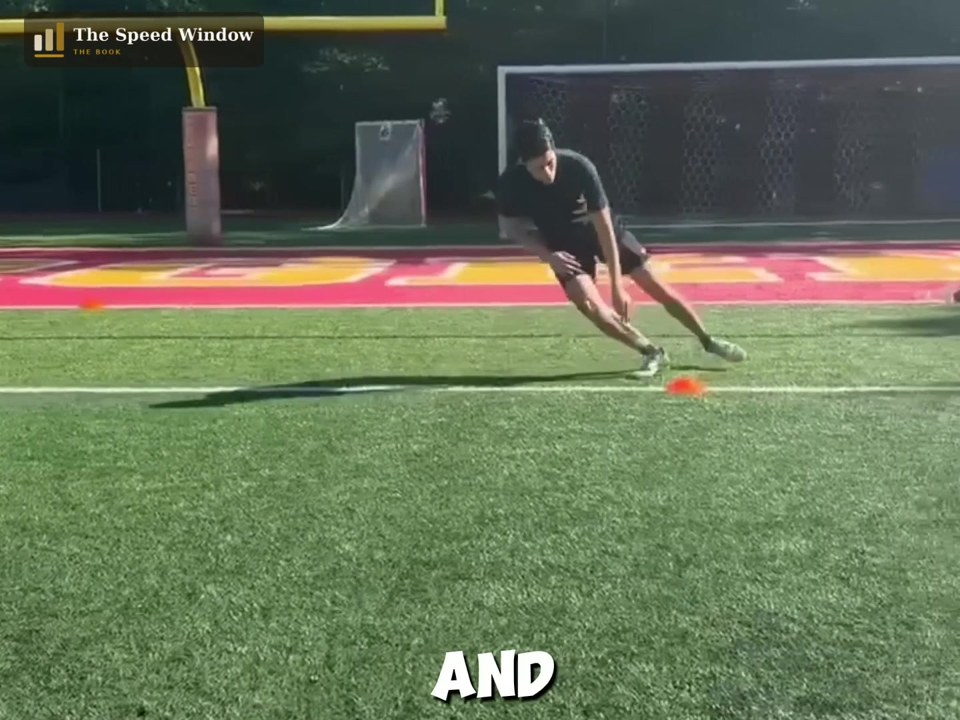
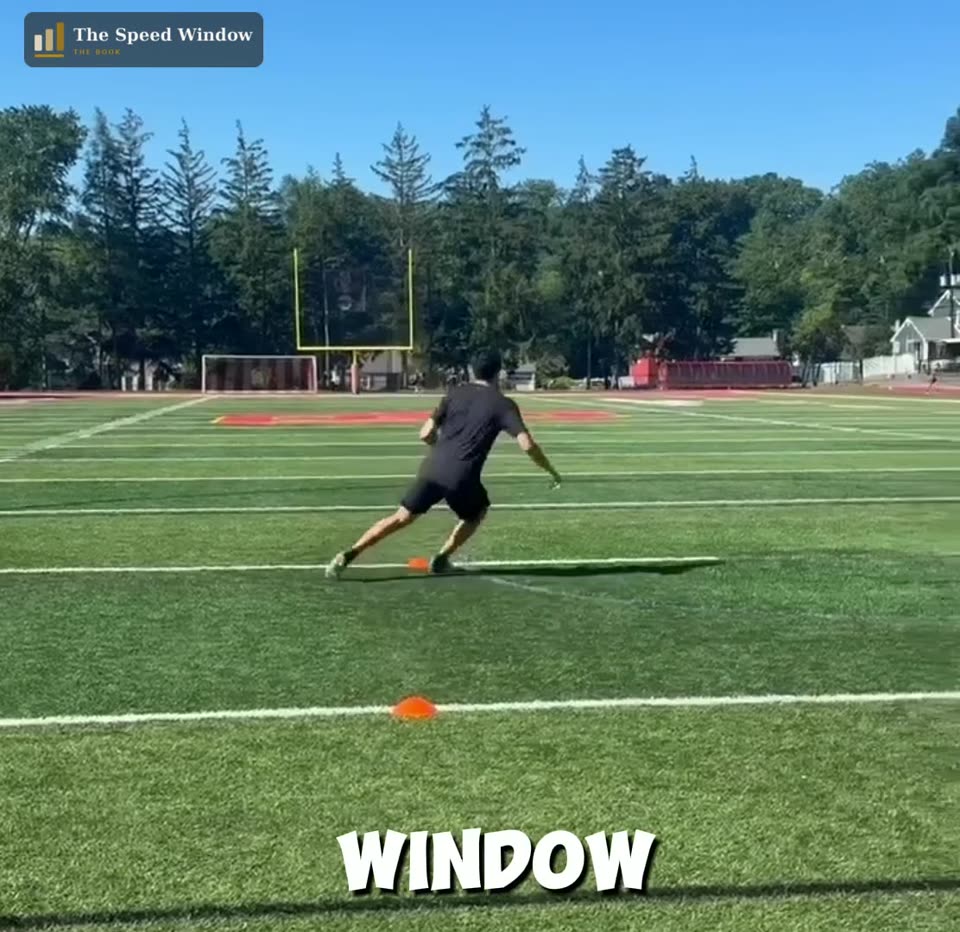
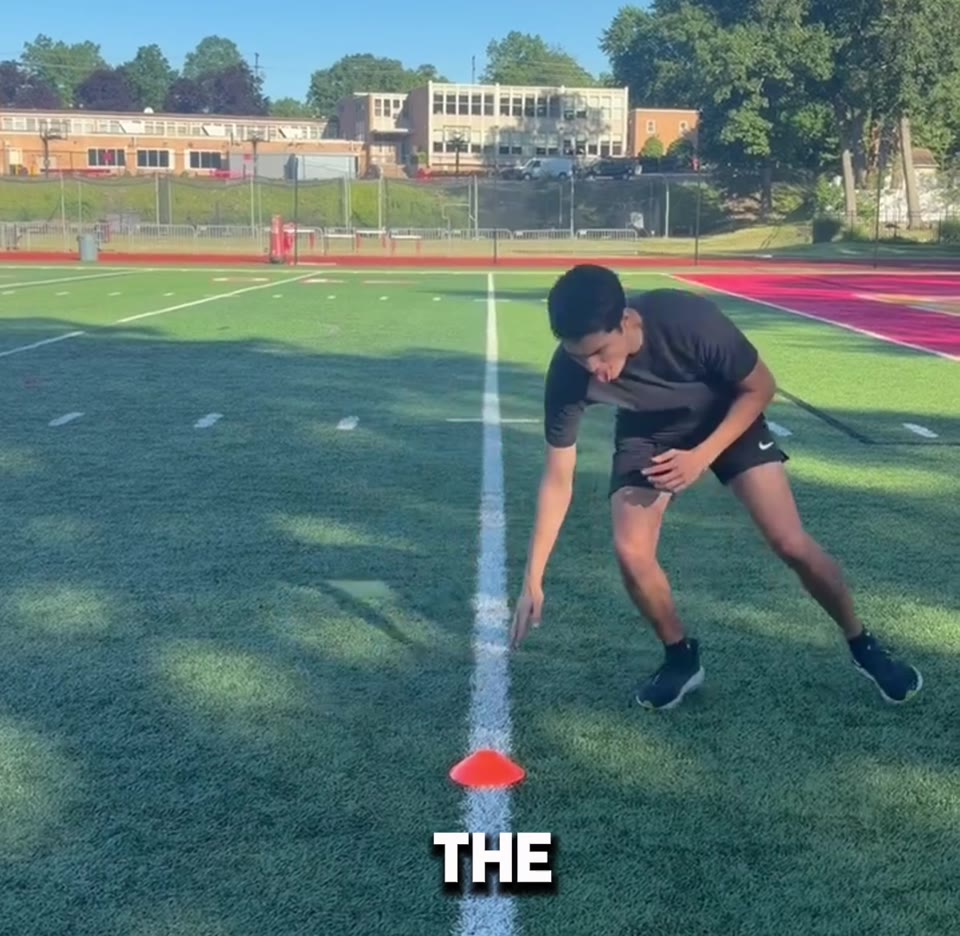
Plant the outside foot past the cone
Cutting left: the right foot plants just outside the line of travel, knee tracking over the toes, hips dropped. The plant foot points mostly forward, not sideways.
Push off the plant and open onto the new diagonal
Drive off the outside foot as the hips turn onto the new angle. The first two steps out of the cut are acceleration steps: low, quick, and forward.
Alternate sides cone to cone and finish through the last one
Each cone reverses the direction, so plants alternate right and left. Run through the final cone at full effort rather than easing up into it.
Common Errors
What to watch for and how to correct it.
Rounding the cones
The athlete curves around each cone instead of planting and cutting. It is faster and it trains nothing. Cue 'plant past the cone': the foot lands beyond it, and the direction change is sharp, not swept.
Planting with the inside foot
Cutting off the inside foot forces a crossover and collapses the angle. The plant is always the foot opposite the new direction. If confusion persists, slow to a walk and rehearse the footwork.
Upright cutting
Tall hips at the plant put the braking load on the knee and make the cut slow. The hips drop slightly into every cone: lower in, faster out.
One direction sharper than the other
Almost universal: the athlete cuts crisply off one leg and mushes off the other. Run the zigzag from both ends so the sequence of plants reverses, and give the weaker side extra attention.
Coaching Cue
The one thing to say when you need the rep to change.
"Outside foot, hips down, push out."
The whole cut in three beats. 'Outside foot' places the plant. 'Hips down' sets the entry position that makes the plant safe and strong. 'Push out' turns the plant into acceleration instead of a stop. Say it at walking pace first; the words then work at speed.Progressions & Regressions
Where this drill fits in the sequence.
Regress to: if the athlete is struggling
- Walking zigzag: rehearse the plant footwork at zero speed
- Cone Weave: gentler serpentine direction change without a hard plant
- Two-cone version: one cut at a time, reset between reps
Progress to: once the pattern is clean
- Sharper offsets: widen the lateral spacing to steepen the cutting angle
- Star Drill: multi-directional movement with varied entry and exit angles
- T-Drill: combine cutting with shuffle and backpedal transitions
Programming Notes
When and how to use this drill in a session.
The Zigzag belongs at the end of the agility progression in a Neural Window session, after ladder work has primed foot rhythm and before any free play. It is the most game-like drill in the coordination block, and it should feel like the reward.
3 to 4 runs per session, alternating starting ends, with full recovery between runs. Quality collapses quietly in cutting drills: the plants get shallower and the curves get rounder. Watch the plant, not the clock.
Keep the angles gentle for this age group. The goal is a clean, confident outside-foot plant on both legs, not maximal cutting sharpness. The sharper angles, and the loads that come with them, belong to the Stabilization and Force Windows.
Neural Window · Ages 7–12
The critical learning window.
Between ages 7 and 12, the nervous system acquires movement patterns faster than at any other stage of development. The drills trained here are not fitness drills. They are wiring sessions.
Explore the Neural WindowEvery drill here comes from the book.
The Speed Window maps all three windows: what to train, when, and why.
Get the Book