Purpose
What this drill trains, and why it matters.
The Lateral Shuffle is the entry point to multi-directional movement in the Neural Window. It teaches the athletic base, lateral weight transfer, and quick directional change that every sport requires: without the complexity of cutting, planting, or reacting to a stimulus. The pattern is simple enough for any 7-year-old to execute and deep enough to reveal every athlete's directional movement quality.
The key mechanic being trained is the athletic base: a low center of gravity, feet wider than shoulder-width, knees tracking over toes, and weight on the balls of the feet. Athletes who cannot maintain the athletic base while shuffling laterally do not yet have the hip abductor strength and movement pattern to cut safely or efficiently. The shuffle reveals this. The drill corrects it.
Every change-of-direction drill in the Neural Window (the T-Drill, Star Drill, and cone weave) builds on what the Lateral Shuffle establishes. This is the foundational lateral movement pattern.
Setup
How to position your athlete before the first rep.
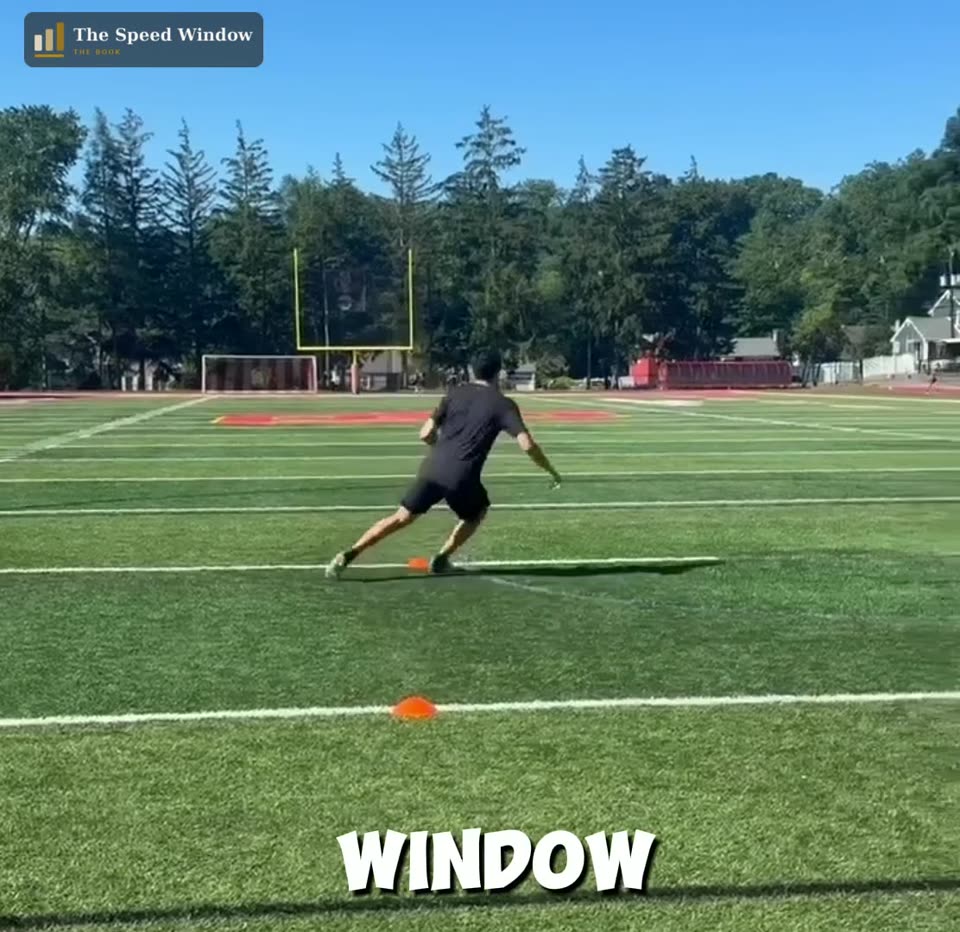
Place two cones 5 yards apart
Five yards is intentionally short. The goal is quality directional change, not lateral distance covered. As the pattern improves, extend to 8 to 10 yards.
Start in the athletic base position
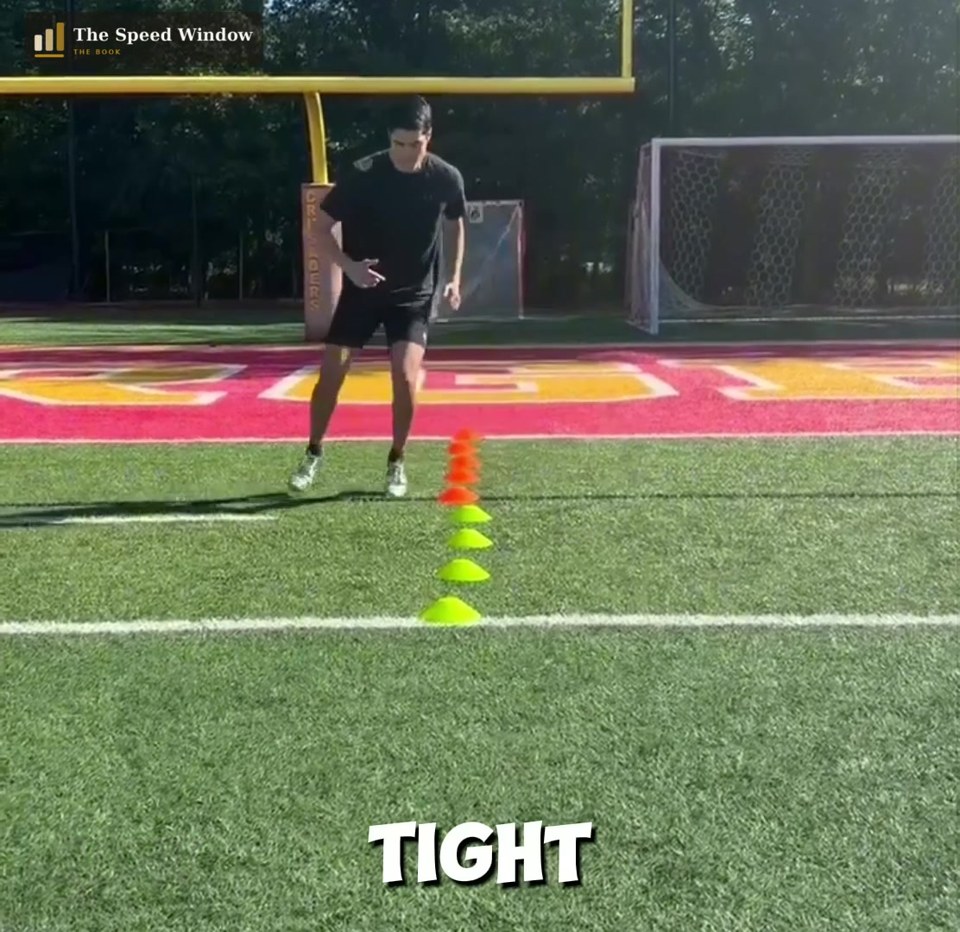
Feet wider than shoulder-width, knees bent, hips back as if sitting into a low chair, weight on the balls of the feet, hands up and active. This is the position the athlete must maintain throughout every rep.
Coach position: directly in front, facing the athlete
From the front you can see the athletic base height, whether the feet are staying wide, and whether the athlete is crossing feet during the shuffle.
Execution
The drill, step by step.
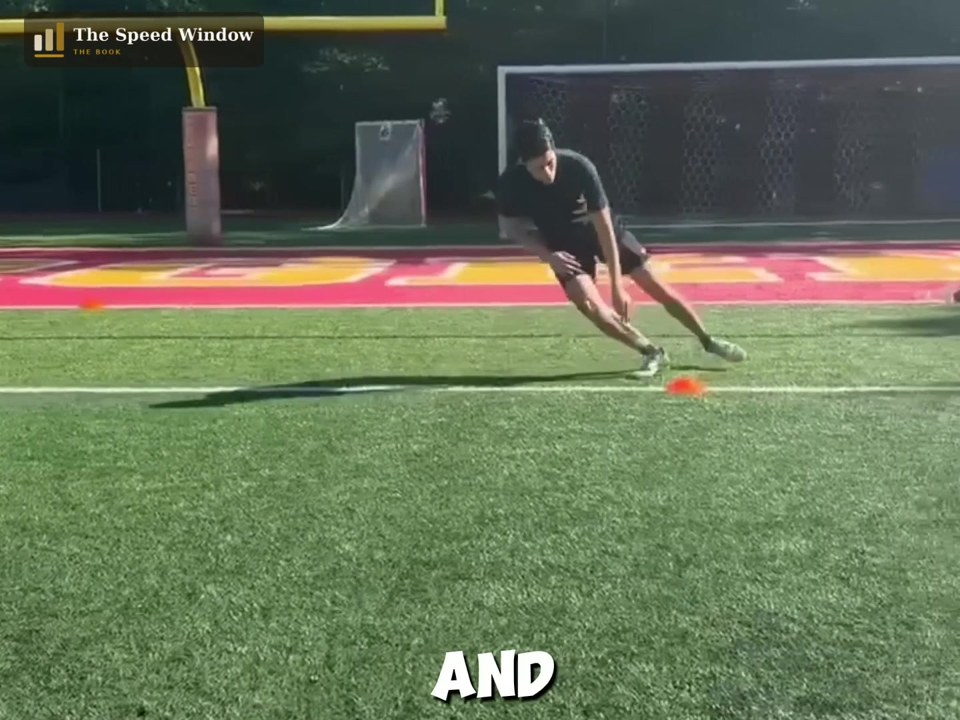
Push off the inside foot. Do not cross the feet
The shuffle is a push-step-push movement. The inside foot pushes laterally, the outside foot steps, the inside foot closes. The feet never cross. In the Neural Window, this rule always holds.
Stay in the athletic base throughout
The hips do not rise above the starting height. Athletes who stand up during the shuffle lose the mechanical advantage for changing direction. Cue: 'stay low, stay ready.'
Touch the cone: then push back immediately
When the outside foot reaches the cone, the athlete touches it (or the ground beside it), plants, and immediately pushes back in the opposite direction. The plant step is not a rest step.
Keep the hands up and active
Hands stay in front of the body, ready to react. Arms help drive the directional change. They should not be hanging at the sides.
Common Errors
What to watch for and how to correct it.
Feet crossing during the shuffle
The most common error in young athletes. Crossing the feet during a lateral shuffle creates a tripping hazard and eliminates the ability to change direction quickly. Slow the drill to a walk-pace lateral step if needed. Never progress past this error.
Hips rising: athlete stands upright
The athlete starts low but gradually rises throughout the set. Cue: 'stay in the chair.' Have the athlete shuffle next to a wall and try to keep their shoulder at the same height on the wall throughout.
Feet staying too narrow. No base
The feet come together between shuffles, eliminating the wide base. Cue: 'wide feet, every step.' Place two parallel lines 18 inches apart on the ground. The athlete's feet must stay outside those lines at all times.
Standing straight at the change of direction
The athlete stands up to change direction instead of planting and pushing from the low position. This is the most expensive error in game situations. It adds 2 to 3 steps to every cut. Cue: 'plant low, push low.'
Coaching Cue
The one thing to say when you need the rep to change.
"Stay in the chair: don't stand up to turn."
'Stay in the chair' gives the athlete a physical image for the low athletic base. 'Don't stand up to turn' targets the most common and most costly breakdown point: the change of direction. Combine them into a single rhythm cue delivered at the moment the athlete approaches each cone.Progressions & Regressions
Where this drill fits in the sequence.
Regress to: if the athlete is struggling
- Lateral walk: stepping wide feet side to side at walking pace, maintaining the athletic base
- Stationary athletic base hold: hold the base position for 10 seconds, then shuffle one step each direction
Progress to: once the pattern is clean
- Lateral Shuffle at 8 yards: extend distance as the base quality improves
- Lateral Shuffle with reaction: coach points left or right, athlete reacts and shuffles on command
- Lateral Shuffle into T-Drill. The shuffle is one of three movements in the T-Drill
Programming Notes
When and how to use this drill in a session.
Use the Lateral Shuffle in the agility prep phase of every Neural Window session. Four sets per side at 5 yards is standard. Keep rest full. This is a movement pattern drill, not a conditioning circuit.
Progress the distance before the speed. A slow, clean shuffle at 10 yards is worth far more than a fast, sloppy shuffle at 5 yards. The directional change quality is the most important metric to watch.
Neural Window · Ages 7–12
The critical learning window.
Between ages 7 and 12, the nervous system acquires movement patterns faster than at any other stage of development. The drills trained here are not fitness drills. They are wiring sessions.
Explore the Neural WindowEvery drill here comes from the book.
The Speed Window maps all three windows: what to train, when, and why.
Get the Book