Purpose
What this drill trains, and why it matters.
The arms are half of sprint mechanics, and they receive a fraction of the coaching attention legs do. The Arm Swing Drill exists to fix this. By isolating the arm action (seated or standing, with zero leg movement) the athlete can focus entirely on elbow angle, wrist position, and the cheek-to-cheek range of motion that drives sprint rhythm.
Incorrect arm mechanics are one of the most common reasons young athletes lose speed. Crossed midlines waste energy in rotation. Collapsed elbows shorten the pendulum and kill rhythm. Fists held too tight create tension that travels through the shoulders into the sprint pattern. All of these can be corrected in 90 seconds with this drill, before a single sprint rep is taken.
Once the arm pattern is established in isolation, it transfers directly into every other mechanics drill in the Neural Window. The A-Skip, B-Skip, and High-Knee Run all demand the same arm mechanics. Coaches who build the arm pattern in isolation first see significantly faster transfer to those drills.
Setup
How to position your athlete before the first rep.
Seated or standing: both work
Seated on the ground with legs straight removes balance demand entirely and is preferred for first introductions. Standing works once the pattern is established.
Arms set at 90 degrees
Elbow angle is 90 degrees. No wider, no narrower. Hands are loosely closed: like holding a potato chip without crushing it. Wrists are neutral, not bent up or down.
Coach stands directly in front
From the front you can see whether the swing is crossing the midline. From the side you can see elbow angle and the cheek-to-cheek range.
Execution
The drill, step by step.
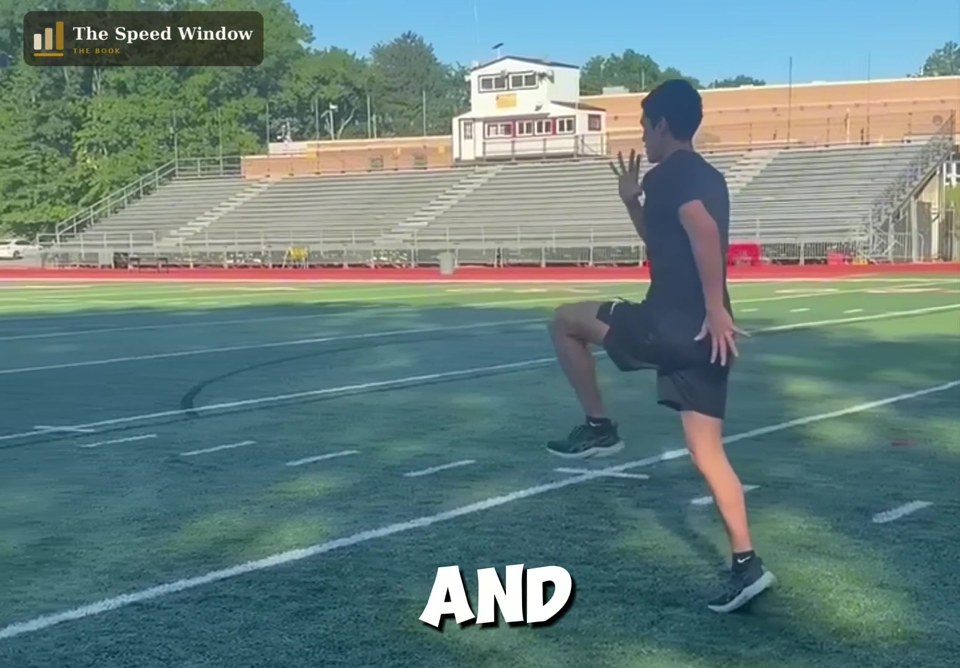
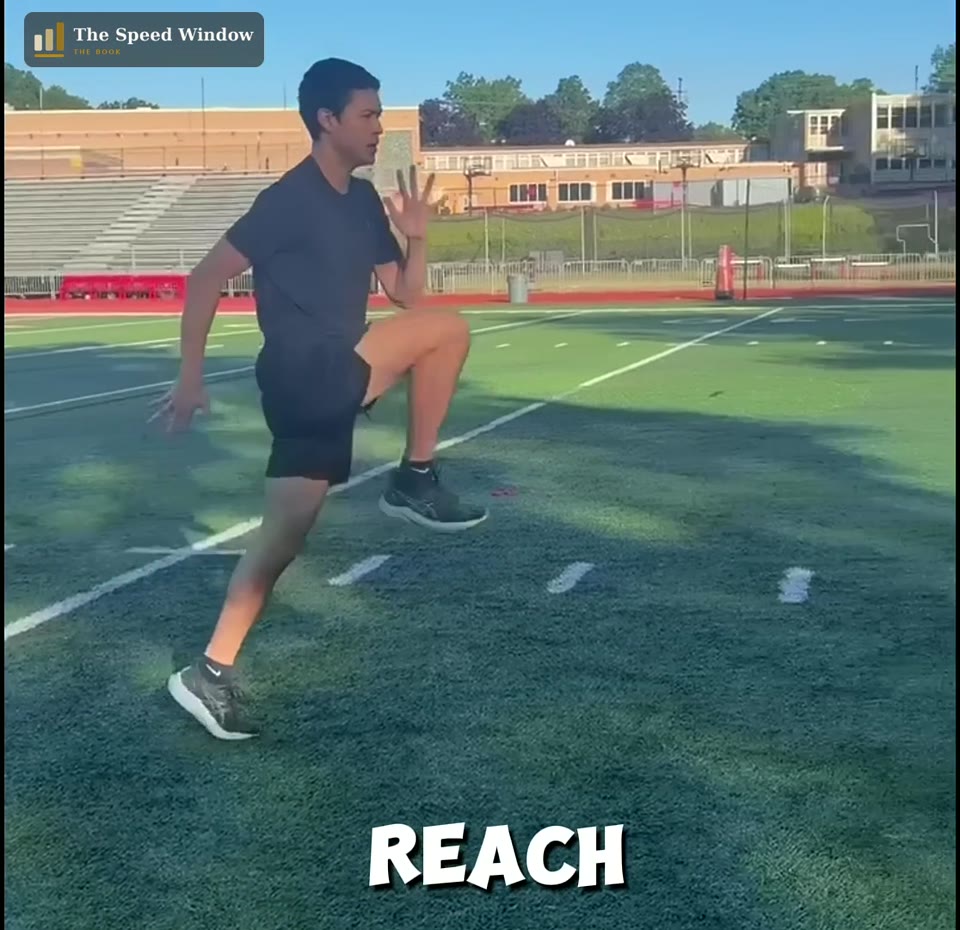
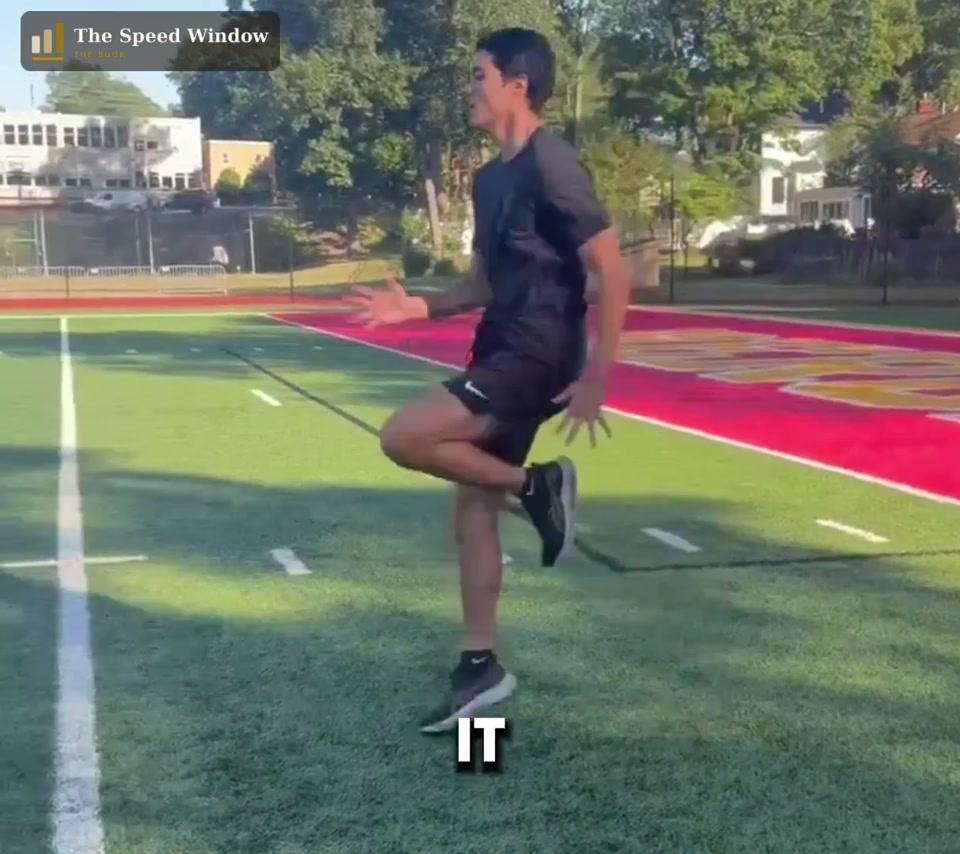
Drive one arm forward to chin height
The forward swing brings the hand to approximately chin height. Not higher. The elbow stays at 90 degrees throughout. The hand passes the ear on the way up.
Drive the opposite arm back to hip pocket
As one arm drives forward, the other drives back to the hip pocket: hand level with the hip. This is the back swing that most young athletes neglect.
Alternate continuously at sprint cadence
The arms swing in continuous alternation at a quick, rhythmic pace. The cadence should match what you want to see in the A-Skip and sprint.
Stay relaxed in the shoulders and hands
No tension in the shoulders, no clenched fists, no rising trapezius. Relaxed arms are faster arms. Tension creates a shortened, choppy swing that limits top speed.
Common Errors
What to watch for and how to correct it.
Arms crossing the midline
The arm swings across the body, creating rotation that interferes with the linear sprint pattern. Cue: 'forward and back, not across.' Place a cone directly in front of the athlete at nose height. The hands should pass on either side of it, never past it.
Elbow angle collapsing: arms going straight
The elbow straightens during the swing, lengthening the pendulum and slowing the cadence. Cue: 'keep the 90 all the way through.' A rubber band around the elbow (lightly) can provide proprioceptive feedback.
No back swing: both arms swinging forward
The athlete pumps both arms forward and gets minimal drive backward. The back swing is what drives the forward arm. Cue: 'drive your elbow back, reach for your back pocket.'
Hands held too tight or too open
Clenched fists create shoulder tension; fully open hands cannot maintain the drive. Cue: 'hold a potato chip, don't drop it and don't crush it.'
Coaching Cue
The one thing to say when you need the rep to change.
"Cheek to pocket, stay loose."
'Cheek to pocket' defines the full range of motion: hand swings from cheek height forward to hip-pocket height back. 'Stay loose' counters the tension that kills arm cadence. Two words per beat makes it easy to say during the drill.Progressions & Regressions
Where this drill fits in the sequence.
Regress to: if the athlete is struggling
- Mirror practice: athlete watches themselves in a mirror or phone camera to self-correct in real time
Progress to: once the pattern is clean
- Standing arm swing: remove the ground support, add balance demand
- Arm swing while standing on one leg: challenges core stability while maintaining arm pattern
- Arm swing with eyes closed: reinforces proprioceptive pattern without visual feedback
- Transfer to A-Skip: arm pattern should feel identical once the skip is added
Programming Notes
When and how to use this drill in a session.
Use the Arm Swing Drill at the very start of the mechanics block, before any footwork drills. Three sets of 20 seconds is enough to activate the pattern. Then carry that arm feeling directly into the first A-Skip set.
Return to the Arm Swing Drill any time arm mechanics break down in skipping or sprint work. A single 20-second correction set usually resets the pattern before the next rep.
Neural Window · Ages 7–12
The critical learning window.
Between ages 7 and 12, the nervous system acquires movement patterns faster than at any other stage of development. The drills trained here are not fitness drills. They are wiring sessions.
Explore the Neural WindowEvery drill here comes from the book.
The Speed Window maps all three windows: what to train, when, and why.
Get the Book