Purpose
What this drill trains, and why it matters.
The March Drill is the simplest sprint mechanics drill in the Neural Window: and often the most overlooked. It removes the skip rhythm entirely, isolating just three mechanical positions: posture, knee height, and foot placement. Everything the A-Skip and B-Skip require, the March Drill first establishes at zero speed.
For athletes who are new to mechanics work, or who show consistent errors in the A-Skip, the March Drill is the correct starting point. There is no tempo, no skip, no complexity: just one knee up, hold it, step down correctly, repeat. The nervous system has no competing demands. The pattern goes in clean.
Even for athletes who have moved past the March Drill developmentally, it belongs in the warm-up as a posture and activation check. If an athlete cannot march with perfect mechanics at walking pace, they cannot sprint with good mechanics at full speed.
Setup
How to position your athlete before the first rep.
Mark a 10-yard line
Shorter than A-Skip distances because each rep is deliberate and slow. Ten yards gives 8 to 10 quality repetitions per pass.
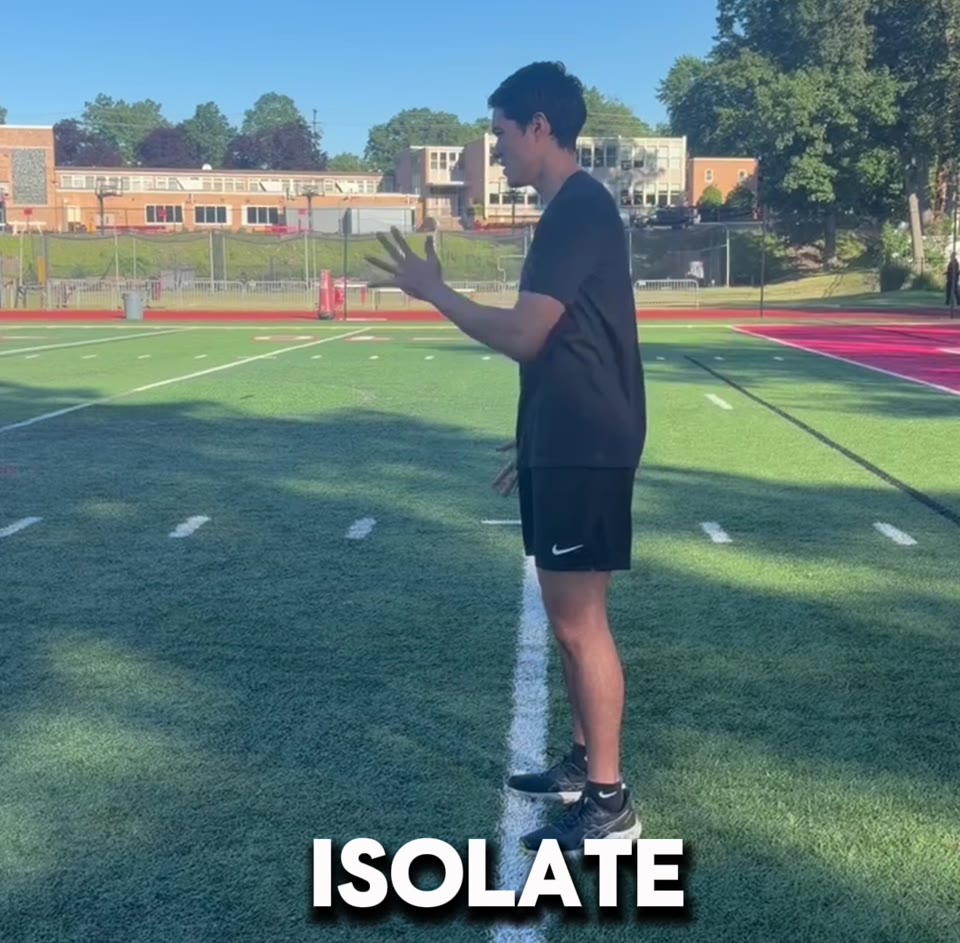
Start in an athletic stance
Feet hip-width, slight bend in the knees, arms at 90 degrees. Before the athlete moves, check posture: shoulders over the balls of the feet, eyes forward, head neutral.
Demonstrate at a slow, exaggerated pace
Show the drill with clear, held positions. Drive the knee to hip height, hold for a moment, then step down deliberately. The exaggeration helps young athletes see what each position looks like.
Execution
The drill, step by step.
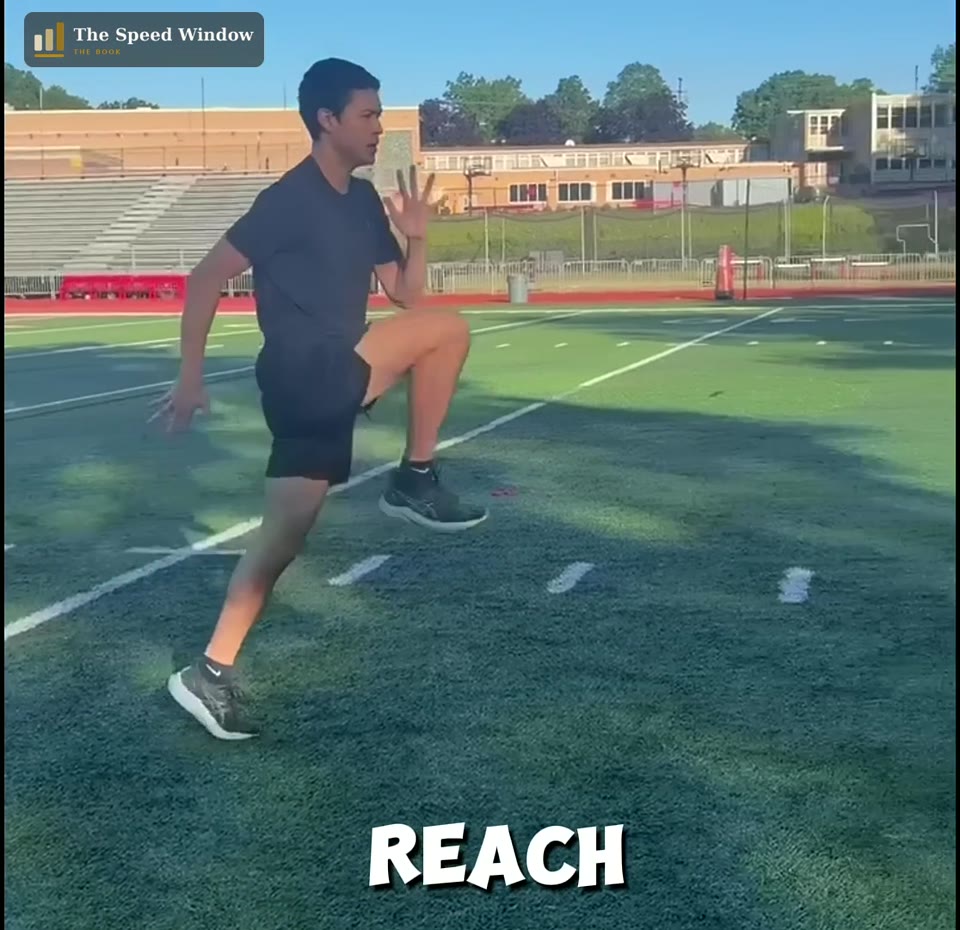
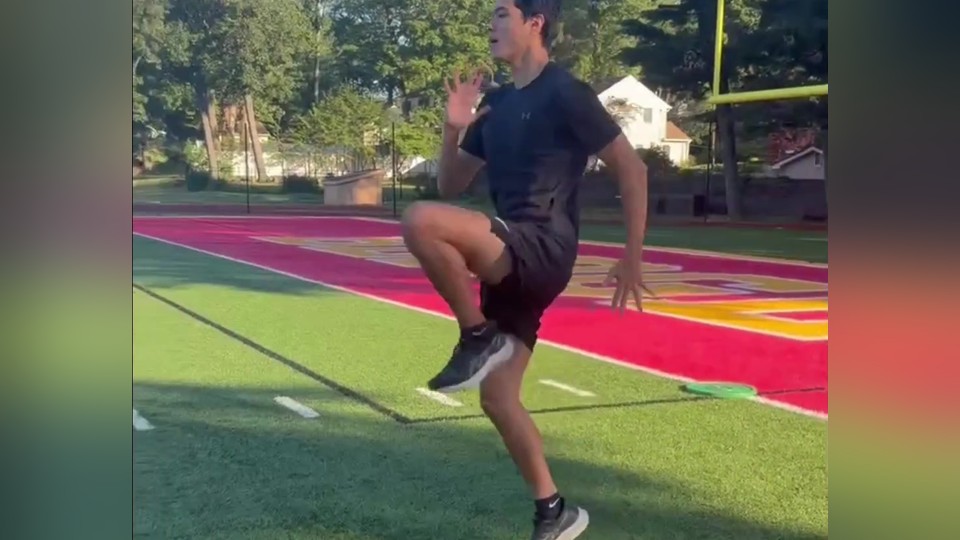
Drive one knee to hip height
Lift the knee until the thigh is parallel to the ground. Foot is dorsiflexed: toes pulled up. Hold the position for a beat before stepping down.
Step down under the hip
Lower the foot directly beneath the hip, not in front of it. Contact is on the midfoot to ball. The step is controlled, not dropped.
Opposite arm drives forward
Right knee up means left arm forward. Maintain the 90-degree elbow angle. The arm swing should feel the same as it will during the A-Skip and sprint.
Stand tall through every step
The torso stays upright on every rep. Hips should not drop as the knee drives up. If the hips drop, the athlete is compensating: slow down and reinforce the upright position.
Keep a steady, deliberate cadence
This is not a slow jog. Each step is intentional: drive, hold, step, drive, hold, step. The pace is completely controlled by the athlete: there is no hurry.
Common Errors
What to watch for and how to correct it.
Hip drop on the support leg
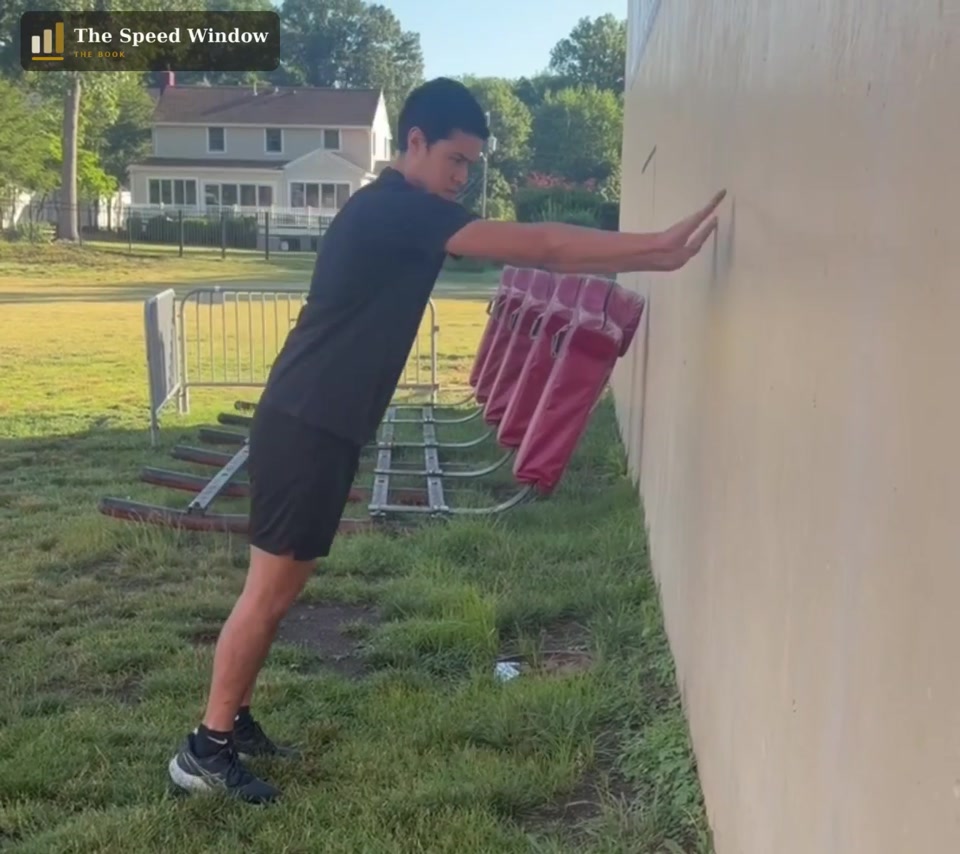
The standing hip drops as the opposite knee drives up, indicating weak hip abductors or a posture pattern that needs reinforcement. Cue: 'stand tall, keep your hips level.' Have the athlete march next to a wall and lightly touch it for balance feedback.
Knee drive stopping below parallel
The thigh does not reach horizontal. The knee stops mid-way. The athlete is either avoiding the range of motion or lacks hip flexor activation. Cue: 'knee to your belt.' Use a hand held at hip height as a target.
Foot landing in front of the body
The step goes forward rather than down. This is the heel-strike pattern transferred from normal walking. Cue: 'step down, not forward.' Use a spot on the ground directly under their hip as a landing target.
Arm action stopping or crossing midline
Arms freeze or swing across the body. Correct this before adding any drill speed. The March Drill is the time to establish arm mechanics: once speed is added, correcting the arms becomes harder.
Coaching Cue
The one thing to say when you need the rep to change.
"Knee to the belt, step down under your hip."
This two-part cue addresses the two most common failure points simultaneously. 'Knee to the belt' sets the target for hip flexion height. 'Step down under your hip' corrects the foot strike position. Use it on every rep until both become automatic.Progressions & Regressions
Where this drill fits in the sequence.
Regress to: if the athlete is struggling
- Stationary knee hold: stand and drive one knee up, hold 3 seconds, lower slowly
- Wall-supported knee drive: light touch on wall for balance, isolate the drive
- Walking high-knee hold: walk normally between every exaggerated drive step
Progress to: once the pattern is clean
- A-Skip: adds the skip rhythm on top of the march pattern
- March with eyes closed: reinforces proprioceptive awareness of hip height and foot placement
- March at slightly increased pace: bridge toward the A-Skip tempo
- March with resistance band at the knee: adds load to hip flexion
Programming Notes
When and how to use this drill in a session.
Use the March Drill at the start of every Neural Window session as part of acceleration prep: before A-Skips and B-Skips. Three passes of 10 yards is sufficient. It serves as both a warm-up and a mechanics check.
For athletes new to mechanics training, spend two to three weeks with the March Drill as the primary sprint mechanics drill before progressing to the A-Skip. Rushing to the A-Skip with an unrefined march pattern builds problems.
Return to the March Drill whenever sprint mechanics break down at higher speeds. If the A-Skip looks wrong, the March is the diagnostic and the fix.
Neural Window · Ages 7–12
The critical learning window.
Between ages 7 and 12, the nervous system acquires movement patterns faster than at any other stage of development. The drills trained here are not fitness drills. They are wiring sessions.
Explore the Neural WindowEvery drill here comes from the book.
The Speed Window maps all three windows: what to train, when, and why.
Get the Book