Purpose
What this drill trains, and why it matters.
The B-Skip builds directly on the A-Skip by adding the active rear-leg extension: the pawing motion that makes sprinting powerful and efficient. Where the A-Skip teaches the athlete to bring the knee up and the foot down under the hip, the B-Skip adds what happens next: the trailing leg actively drives back and down, creating the ground-contact force that propels the athlete forward.
This drill is the bridge between mechanics work and actual sprinting. The pawing action (reaching forward with the foot then actively pulling the ground back) is the same motion that generates stride power during a sprint. Training it in isolation at slow speed is the only way to wire it correctly before adding velocity.
Do not introduce the B-Skip until the A-Skip pattern is clean. Athletes who cannot demonstrate consistent dorsiflexion, foot strike under the hip, and upright posture in the A-Skip will compensate in the B-Skip and wire the wrong pattern.
Setup
How to position your athlete before the first rep.
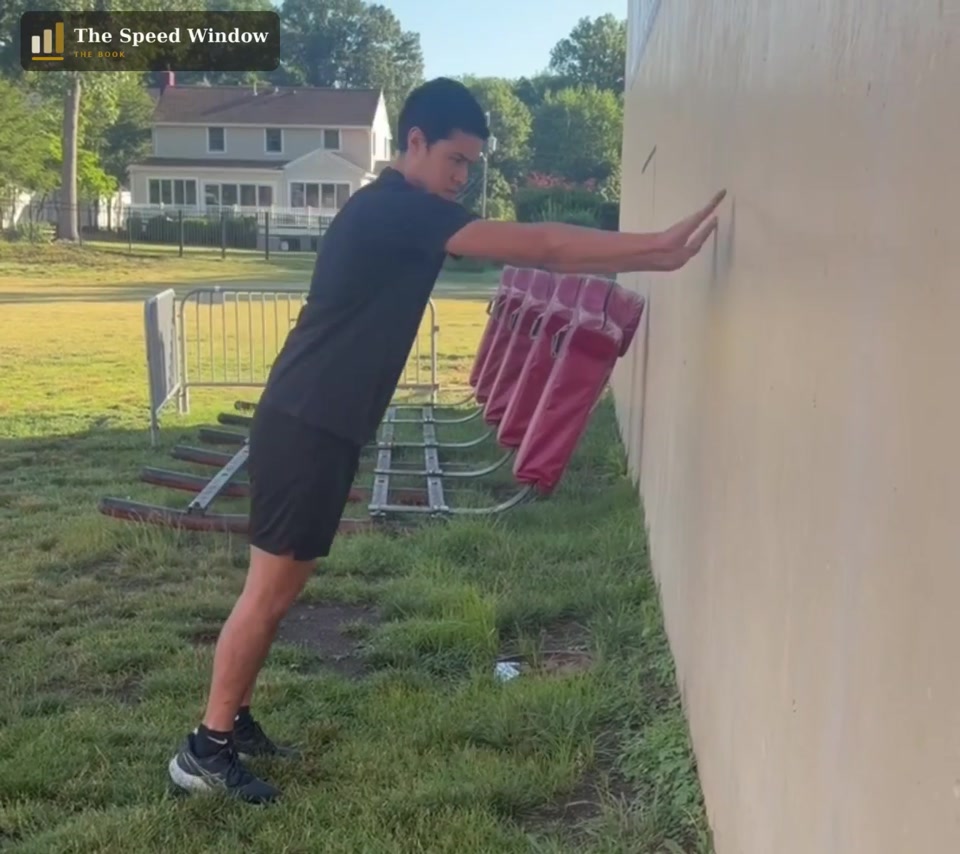
Mark a 10- to 15-yard line
Same setup as the A-Skip. Use cones or ground markings. Keep distances short so the coach can observe the full extension on every rep.
Demonstrate A-Skip first
Begin with two A-Skip passes to activate the hip flexion pattern. The B-Skip adds to this foundation: athletes should feel the connection between the two drills.
Coach position: side view
Position yourself to the side, slightly behind the athlete's travel direction. This gives you a clear view of both the knee drive and the trailing leg extension simultaneously.
Execution
The drill, step by step.
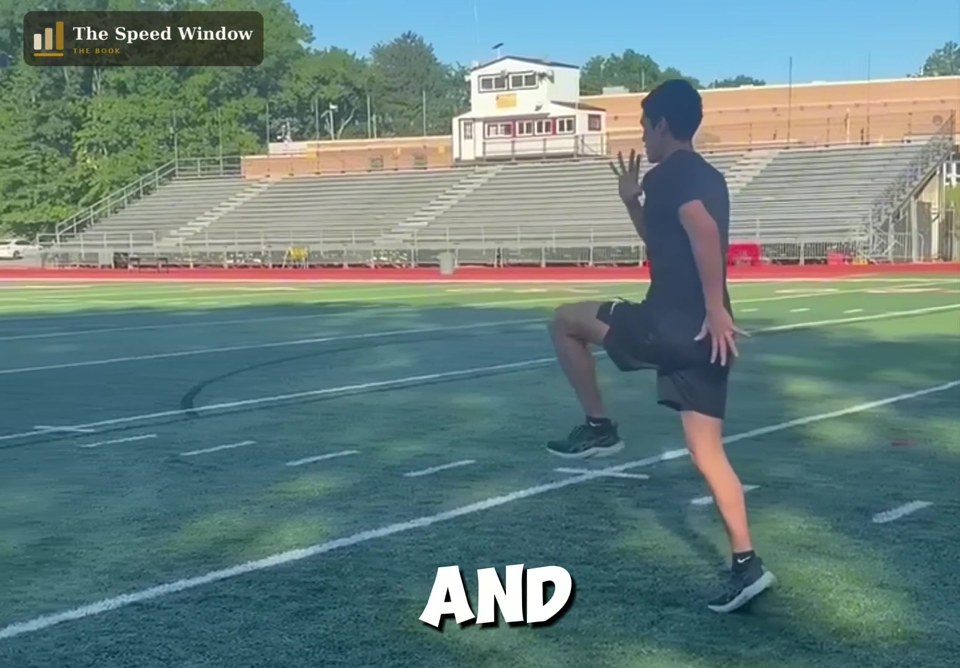
Drive the knee to hip height: same as A-Skip
The first phase is identical to the A-Skip: knee up to parallel, foot dorsiflexed, upright posture, coordinated arm action.
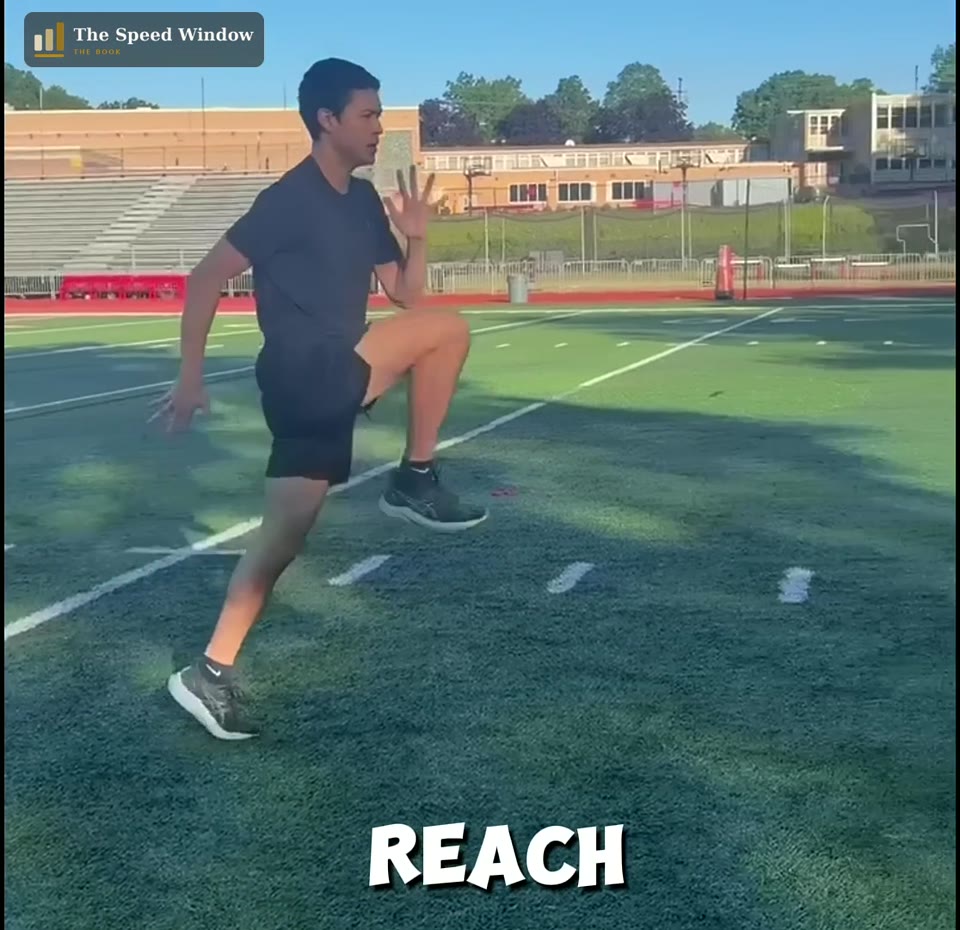
Extend the leg forward: reach
From the high-knee position, the foot extends forward slightly: reaching ahead of the body. This is the 'reach' phase. The foot is still dorsiflexed, toes pulled up.
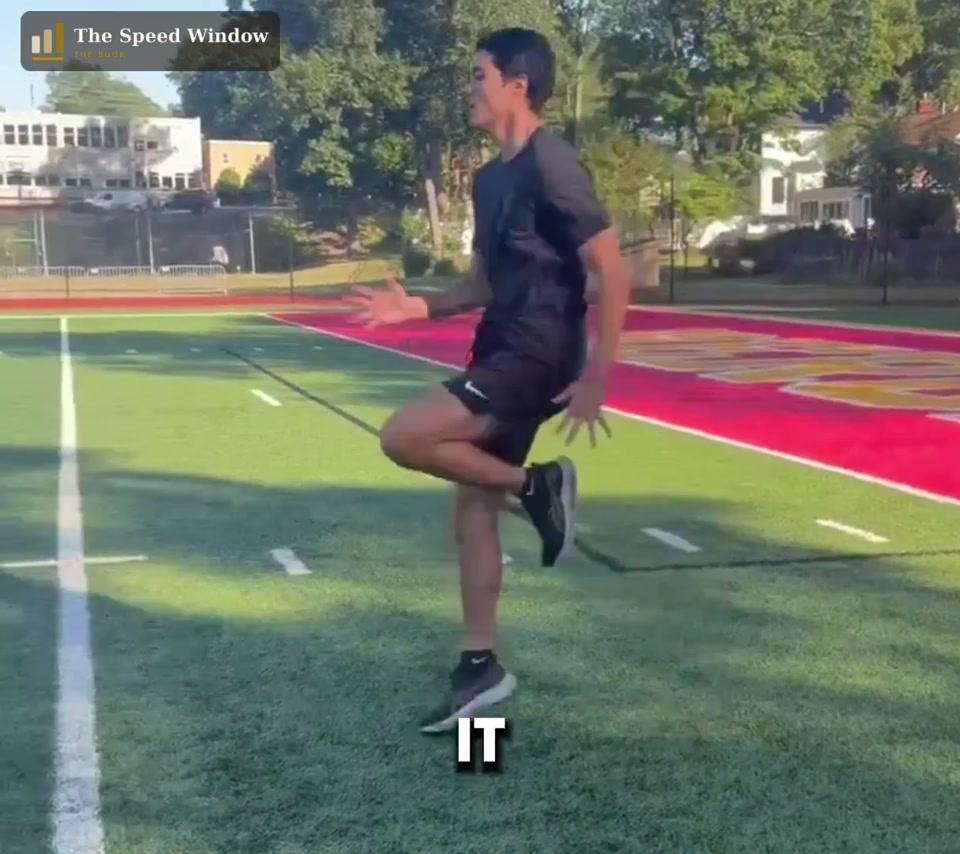
Paw the ground back: active contact
The foot then pulls back and down, making contact under the hip in a pawing motion. This is not a passive landing. The athlete is actively pulling the ground behind them.
Push off the support leg. The skip
The support leg pushes off as the drive leg makes contact, creating the skip rhythm. The transition should be smooth and continuous. Drive-reach-paw, drive-reach-paw.
Maintain posture throughout
Shoulders remain over the hips. The head stays neutral. Athletes who lean back during the extension phase are losing force application. Cue upright posture before correcting the leg mechanics.
Common Errors
What to watch for and how to correct it.
Kicking forward instead of pawing back
The athlete extends the leg but does not pull it back actively. It becomes a forward kick. The paw must be deliberate. Cue: 'reach, then claw it back.' Slow the drill down until the pawing action is felt.
Heel striking on the paw contact
The foot lands on the heel rather than the midfoot during the pawing motion. This eliminates the elastic energy benefit. Cue: 'ball of the foot, pull it back.' Exaggerate the dorsiflexion hold before the ground contact.
Loss of posture during extension
The athlete leans back as the leg reaches forward. This indicates hip flexor tightness or a pattern breakdown. Regress to A-Skip until posture is stable under the full knee drive.
Arms stopping during the paw phase
Arm action freezes as the athlete concentrates on the leg movement. Arms must stay continuous: the same cheek-to-cheek rhythm as the A-Skip throughout every phase.
No rhythm. Drill becomes choppy
The skip cadence breaks down into a march with a kick. Clap the rhythm before the athlete moves. The sound should be: skip-reach-paw, skip-reach-paw, a clean, even three-beat cycle.
Coaching Cue
The one thing to say when you need the rep to change.
"Knee up, reach, claw it back."
This three-beat cue maps directly onto the three phases of the B-Skip. 'Knee up' activates the A-Skip foundation. 'Reach' cues the forward extension. 'Claw it back' triggers the active paw. Use it as a verbal rhythm during the rep.Progressions & Regressions
Where this drill fits in the sequence.
Regress to: if the athlete is struggling
- A-Skip: reinforce hip flexion and foot strike first
- Stationary paw drill: stand on one leg and practice the pawing motion against the ground
- A-Skip with exaggerated arm drive: ensure arm continuity before adding extension
- Walking B-Skip: step between each repetition to isolate and feel each phase
Progress to: once the pattern is clean
- B-Skip at increased distance: 20 to 25 yards
- B-Skip with resistance band around the waist: adds load to the paw phase
- B-Skip into sprint: last two reps transition into a 10-yard sprint
- Alternating A-Skip and B-Skip: builds fluency between the two patterns
Programming Notes
When and how to use this drill in a session.
Introduce the B-Skip only after the A-Skip pattern is stable: typically in weeks 4 to 6 of a Neural Window training block. Add it to the acceleration prep phase immediately after A-Skips.
Use 3 to 4 sets of 10 to 15 yards per leg. Rest fully between sets. The pawing action requires neural precision: fatigued reps teach compensation patterns. Stop before quality declines.
In weeks where both A-Skip and B-Skip are in the session, run A-Skips first. The B-Skip should feel like a natural extension of what the A-Skip activates.
Neural Window · Ages 7–12
The critical learning window.
Between ages 7 and 12, the nervous system acquires movement patterns faster than at any other stage of development. The drills trained here are not fitness drills. They are wiring sessions.
Explore the Neural WindowEvery drill here comes from the book.
The Speed Window maps all three windows: what to train, when, and why.
Get the Book