Purpose
What this drill trains, and why it matters.
The High-Knee Run takes the March Drill pattern and adds continuous forward movement at an increased cadence. It bridges the gap between the controlled, isolated mechanics of marching and skipping drills and the fully continuous movement of a sprint. The athlete must now maintain hip flexion, dorsiflexion, and upright posture while the legs are cycling at a higher rate.
The primary training effect is cadence development: the rate at which the legs turn over. Sprint speed is a product of stride length and stride frequency. The High-Knee Run builds stride frequency by demanding rapid, continuous knee drives at high cadence over a short distance.
This drill is also one of the best diagnostic tools in the Neural Window. When an athlete runs High-Knees, every mechanic is visible: posture, arm action, ground contact, knee height, and cadence. Coaches who learn to read the High-Knee Run can identify exactly which mechanics need isolated work before the athlete returns to full sprint velocity.
Setup
How to position your athlete before the first rep.
Mark a 15- to 20-yard straight line
Slightly longer than march and skip distances because the drill is continuous movement. Enough distance for 12 to 16 quality contacts per leg.
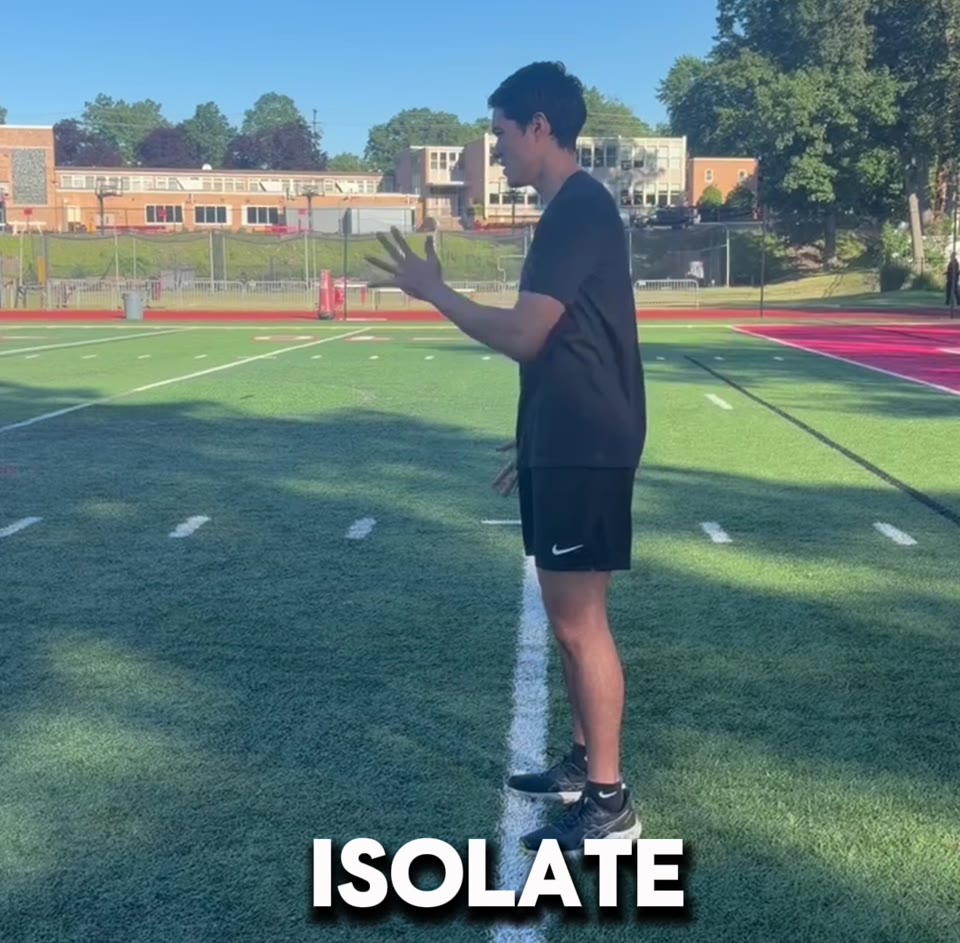
Begin from a two-point athletic stance
Feet hip-width, slight forward lean, arms set at 90 degrees. No false start, no exaggerated lean: just a natural athletic ready position.
Coach stands to the side, mid-distance
From the side, you can see posture, knee height, and foot placement simultaneously. Watch the first five steps especially. The pattern established at the start carries through the rep.
Execution
The drill, step by step.
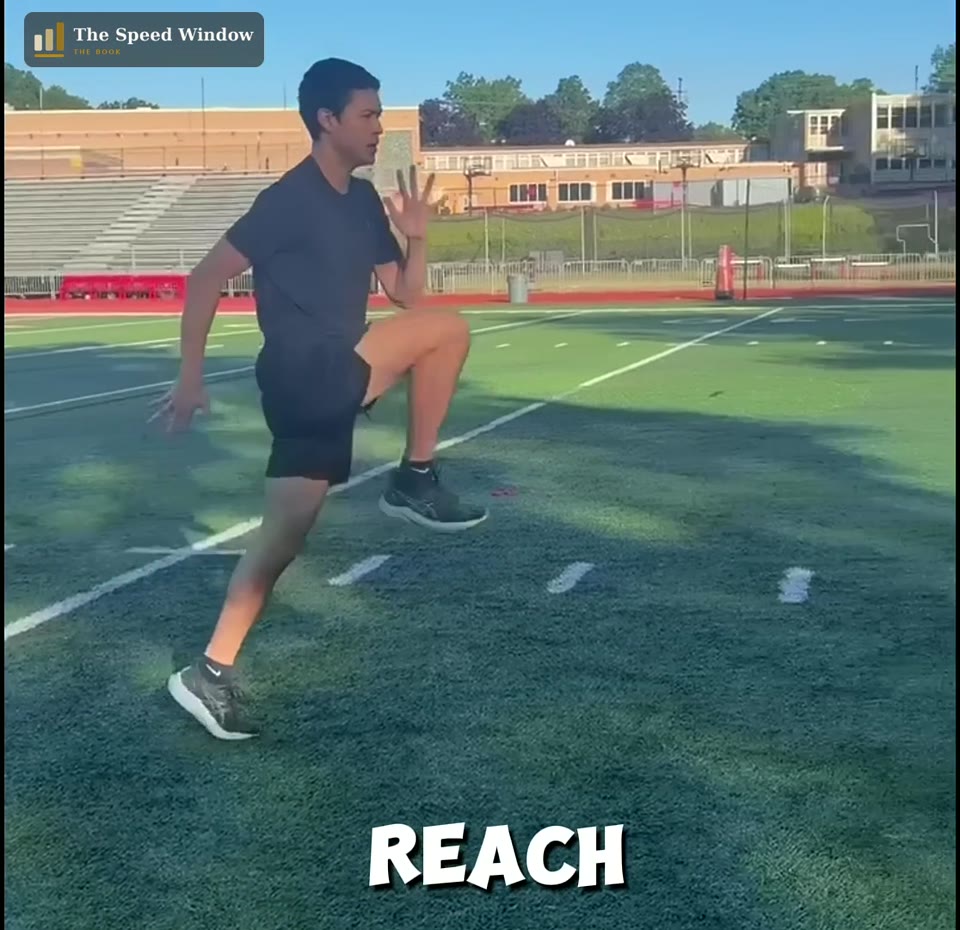
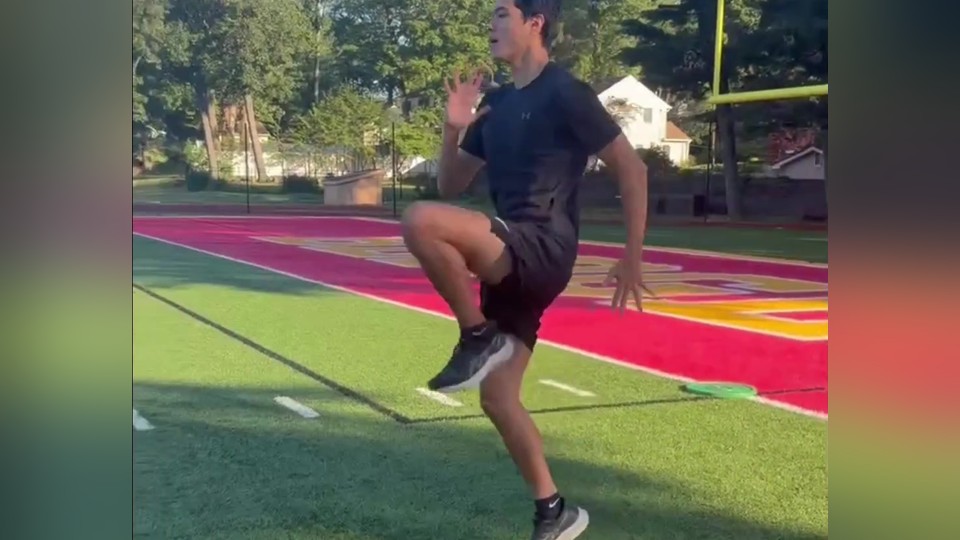
Drive knees to hip height with rapid alternation
Both knees drive to parallel in continuous alternation. Unlike the march, there is no pause or hold. The cycling is fluid and fast.
Maintain quick, light ground contacts
Contacts are on the ball of the foot, directly under the hip. The feel should be quick and light: like running across hot pavement. Heavy contacts indicate the athlete is overextending between drives.
Keep the torso upright, arms driving
Shoulders stay over the hips. The arm action should be at full cheek-to-cheek range, not shortened under the fatigue of the cadence demand.
Do not travel forward fast
The High-Knee Run has a slow, almost in-place horizontal progression. Athletes who run forward quickly are lowering the knees to gain speed. The point is the knee height and cadence, not the forward distance covered.
Common Errors
What to watch for and how to correct it.
Bouncing vertically instead of cycling horizontally
The athlete goes up and down like a pogo stick rather than cycling forward. The knees need to drive up and pull back down in a cycle, not project the body upward. Cue: 'quick and forward, not up.'
Knee height dropping after the first 5 yards
The knees start high then gradually lower as fatigue or pattern breakdown sets in. Shorten the distance before increasing the cadence demand. Quality reps over 10 yards beat poor reps over 20.
Forward lean developing over the rep
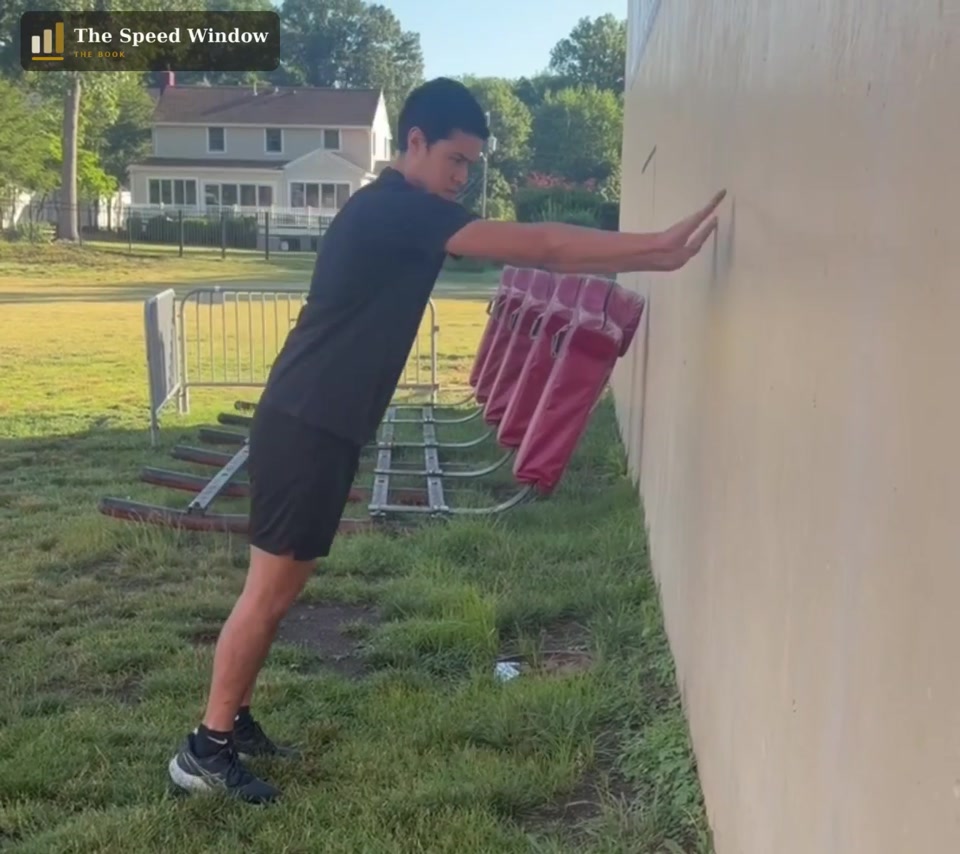
The athlete starts upright but folds forward under the cadence demand. This is a core stability breakdown. Reinforce the Wall Drive Series before returning to High-Knee runs.
Arm action shortening or stopping
Arms shorten to 'chicken wing' positions as the athlete focuses on the legs. Arms must stay full cheek-to-cheek. Correct this before increasing distance.
Coaching Cue
The one thing to say when you need the rep to change.
"Quick and light, knees to the belt."
The two-word pairs do separate jobs: 'quick and light' cues ground contact quality and prevents the heavy, bouncing pattern. 'Knees to the belt' maintains the hip flexion height under cadence demand.Progressions & Regressions
Where this drill fits in the sequence.
Regress to: if the athlete is struggling
- March Drill: remove the cadence demand, rebuild the isolated pattern
- A-Skip: skip cadence before full run cadence
Progress to: once the pattern is clean
- High-Knee Run with arm variation: hands behind head to isolate hip mechanics
- High-Knee Run into sprint: last 5 yards transition to a full sprint
- High-Knee Run at 20 to 25 yards: increase distance as cadence becomes stable
Programming Notes
When and how to use this drill in a session.
Use the High-Knee Run after A-Skips and B-Skips in the acceleration prep phase. It serves as the tempo bridge before sprint work. Four sets of 15 to 20 yards is standard for Neural Window athletes.
Watch for pattern degradation after the first two sets. If knee height drops significantly in sets three and four, reduce to two sets and prioritize quality. The High-Knee Run is a mechanics drill, not conditioning.
Neural Window · Ages 7–12
The critical learning window.
Between ages 7 and 12, the nervous system acquires movement patterns faster than at any other stage of development. The drills trained here are not fitness drills. They are wiring sessions.
Explore the Neural WindowEvery drill here comes from the book.
The Speed Window maps all three windows: what to train, when, and why.
Get the Book