Purpose
What this drill trains, and why it matters.
The Wall Drive Series isolates acceleration posture and the alternating leg drive without adding the complexity of forward movement. By leaning against a wall at a forward angle, the athlete is forced into the correct acceleration body position (forward lean, full extension through the support leg, high knee drive) and can practice the alternating drive pattern with zero balance demand.
Acceleration posture is the hardest sprint mechanic to teach while an athlete is moving. The Wall Drive Series solves this by making acceleration posture the stable base from which every rep is performed. The athlete cannot accidentally stand upright. The wall holds the angle. This is deliberate constraint-based learning.
This drill is foundational before any standing sprint work. An athlete who has internalized the wall drive angle and leg drive pattern will find the step-out into an actual sprint significantly easier to execute correctly.
Setup
How to position your athlete before the first rep.
Find a solid wall, fence, or goal post
The surface needs to hold the athlete's weight as they lean into it. The athlete places both hands flat on the wall at shoulder height or slightly above.
Walk feet back until arms are straight
The athlete steps back until the body forms a straight diagonal line from hands to heels: approximately 45 degrees to the ground. This is the acceleration angle.
Check the line: hands, shoulders, hips, heels
Nothing should be bent. The hips should not be sagging down (too weak to hold position) or piked up (athlete standing too upright). A rigid plank from heel to hand is the target position.
Feet hip-width, balls of feet on the ground
Both feet start with the ball of the foot in contact, never the heel. This is the starting foot position for every drive rep.
Execution
The drill, step by step.
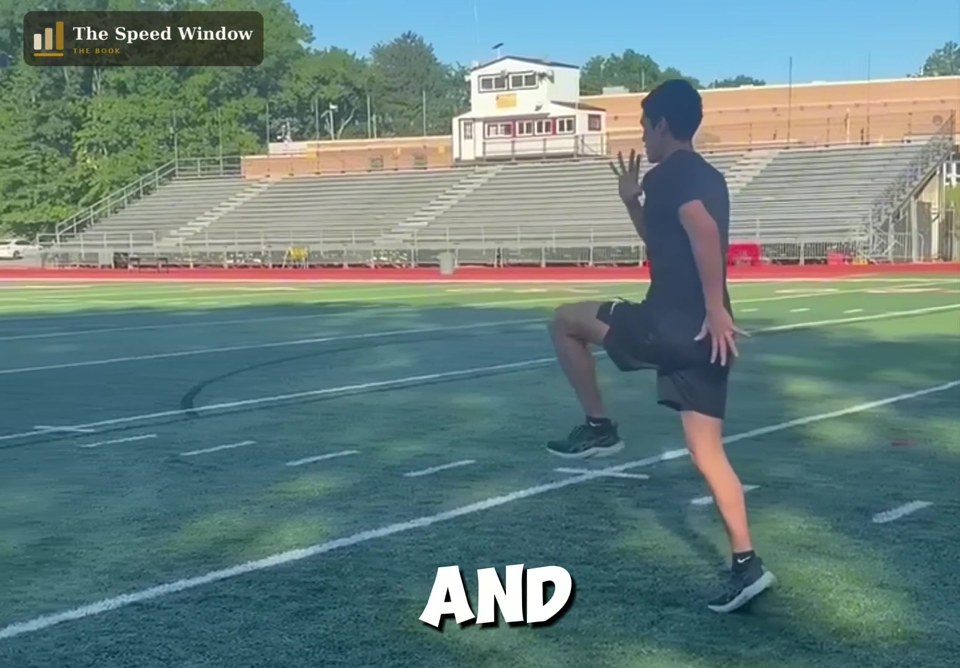
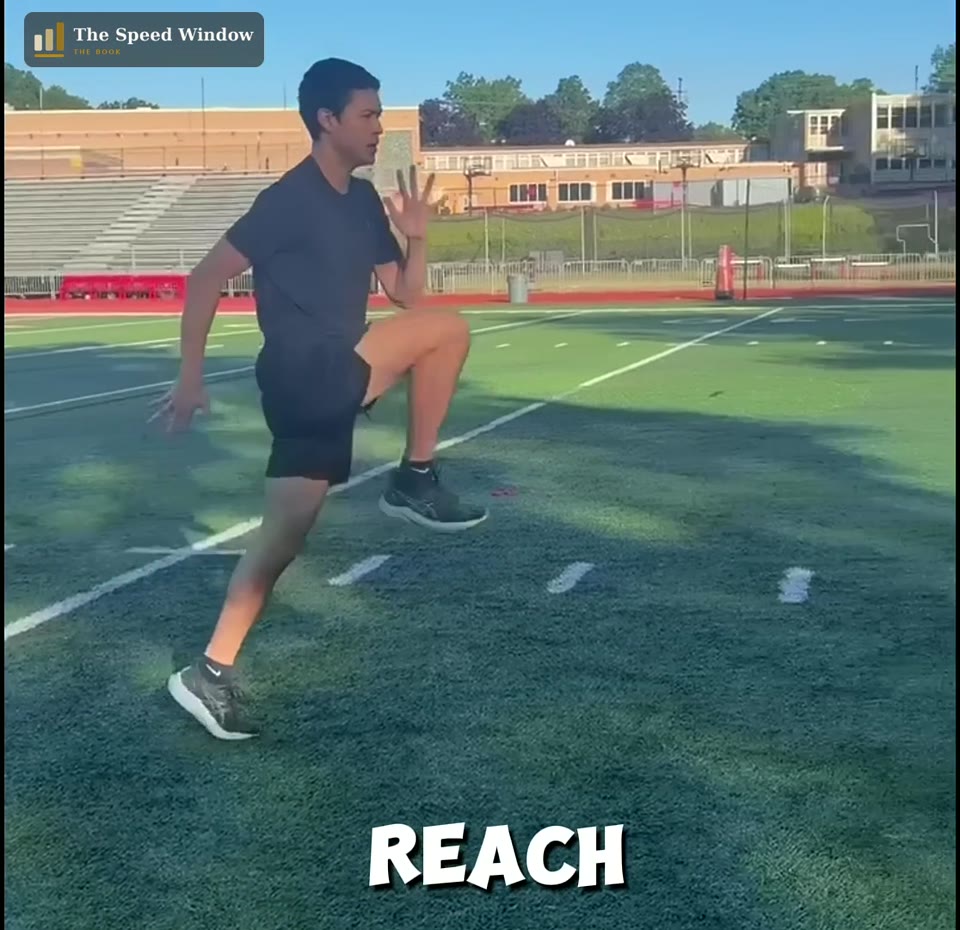
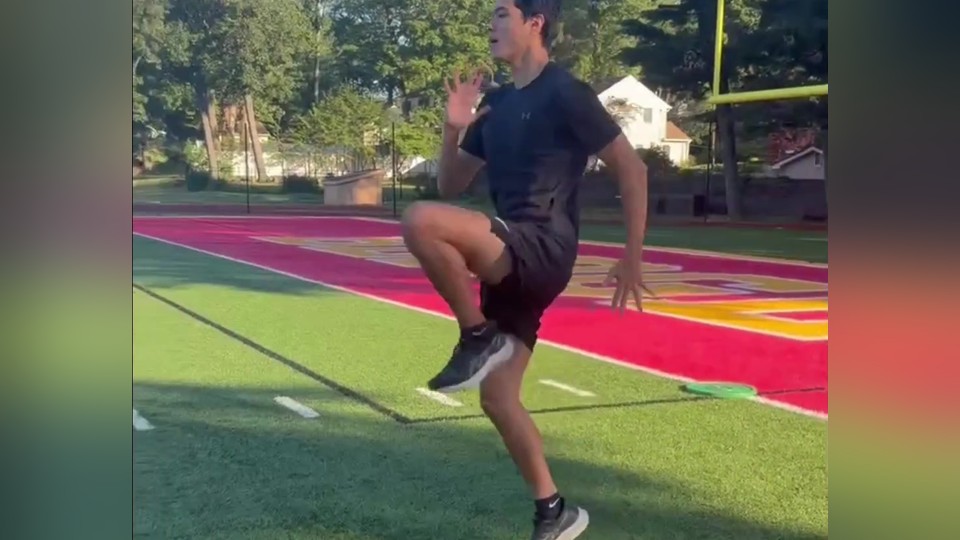
Drive one knee up to hip height
From the wall position, drive one knee up sharply to parallel: thigh horizontal, shin vertical, foot dorsiflexed. The body angle does not change. The hips stay level.
Hold for a beat, then drive it back down
The foot returns to the starting position by driving back and down. Not dropping. This reinforces the pawing motion that connects directly to the B-Skip and sprint mechanics.
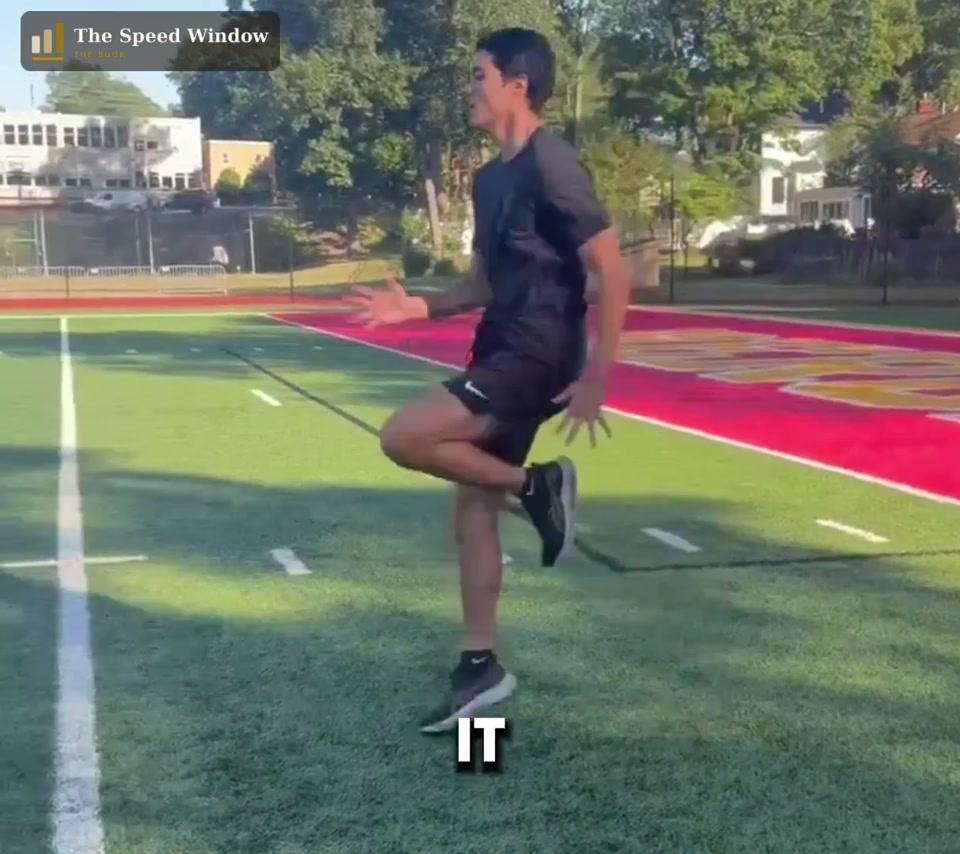
Alternate legs at a controlled pace
Alternate right and left for the prescribed reps. Maintain the body angle on every rep. The movement is entirely in the hips and legs. The upper body is stable.
Increase cadence for the final set
The first two sets are deliberate and controlled. The third set increases tempo: still in good position, but faster alternating drives to approach the sprint cadence.
Common Errors
What to watch for and how to correct it.
Hips sagging: butt dropping toward the ground
The athlete cannot maintain the rigid body angle and the hips drop. This eliminates the drill's purpose. Cue: 'make a straight line, heel to hands.' Reduce the number of reps until core engagement is sufficient.
Standing too upright: angle is too steep
The athlete walks feet only slightly back and is nearly standing. No acceleration posture is being trained. Walk the feet back until the body angle is clearly forward: approximately 45 degrees.
Knee drive stopping short
The knee does not reach hip height. The same correction as in the March Drill: cue 'knee to your belt' and use a hand held at hip height as a target.
Toes pointed down on the drive leg
Plantar flexion during the drive. The foot should stay dorsiflexed throughout: toes up, ready to strike the ground correctly when it returns.
Arms bending or pushing off the wall
The athlete pushes with the arms to assist the leg drive. The arms are passive support only. Cue: 'hands flat, don't push.'
Coaching Cue
The one thing to say when you need the rep to change.
"Straight line, drive the knee, don't push with your hands."
This three-part cue keeps the athlete accountable to posture, leg drive, and passive arm support simultaneously. Deliver it before each set, not reactively mid-rep.Progressions & Regressions
Where this drill fits in the sequence.
Regress to: if the athlete is struggling
- March Drill: establish hip flexion pattern without any balance demand
- Single-leg wall hold. Drive one knee up and hold for 5 seconds, focusing only on the position
Progress to: once the pattern is clean
- Wall Drive into sprint: after 10 alternating drives, step out into a 10-yard sprint maintaining the lean
- Wall Drive with band: resistance band around the ankle adds load to the drive leg
- Falling Start: combines the wall drive angle with a self-initiated step into acceleration
Programming Notes
When and how to use this drill in a session.
The Wall Drive Series belongs in acceleration prep, after march and skip work. It is the final checkpoint before athletes perform standing or rolling sprints. Three sets is standard. The final set should feel slightly faster while maintaining the body angle.
Revisit the Wall Drive whenever athletes are over-striding in sprints or losing the forward lean out of their start. It is the most direct correction for both. Five minutes at the wall will transfer to the sprint in the same session.
Neural Window · Ages 7–12
The critical learning window.
Between ages 7 and 12, the nervous system acquires movement patterns faster than at any other stage of development. The drills trained here are not fitness drills. They are wiring sessions.
Explore the Neural WindowEvery drill here comes from the book.
The Speed Window maps all three windows: what to train, when, and why.
Get the Book