Purpose
What this drill trains, and why it matters.
The Broad Jump + Stick teaches two of the most important athletic skills in the Neural Window: horizontal power production and landing mechanics. Every jump sport, sprint, and change-of-direction movement requires the ability to both generate force through the ground and absorb it on landing. The Broad Jump + Stick trains both in the same rep.
The 'stick' (the two-second stable landing hold) is the critical half of this drill that most coaches rush past. Young athletes who cannot stabilize a landing are not yet ready for repeated-effort plyometric work. The stick forces the athlete to demonstrate landing mechanics before the next jump is taken. It is a built-in quality control mechanism.
Introduce this drill before any box jumps, depth jumps, or repeated-effort plyometric work. The landing pattern established here protects against the ankle, knee, and hip injuries that come from uncontrolled landings in later training.
Setup
How to position your athlete before the first rep.
Clear floor space of 6 to 8 feet
The athlete needs enough space to land without obstruction. Use a tape mark on the ground at the starting position.
Athletic stance: feet hip-width
Starting position is feet hip-width, slight knee bend, arms behind the body in a loaded position ready to drive forward on the jump.
Demonstrate the full rep including the hold
Show the jump, land, and hold for a clear two seconds. Emphasize the hold visually: athletes will understand the standard before performing it.
Execution
The drill, step by step.
Load: hinge the hips back, arms swing back
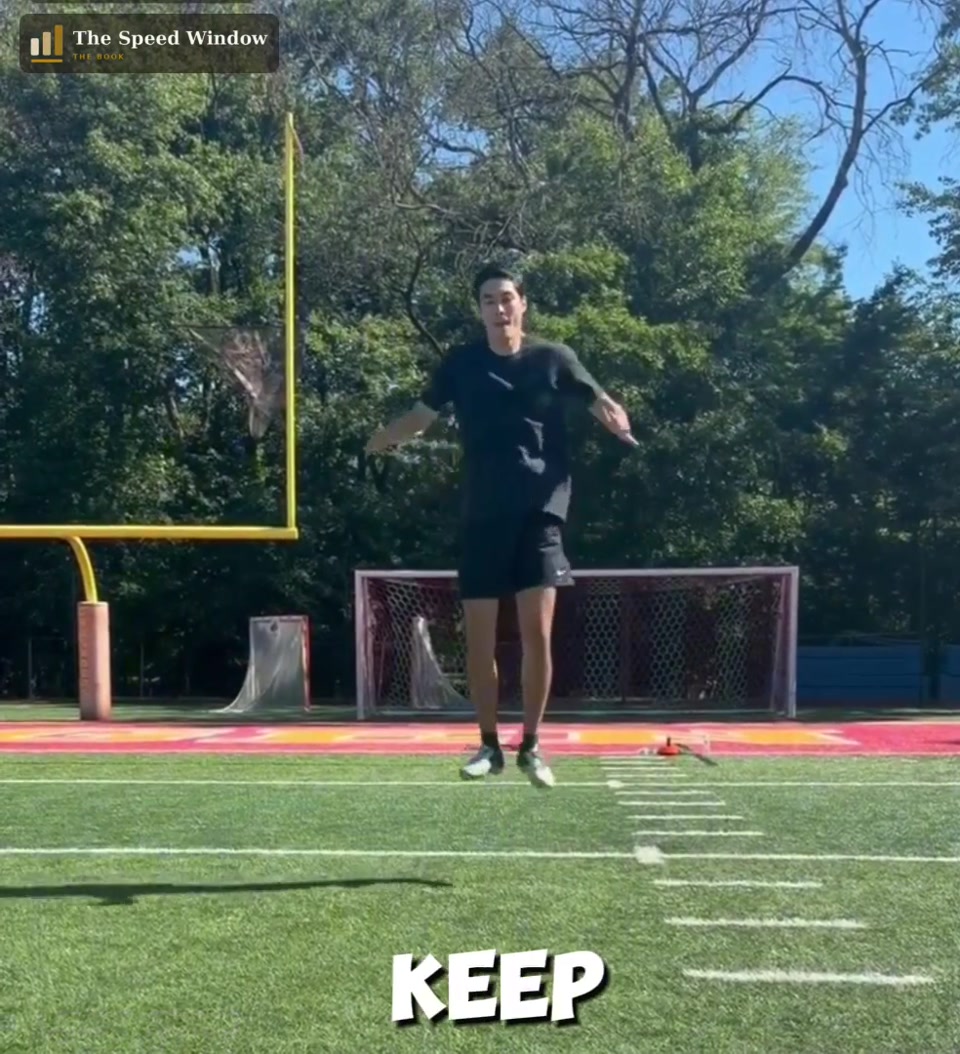
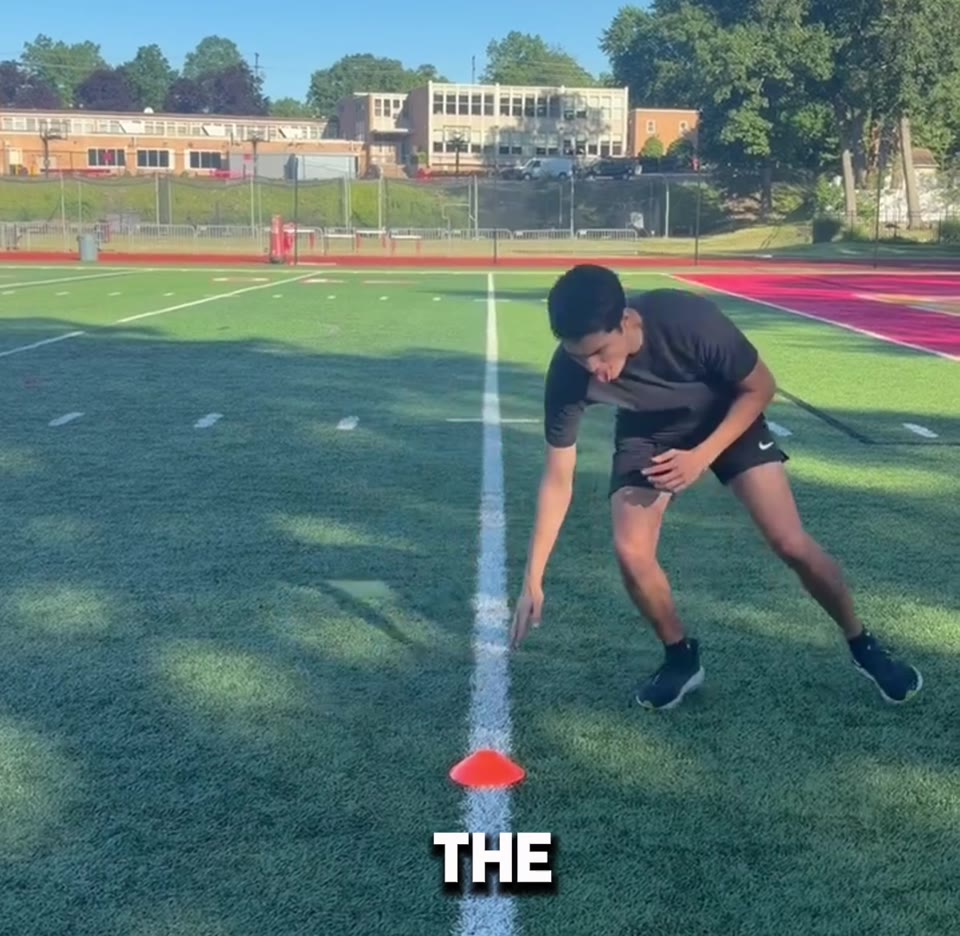
Before the jump, the athlete performs a quick hip hinge: sending the hips back, loading the posterior chain, and swinging the arms behind the body. This is the countermovement that generates horizontal power.
Drive forward: arms, hips, legs simultaneously
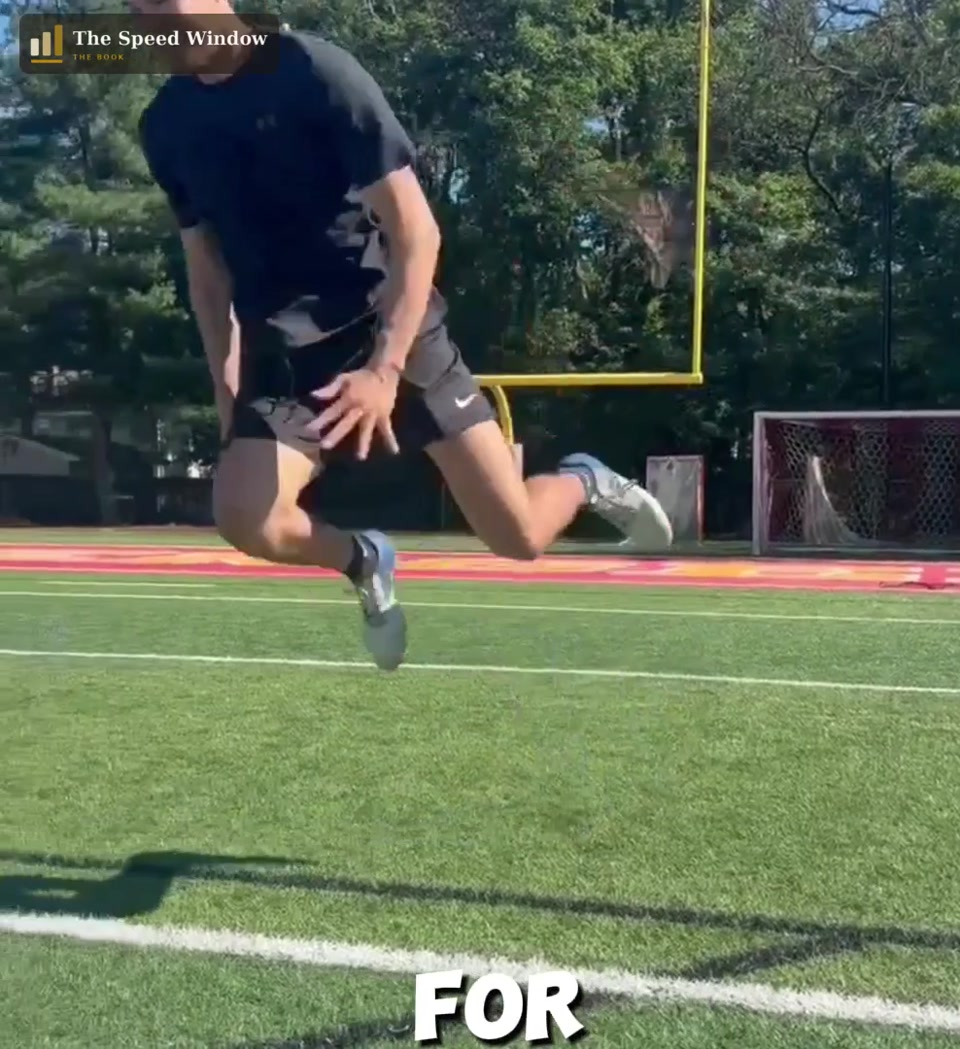
The arms drive forward, the hips extend, and the legs push through the ground in a simultaneous triple-extension action. The athlete should feel like they are projecting forward, not upward.
Land on two feet: absorb and hold
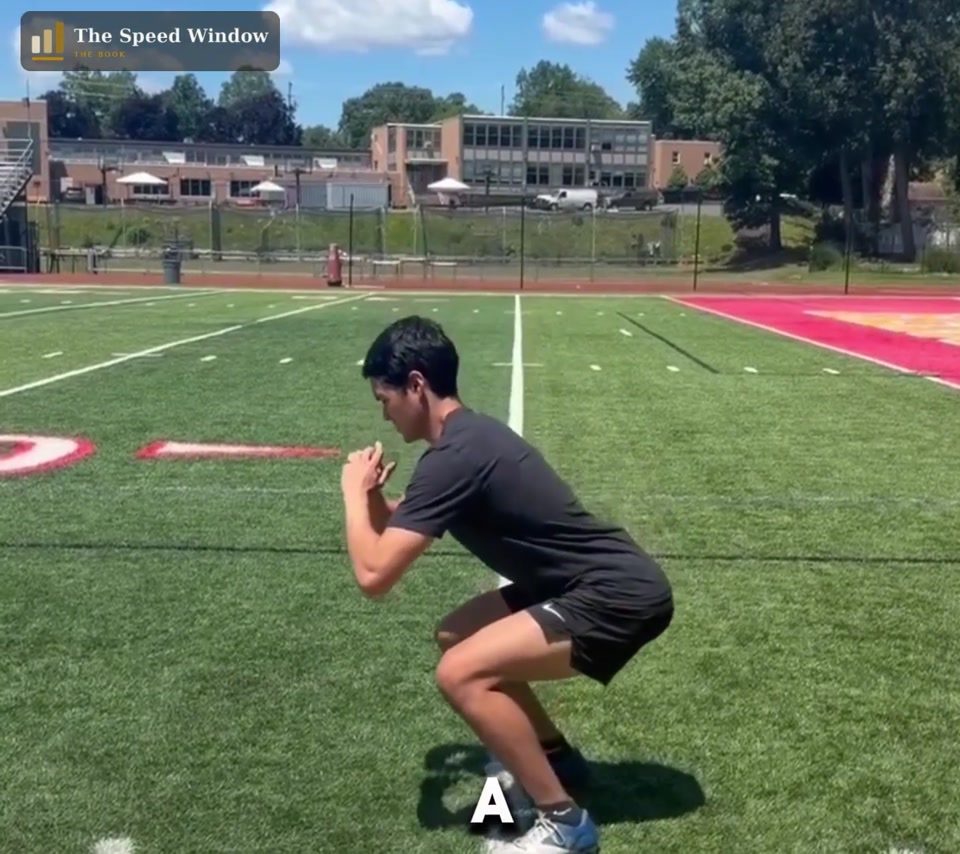
Landing is on two feet simultaneously, on the balls of the feet. On contact, the athlete performs a soft knee bend to absorb the force (a controlled squat into the ground) and then holds the position for two full seconds without wobbling.
Check the landing position before the next rep
Feet hip-width, knees over toes, hips back, balanced. If any of these are missing on the hold, reset and cue the correction before the next jump.
Common Errors
What to watch for and how to correct it.
No hold: bouncing into the next jump
The athlete lands and immediately jumps again without the two-second stabilization hold. Stop the drill and re-emphasize the hold standard. Count 'one, two' aloud during each landing until the pattern is established.
Stiff landing. No knee bend on contact
The athlete lands with straight legs, sending impact force directly into the joints. This is a significant injury risk in later training. Cue: 'soft knees, absorb the ground.' Have the athlete try to land silently as a correction cue.
Landing with feet too close together or too wide
Feet too narrow creates instability; feet too wide eliminates the loading position for the next jump. Cue: 'land where you started, hip-width.' Use ground marks.
Leaning forward past the toes on landing
The athlete's center of mass projects forward past the landing foot, causing a step forward to recover balance. Cue: 'land tall, hips back.' The landing position should mirror the starting position.
Coaching Cue
The one thing to say when you need the rep to change.
"Jump far, land quiet, hold it."
'Jump far' targets the horizontal power production. 'Land quiet' cues the soft, absorbing landing mechanics: athletes instinctively try to be silent on contact, which produces the correct knee bend. 'Hold it' enforces the stick.Progressions & Regressions
Where this drill fits in the sequence.
Regress to: if the athlete is struggling
- Squat to hold: practice the landing position in a static squat for 2 seconds per rep before adding the jump
- Step-off landing: step off a small (4 inch) box and stick the landing
Progress to: once the pattern is clean
- Single-Leg Hop + Stick: same concept on one leg
- Broad Jump × 3 consecutive: three jumps with a stick only on the last one
- Broad Jump + Sprint: land the jump and immediately accelerate for 5 yards
Programming Notes
When and how to use this drill in a session.
Use the Broad Jump + Stick in the plyometric section of the session, after warm-up and mechanics work and before any sprint or agility work. Three sets of 5 reps with full recovery between sets is the standard prescription.
Progress the jump distance only when the landing quality is consistently clean. Distance is meaningless if the landing is uncontrolled. The stick hold is the performance metric, not the horizontal distance.
Neural Window · Ages 7–12
The critical learning window.
Between ages 7 and 12, the nervous system acquires movement patterns faster than at any other stage of development. The drills trained here are not fitness drills. They are wiring sessions.
Explore the Neural WindowEvery drill here comes from the book.
The Speed Window maps all three windows: what to train, when, and why.
Get the Book