Purpose
What this drill trains, and why it matters.
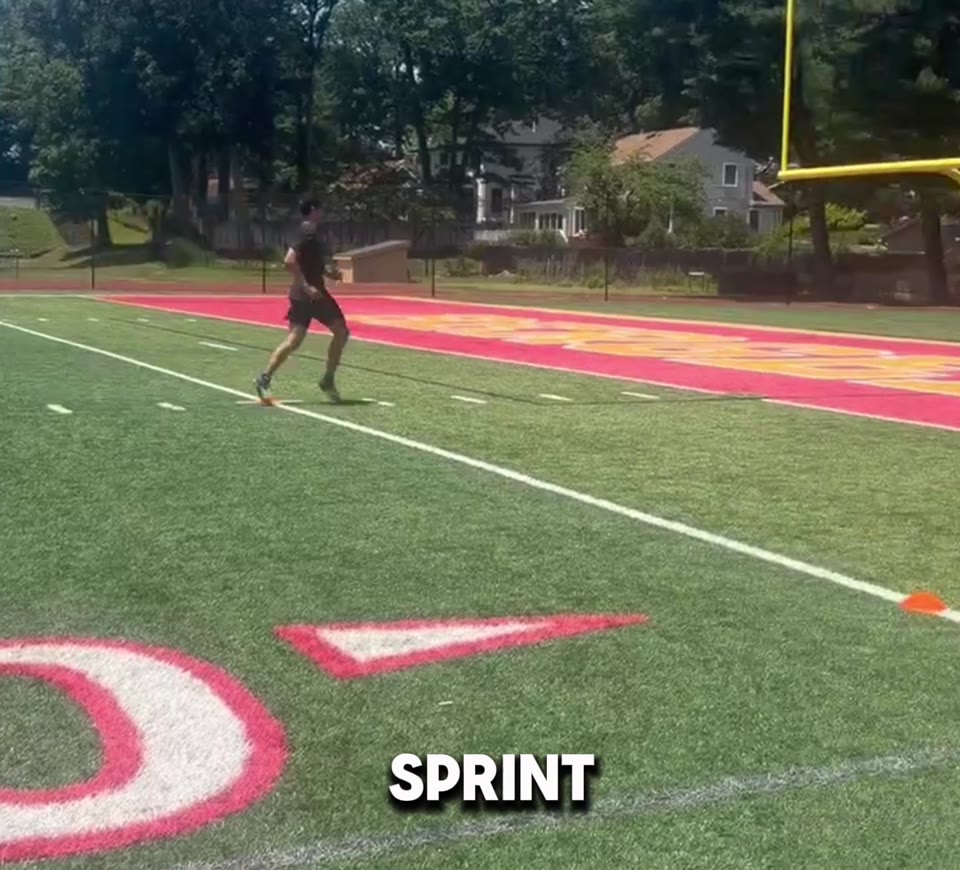
The X Drill sets four cones on a five-yard square and sends the athlete through them in a pattern that draws an X: sprint the first diagonal, shuffle across the top, backpedal the second diagonal, then shuffle along the baseline back to the start. Four legs, three different movement skills, and three hard transitions between them.
The transitions are the drill. Sport rarely lets an athlete stay in one movement for long: play demands sprint into shuffle, shuffle into backpedal, backpedal into sprint, over and over. Each switch requires the hips to flip, the weight to shift, and the feet to reorganize, all without stalling. The X Drill isolates exactly those switches and puts them on a fixed course where they can be coached.
For Stabilization Window athletes the drill is run at controlled speed with full recovery, like the Pro Agility and Box Drill beside it in this category. The goal is not a time. The goal is that every transition is clean: low hips through the change, no extra steps, no upright stumble between movements. Speed is added only when the switches stop leaking.
Setup
How to position your athlete before the first rep.
Set four cones in a 5-yard square
One cone per corner. Number them: cone 1 is the start (bottom left), cone 2 bottom right, cone 3 top right, cone 4 top left. Exact spacing matters less than knowing the route cold.
Walk the route once
Cone 1 to 3 on the diagonal, 3 to 4 across the top, 4 to 2 on the other diagonal, 2 to 1 along the baseline. Walk it, then jog it. Confusion about the route ruins every mechanical intention.
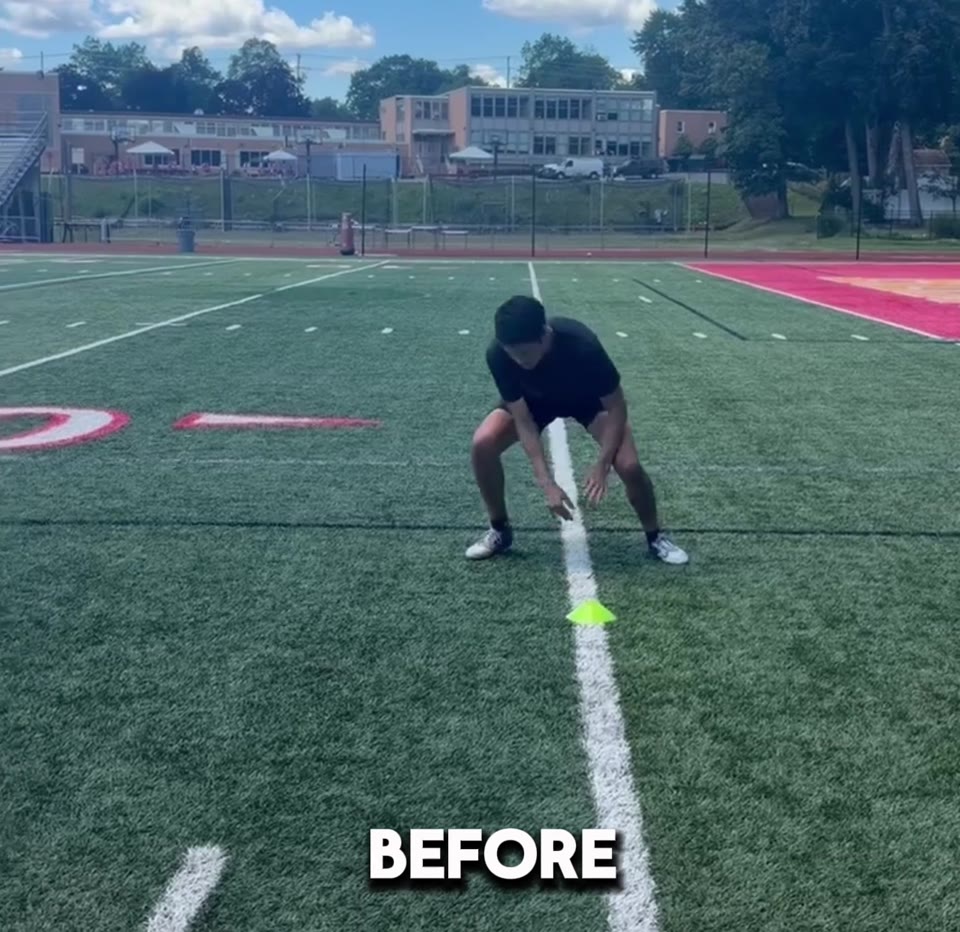
Start in a two-point stance at cone 1
Athletic base, hips low, eyes up. The first movement is a diagonal sprint, so the stance angles slightly toward cone 3.
Execution
The drill, step by step.
Sprint the diagonal: cone 1 to cone 3
Explode out low and accelerate through the middle of the square. Short, punchy steps: this is a five-to-seven yard burst, not a stride-out.
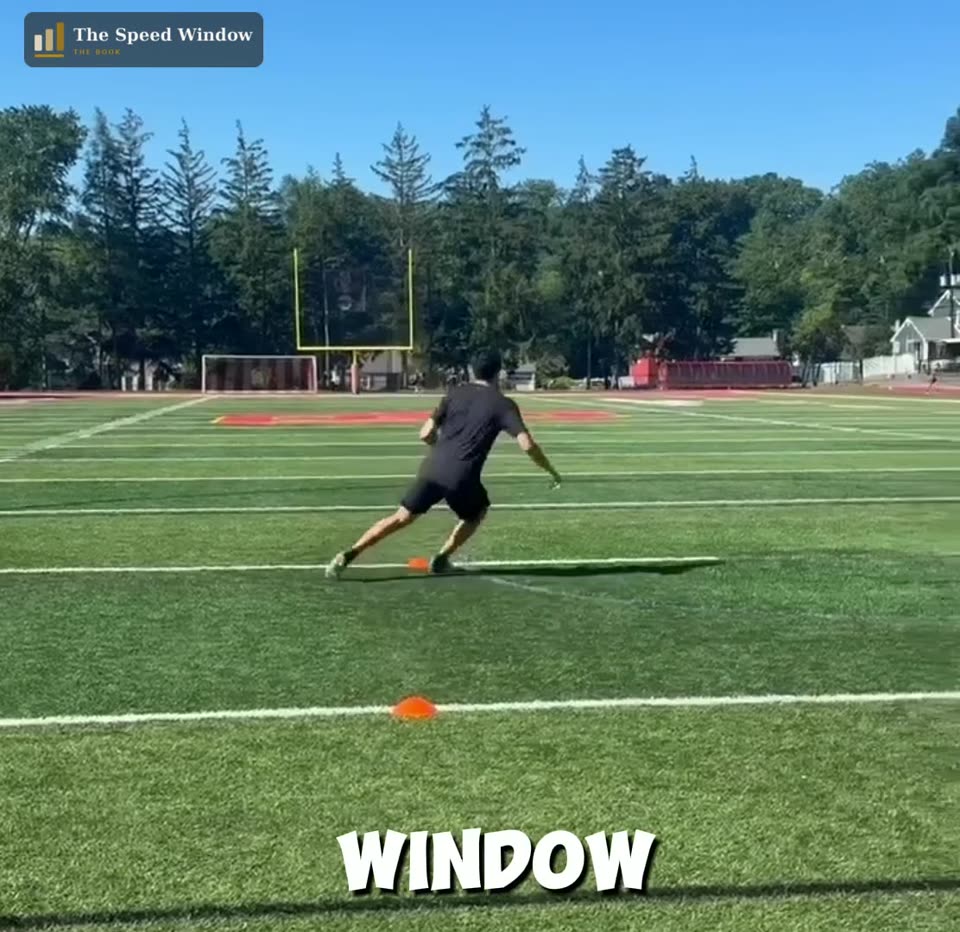
Switch to a shuffle: cone 3 to cone 4
At cone 3, drop the hips, flip the hips square, and shuffle laterally across the top of the square. The switch is the rep: no crossover steps, no rise in height, no stutter.
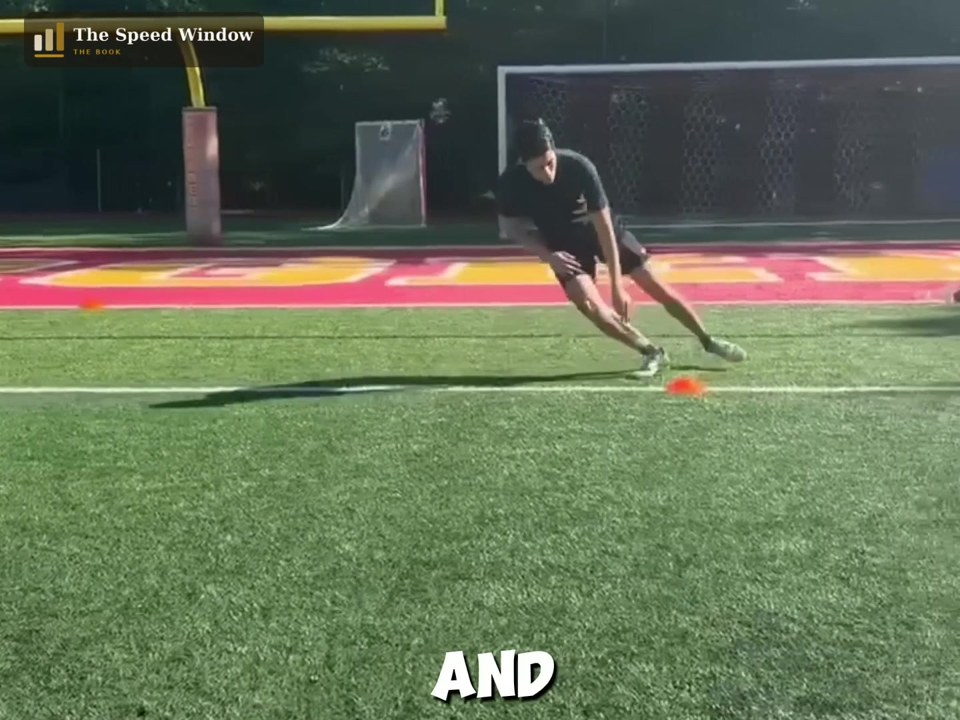
Backpedal the diagonal: cone 4 to cone 2
At cone 4, flip the hips again and backpedal down the second diagonal. Weight stays over the balls of the feet, nose over toes, eyes up the whole way.
Shuffle home: cone 2 to cone 1
One more switch at cone 2 into a lateral shuffle along the baseline, finishing through cone 1 at full effort.
Reverse the route on alternating reps
Running the mirror image reverses every transition and works the other hip. Both directions, every session, equal reps.
Common Errors
What to watch for and how to correct it.
Standing up in the transitions
The hips rise at every cone, adding a beat of stall to each switch. The hips stay at shuffle height through the change: lower through the cone, not taller.
Crossing the feet in the shuffle legs
Under fatigue or excess speed the shuffle turns into a run sideways. Feet never cross in a shuffle: if they do, the speed is too high for the pattern today.
Rounding the route
Drifting curves between cones instead of sharp legs. Each leg of the X is a straight line with a hard change at the end. Plant, flip, go.
Backpedaling on the heels
Weight rocks back, and one uneven patch of ground means a fall. Cue 'nose over toes': the athlete should be able to stop and sprint forward out of any backpedal step.
Coaching Cue
The one thing to say when you need the rep to change.
"The switch is the rep. Flip the hips, stay low."
This drill is not sprinting, shuffling, or backpedaling practice: it is switching practice. 'Flip the hips' names the mechanic every transition shares. 'Stay low' removes the stall that ruins it. An athlete who hears this cue watches their own cones differently.Progressions & Regressions
Where this drill fits in the sequence.
Regress to: if the athlete is struggling
- Half pattern: sprint the diagonal and shuffle the top, reset, and repeat
- Box Drill: the same movement vocabulary on a simpler perimeter route
- Walking X: rehearse the hip flips at each cone at zero speed
Progress to: once the pattern is clean
- Timed X Drill: add the clock only after transitions are consistently clean
- Pro Agility — Max Effort: full-speed change of direction over a simpler pattern
- Reactive X: a coach calls the next leg mid-drill, converting pattern into reaction
Programming Notes
When and how to use this drill in a session.
Program the X Drill as the capstone of the controlled agility block, after the Pro Agility and Box Drill are familiar. It recombines their movement vocabulary and adds transition density: more switches per rep than either.
3 to 4 reps in each direction with full recovery between reps. The drill takes under ten seconds per rep; the recovery is where the quality for the next rep comes from. Short rest turns it into conditioning and the transitions immediately decay.
Hold speed at roughly three-quarters until every switch is clean in both directions, then let the athlete chase speed. In this window the clock is a graduation gift, not a starting point. The full-speed version of this pattern belongs to the Force Window years.
Stabilization Window · Ages 12–15
Re-coordination through growth.
Growth disrupts movement patterns. This window focuses on re-establishing mechanics, building foundational strength, and preparing the body for the demands of force-based training.
Explore the Stabilization WindowEvery drill here comes from the book.
The Speed Window maps all three windows: what to train, when, and why.
Get the Book