Purpose
What this drill trains, and why it matters.
The Power Clean from the hang position is the primary total-body explosive strength movement of the Force Window. It teaches triple extension (the simultaneous extension of the ankle, knee, and hip), the same event that drives every sprint stride, jump, and cut. Nothing else trains that chain as directly.
The hang position is the correct starting point for athletes learning Olympic lifting. Beginning from the floor requires a more complex setup and more time. Beginning from the hang (bar at mid-thigh) isolates the explosive hip extension pattern that matters most for athletic performance. The pull, the shrug, the catch: this is what power training looks like in the Force Window.
Athletes who have built their foundation in the Neural Window (sprint mechanics), refined their movement in the Stabilization Window (goblet squat, RDL, hip thrust), and progressed through the early Force Window work are ready for this drill. Do not introduce the Power Clean to athletes who lack a clean squat pattern, a controlled RDL, or the ability to brace under load.
Setup
How to position your athlete before the first rep.
Set the bar at mid-thigh: hang position
The athlete holds the bar with a pronated grip, shoulder-width or slightly wider. The bar rests at mid-thigh, shins vertical, slight knee bend, flat back, shoulders over or in front of the bar.
Establish a strong hinge position
The starting position is a partial hip hinge. Not an upright stance, not a full squat. The hips are back, the chest is tall, the back is flat. This position mirrors the loading phase before the explosive pull.
Grip the bar with hook grip or standard grip
Hook grip (thumb under fingers) is recommended for heavier loads and reduces slippage during the catch. Standard grip is acceptable for introductory loads. Bar should be balanced in the fingers, not the palm.
Coach positions to the side and slightly behind
The coach observes the hip extension and bar path from the side. A second coach or camera at the rear helps monitor grip width and elbow position during the catch.
Execution
The drill, step by step.
Load the hips. Push them back slightly
Before the pull, the athlete performs a subtle additional hip hinge (dropping the hips slightly and pushing them back) to create the elastic loading that drives the explosive extension.
Drive the hips through: violent triple extension
From the loaded position, the athlete explosively extends the ankle, knee, and hip simultaneously. This is not a curl. The arms do not initiate the movement. The hips drive first, the bar travels upward as a result.
Shrug aggressively at the top of the pull
At the peak of hip extension, the athlete shrugs the shoulders to the ears while keeping the elbows above the wrists. The shrug adds the final acceleration to the bar as it travels toward the catch position.
Pull the elbows through: catch in the front rack
The athlete rotates the elbows forward and under the bar, catching it in the front rack: bar across the front of the shoulders, elbows parallel to the floor, upper arms parallel to the floor. The catch absorbs the load through a slight squat dip.
Control the descent. Return to hang
Lower the bar under control back to the hang position. Reset the bracing and loading pattern before the next rep. Do not drop the bar unless using bumper plates on a deadlift platform.
Common Errors
What to watch for and how to correct it.
Using the arms too early: muscling the bar
The athlete bends the arms before the hip extension is complete. This converts the explosive pull into a bicep curl and eliminates the power output the drill is designed to develop. Cue: 'arms are ropes. They follow the hips.' The arms should not bend until the hips are fully extended.
Insufficient hip load: pulling from vertical
The athlete skips the loading phase and pulls from an upright position, reducing power output. Cue: 'load the hips back first, then explode.' The subtle hip drop before the pull is essential.
Bar swinging away from the body
The bar travels forward rather than vertically, reducing mechanical efficiency and making the catch difficult. The bar should stay close to the thighs and travel vertically. Cue: 'drag the bar up your thighs.'
Catching with soft elbows
The elbows do not rotate forward quickly enough and the athlete catches the bar in a wrist-curl position rather than the front rack. This is a wrist injury risk. Drill the elbow rotation separately before adding weight.
Coaching Cue
The one thing to say when you need the rep to change.
"Hips first: arms are ropes."
It corrects the most common beginner error, pulling with the arms, and points the athlete back to the hips. Pair it with 'load the hips back first' and the whole rep is covered: load, explode, catch.Progressions & Regressions
Where this drill fits in the sequence.
Regress to: if the athlete is struggling
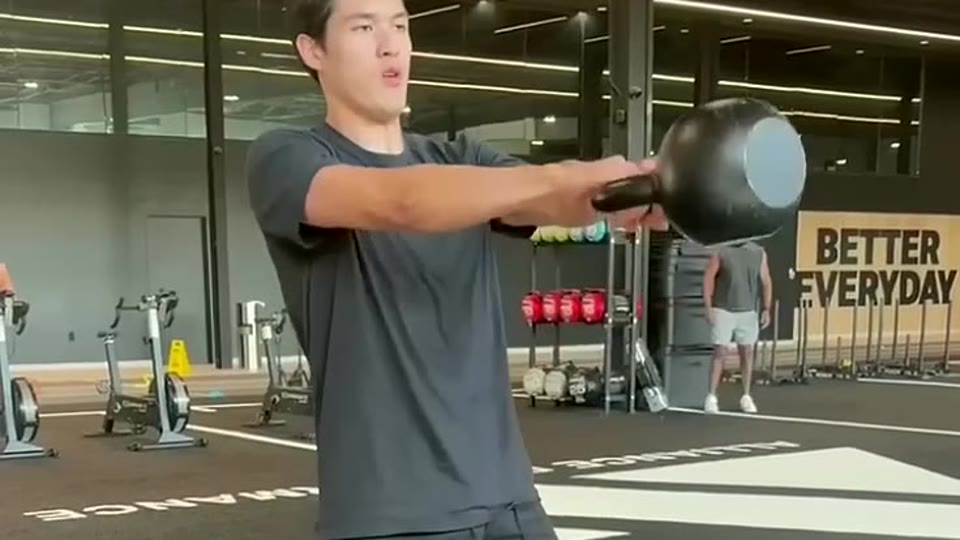
- Kettlebell Swing: develops the hip extension pattern without the catch demand
- Barbell Shrug: isolates the shrug component without the full clean
- Hang High Pull: full hang pull without the catch, develops the pull and shrug pattern
Progress to: once the pattern is clean
- Power Clean from the floor: extends the pull range and adds the first pull phase
- Hang Squat Clean: catch in a full squat rather than a quarter squat for deeper receiving
- Power Clean complex: 3 pulls + 1 clean: develops pulling rate before adding full reps
Programming Notes
When and how to use this drill in a session.
Program the Power Clean as the first exercise of the training session: before strength work, before sprints, before any high-fatigue activity. It is a nervous system exercise and requires a fully fresh athlete to be trained correctly.
Four sets of three to four reps at moderate-to-heavy load. The rep scheme is low because quality degrades with fatigue. If the athlete cannot maintain a consistent catch position by rep three, the session weight is too heavy.
Cycle through a 4-week progression: Week 1 technique (60% 1RM), Week 2 development (70%), Week 3 building (75–80%), Week 4 deload (60%). Repeat with increased absolute load.
Force Window · Ages 15–18
Power on a proven foundation.
The athlete is physically ready for high-intensity training. Speed-power, strength, and explosive work are built on what the first two windows established.
Explore the Force WindowEvery drill here comes from the book.
The Speed Window maps all three windows: what to train, when, and why.
Get the Book