Purpose
What this drill trains, and why it matters.
Flying 10s are the primary tool for developing and measuring top-speed velocity in the Force Window. Unlike the 40-yard dash or the resisted sprint, the Flying 10 measures a 10-yard window at or near maximum sprint velocity: isolating the top-speed phase of a sprint from the acceleration phase that precedes it.
Top speed and acceleration are different skills. Acceleration requires forward lean, short ground contacts, and high force application. Maximum velocity requires an upright posture, longer flight times, and the ability to apply force in a very brief ground contact window. These two patterns must be trained separately. The Flying 10 is the dedicated top-speed training tool.
In the Force Window, athletes have the physical maturity to approach their actual top-speed potential for the first time. Flying 10s harness this by allowing the athlete to arrive at the timed window already at or near maximum velocity: so the rep trains holding top speed, not just reaching it.
Setup
How to position your athlete before the first rep.
Mark three cones: 0, 20, and 30 yards
The start cone is at 0. The second cone at 20 yards marks the entry to the timed window. The third cone at 30 yards marks the exit. The athlete accelerates through 20 yards before the timed 10-yard section begins.
Allow full warm-up before any timed reps
Flying 10s are maximum-intensity sprints. The athlete should complete the full warm-up sequence (joint circles, dynamic movement, skips, and at least 3 sub-maximal sprint build-ups) before any timed rep.
Timing gates or manual timing at the 20- and 30-yard marks
Timing gates at 20 and 30 yards give the most accurate data. Manual timing with a stopwatch at the second cone is a reliable alternative. The coach should be positioned at the 20-yard cone to cue and time simultaneously.
Execution
The drill, step by step.
Accelerate through the first 20 yards. Do not sprint maximally
The buildup is deliberate. The athlete accelerates to approximately 90 to 95% of maximum speed by the 20-yard mark. Maximum effort at the start leads to over-striding and a slower split through the timed window.
Hit full velocity at the 20-yard cone
The athlete should be at or near maximum velocity as the feet cross the 20-yard cone. The transition from buildup to timed sprint should be seamless. No gear-change visible to the observer.
Through the timed 10 yards: upright, long strides, quick contacts
Top-speed mechanics: upright posture, long stride length, quick ground contacts on the ball of the foot directly under the hip. Arms driving at full cheek-to-cheek range. No deceleration until past the 30-yard cone.
Decelerate gradually past the 30-yard cone
Do not decelerate abruptly at the cone. Gradual deceleration over 10 to 15 yards protects the hamstrings from the eccentric load spike that causes strain injuries.
Common Errors
What to watch for and how to correct it.
Over-striding at top speed
The athlete reaches the foot too far in front of the body at maximum velocity, creating a braking force on every stride. It is the most common limiter of top speed. Cue: 'foot contacts under the hip, not in front of it.' The A-Skip and B-Skip patterns from earlier windows are the direct preparation for this mechanic.
Starting too fast: arriving at 20 yards already fatigued
The athlete sprints the first 20 yards at maximum effort, arrives at the timed window with accumulated lactic acid, and slows through the split. Cue: 'build, don't blast.' The first 20 yards is preparation, not performance.
Braking at the cone: decelerating before 30 yards
The athlete begins to slow as they approach the end cone rather than running through it. This is usually fear-based (nowhere to go) or poor running habits. Cue: 'run through the cone, don't stop at it.'
Arm action breaking down at top speed
The arm mechanics collapse under the velocity demand: elbows flaring, arms crossing, range shortening. Review Arm Swing Drill before Flying 10 sessions if arm mechanics are identified as a limiter.
Coaching Cue
The one thing to say when you need the rep to change.
"Build to the line, then run through it."
'Build to the line' addresses the common over-sprint of the buildup phase. 'Then run through it' prevents the braking error at the 30-yard cone. Four words, the whole rep. Say it before every set.Progressions & Regressions
Where this drill fits in the sequence.
Regress to: if the athlete is struggling
- Sprint build-ups: 30-yard gradual acceleration to near-maximal without any timed section
- Wicket Runs (Stabilization Window): re-establish stride mechanics before top-speed work
Progress to: once the pattern is clean
- Flying 20s: extend the timed window from 10 to 20 yards
- Flying 10s with timing gates. Add precise split data to track top-speed progress
- Flying 10s into position-specific patterns: sprint through the window and execute a sport-specific action immediately after
Programming Notes
When and how to use this drill in a session.
Program Flying 10s on the highest-quality day of the training week: when the athlete is fully rested. Maximum-velocity work requires a fully recovered nervous system. Fatigue destroys top-speed output.
4 to 6 reps with 4 to 5 minutes of full rest between each rep is the standard prescription. This is not a conditioning drill. Full rest, every time. Reps taken without full recovery are not top-speed reps.
Track the split time across the block. When Flying 10 times drop, the program is working.
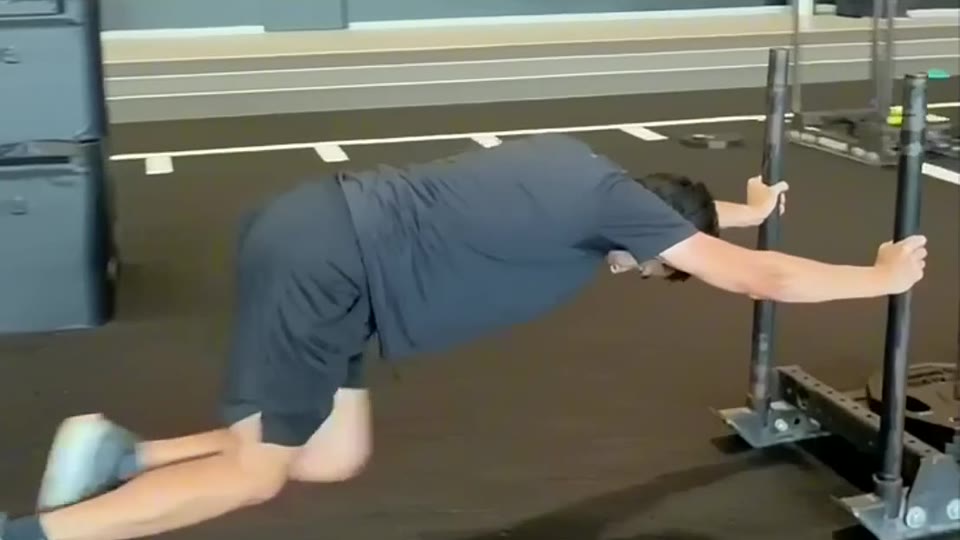

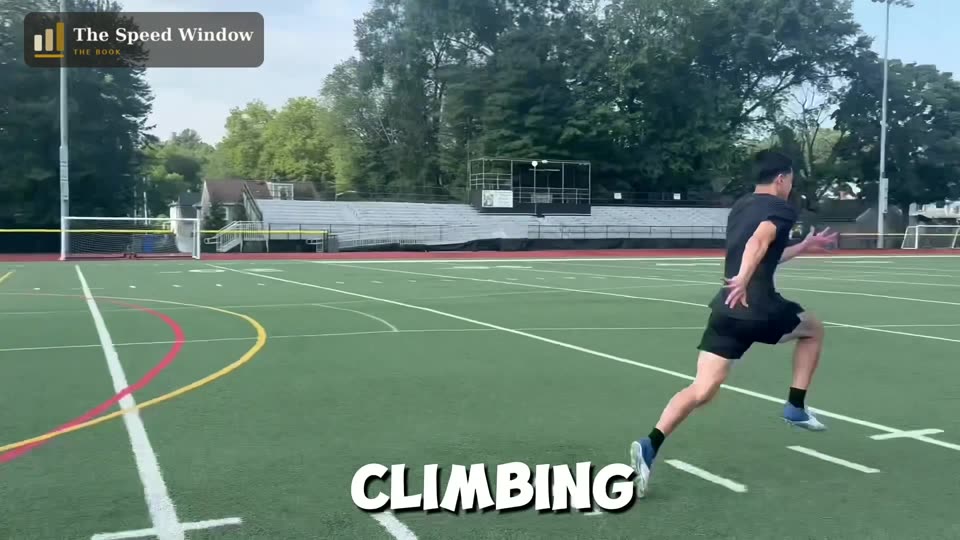
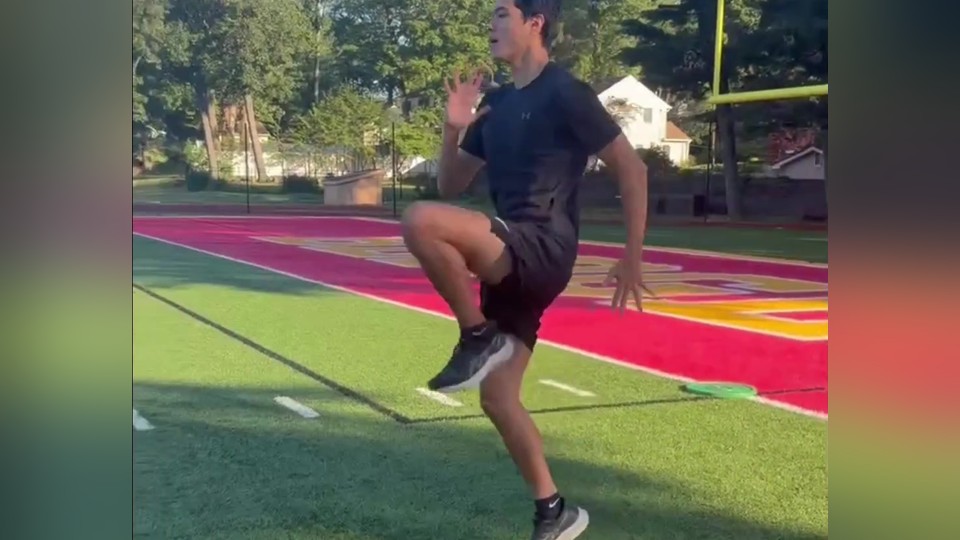
Force Window · Ages 15–18
Power on a proven foundation.
The athlete is physically ready for high-intensity training. Speed-power, strength, and explosive work are built on what the first two windows established.
Explore the Force WindowEvery drill here comes from the book.
The Speed Window maps all three windows: what to train, when, and why.
Get the Book