Purpose
What this drill trains, and why it matters.
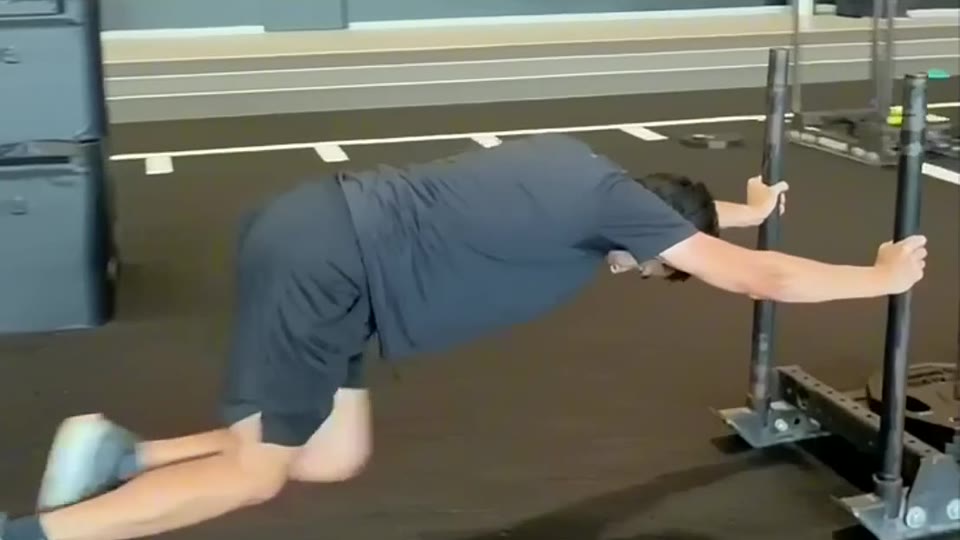
The Resisted Sprint overloads the acceleration phase of sprinting by adding horizontal resistance: requiring the athlete to produce more force than unresisted sprinting demands in order to move at all. The resistance targets the mechanics that decide first-step quickness: shin angle, forward lean, ground contact force, and arm drive.
The science of resisted sprint training is well established: loads that reduce sprint velocity by no more than ten percent of unresisted sprint time produce the greatest transfer to free sprinting. Heavier loads change mechanics. This drill is not about dragging maximum weight. It is about training maximum force production while maintaining sprint mechanics under load.
The resisted sprint is the Force Window's version of the Neural Window's sprint mechanics work. Where the 7-to-12 year-old is learning what sprint mechanics look like, the 15-to-18 year-old is expressing those mechanics against resistance. The prerequisite is clean sprint mechanics in unresisted conditions: an athlete who sprints poorly without resistance will sprint worse with it.
Setup
How to position your athlete before the first rep.
Attach the sled or band: set appropriate resistance
For sled pulls: start with 10 to 15 percent of the athlete's body weight on the sled on turf, less on track. For bands: select a band that provides moderate resistance at 10 yards. Not so heavy that the athlete is pulled backward at the finish line.
Mark the start and 10-yard finish
The sprint is exactly 10 yards. Beyond 10 yards, the athlete should be in maximum velocity mechanics, not acceleration: and the resistance drill is specifically targeting the acceleration phase.
Start in a 2-point stance: slight forward lean
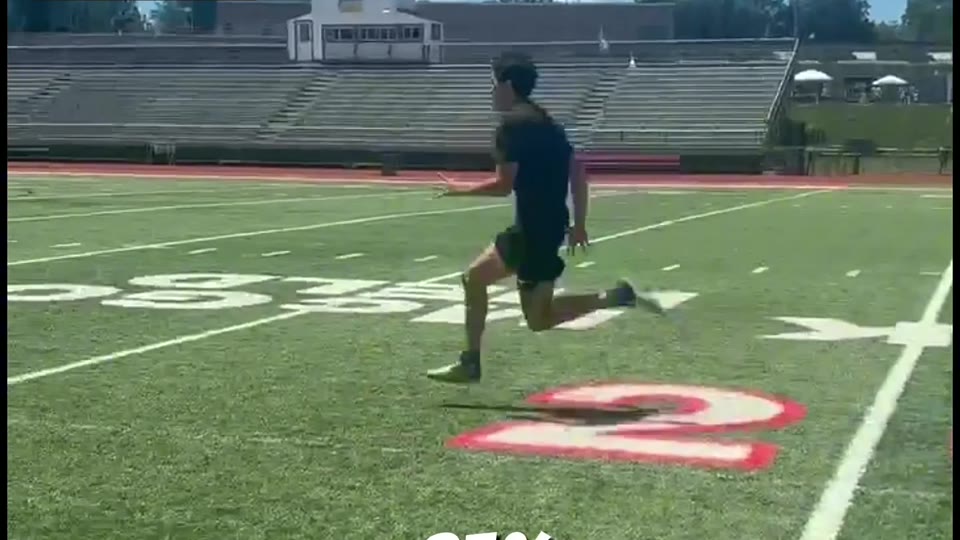
The athlete begins in a two-point stance with an aggressive forward lean: shin angle that mirrors the early acceleration position. Not upright, not falling over, but leaning into the direction of travel.
Execution
The drill, step by step.
Explosive first step: low and forward
The first step is low and forward. Not up and forward. The shin angle is steep. The foot strikes the ground behind the hips. This aggressive lean-and-drive position is exaggerated by the resistance.
Drive the arms hard: opposite to the legs
The arm drive in a resisted sprint is more aggressive than in an unresisted sprint because the resistance demands more force. Drive the arms from the hip to the chin: low to high, driving the rear arm back and the front arm forward.
Maintain forward lean. Do not stand up early
The athlete should remain in the acceleration lean throughout the 10 yards. Standing up tall before the finish line is a deceleration cue in the unresisted sprint: under resistance, premature upright posture is a sure sign of losing power to the sled.
Drive through the finish. Do not slow down before 10 yards
The athlete accelerates through the full 10-yard distance. The sled or band will provide increasing resistance as it stretches or as the athlete approaches top speed. This is the training stimulus. Do not let off before the finish.
Common Errors
What to watch for and how to correct it.
Standing up too early: losing the acceleration angle
The athlete transitions to an upright posture before the 10-yard mark. This converts the drill from an acceleration exercise to a maximum velocity exercise, which defeats the purpose of the resistance. Cue: 'stay low. Drive forward through the finish.'
Resistance is too heavy: mechanics break down
If the athlete cannot maintain sprint mechanics (if the stride becomes choppy, the arms stop driving, or the athlete shuffles) the resistance is too heavy. The drill should look like a slightly modified sprint, not a struggle. Reduce the load.
Short, shuffling steps. No extension
The athlete takes rapid, short steps rather than full-extension drive steps. This happens when the resistance is too high or the athlete has not yet mastered acceleration mechanics. Cue: 'drive each step. Push the ground back.'
Coaching Cue
The one thing to say when you need the rep to change.
"Stay low (drive the arms) push the ground back."
This cue addresses the three acceleration components simultaneously: the body angle (stay low (don't stand up), the arm contribution (drive the arms) adds power and maintains the body angle), and the foot contact (push the ground back, drives horizontal force production). Deliver it at the start line before each rep.Progressions & Regressions
Where this drill fits in the sequence.
Regress to: if the athlete is struggling
- Falling Start + Sprint (Stabilization): unresisted acceleration drill with proper lean mechanics
- Wall Drive (Alternate (Stabilization)) isolates the drive step mechanics without velocity
- A-Skip and March Drills (Neural). Return to mechanics basics if sprint pattern has deteriorated
Progress to: once the pattern is clean
- Resisted Sprint (20 yd) longer acceleration phase with sustained resistance
- Resisted Sprint + Flying 10s. Use the resisted sprint to load the acceleration phase, then run a free flying 10 to feel the contrast
- Partner Resisted Sprint: variable resistance applied by a partner holding a band
Programming Notes
When and how to use this drill in a session.
Program the Resisted Sprint as the primary acceleration development drill in the Force Window speed sessions. Four to six reps with full recovery between each rep: three to four minutes minimum.
The resisted sprint requires fresh legs. Do not program it after heavy squat work or at the end of a high-fatigue session. It belongs at the beginning of the speed training portion, after the warm-up but before any conditioning work.
Test unresisted sprint time over 10 yards periodically to verify the resistance is within the ten percent velocity reduction guideline. If the athlete's unresisted time is 1.8 seconds and their resisted time exceeds 2.0 seconds, the load is too heavy.

Force Window · Ages 15–18
Power on a proven foundation.
The athlete is physically ready for high-intensity training. Speed-power, strength, and explosive work are built on what the first two windows established.
Explore the Force WindowEvery drill here comes from the book.
The Speed Window maps all three windows: what to train, when, and why.
Get the Book