Purpose
What this drill trains, and why it matters.
The Falling Start is the Stabilization Window's primary acceleration mechanics drill because it teaches forward body angle without requiring the athlete to think about it. The athlete leans forward until gravity demands a first step, then drives into the sprint. The body angle at the moment of first contact is the correct acceleration angle. Not approximated, not coached into position, but physically required by the mechanics of the lean.
Most coaching of acceleration in youth athletes focuses on the 'drive out low' instruction, which athletes hear but rarely execute correctly because they have no proprioceptive reference for what the correct lean feels like. The Falling Start gives them that reference by making the correct body angle a prerequisite for the drill rather than a coaching instruction during it.
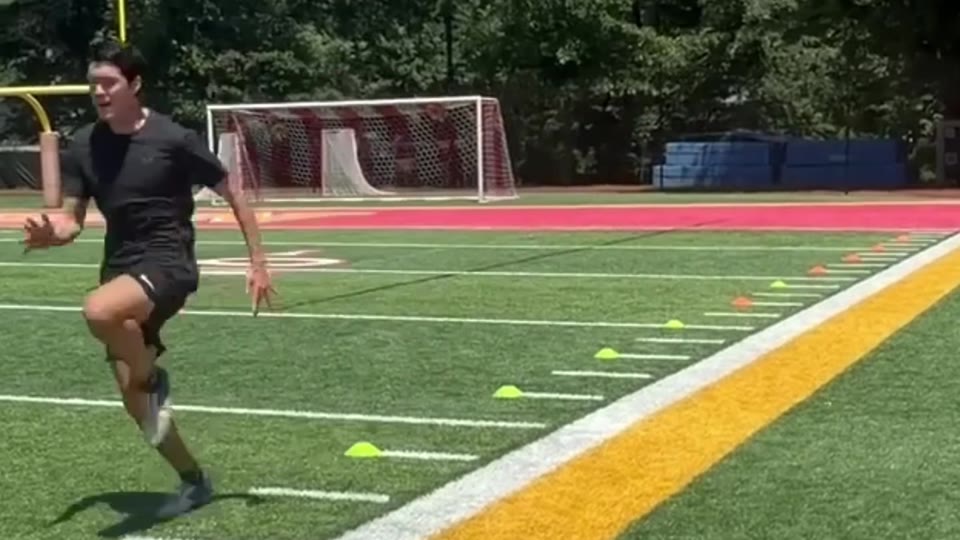
The Falling Start is not a maximal sprint. It is a mechanics drill run at 80 to 85 percent effort where the first 3 to 5 strides are the training stimulus. After the athlete has established the drive phase angle in the first strides, they transition into their natural upright sprint. The drill is complete at 10 to 15 yards.
Setup
How to position your athlete before the first rep.
Start in an upright two-point stance
Feet hip-width, weight on the balls of the feet, arms at the sides. There is no crouched start, no set position, no stagger. The starting position is simply standing.
Mark a 10- to 15-yard cone
The drill is short. The training stimulus is entirely in the first 5 yards: the lean, the first step, and the first three drive-phase strides. Beyond 10 yards the drill has delivered its benefit.
Coach stands to the side at the start position
Position yourself where you can see the athlete's body angle at the moment of first contact and the first three strides. This is the assessment view.
Execution
The drill, step by step.
Lean forward from the ankles. Not the waist
The athlete leans the entire body forward as a rigid unit, from the ankle, until the lean forces a first step. The back should be flat. A waist-bend lean creates a broken-at-the-hip posture that is the opposite of acceleration mechanics.
The first step is forced by the lean. Not chosen
The athlete does not decide when to step. The lean increases until gravity demands a step to prevent falling. This is the point. The lean angle that forces the first step is the correct acceleration angle.
Drive the first three strides low and powerful
The first three strides maintain the forward lean established by the falling-start angle. Each stride drives back and down, not up. The knee lift is lower in the drive phase than in upright sprinting. The athlete is pushing into the ground forward.
Transition to upright sprinting at stride 4 to 5
After three to five drive-phase strides, the athlete gradually rises to the upright sprint position and completes the 10- to 15-yard distance at full sprint mechanics.
Common Errors
What to watch for and how to correct it.
Leaning from the waist: broken-hip posture
The athlete bends forward at the waist rather than leaning as a rigid unit from the ankle. This produces a forward trunk with a vertical lower body: the exact opposite of correct acceleration posture. Cue: 'lean from the ankle, like a falling plank, not a folding chair.' Demonstrate the difference between the two lean types before the first rep.
Too short a lean: stepping before the angle is sufficient
The athlete steps too early, before the lean has reached the correct acceleration angle. The resulting first step is nearly vertical: upright rather than driving. Cue: 'lean until you have to step, don't choose.' The lean should feel slightly uncomfortable before the first step is forced.
First step too short. No drive
The first step is a small, recovery step rather than a drive step. This means the lean was insufficient. Cue: 'big first step. Push into the ground.' The first stride should cover more ground than a walking step.
Standing up too early: losing the drive phase angle
The athlete rises to upright too quickly, abandoning the drive phase posture after only one or two strides. Cue: 'stay low for three strides, then rise.' The first three strides are the drill.
Coaching Cue
The one thing to say when you need the rep to change.
"Lean until you fall, drive three strides, then rise."
This cue describes the complete rep in nine words: the correct lean initiation (lean until you fall), the first-phase maintenance (drive three strides), and the transition point (then rise). Delivering the full cue before each rep gives athletes a three-part mental map of what a correct rep looks and feels like.Progressions & Regressions
Where this drill fits in the sequence.
Regress to: if the athlete is struggling
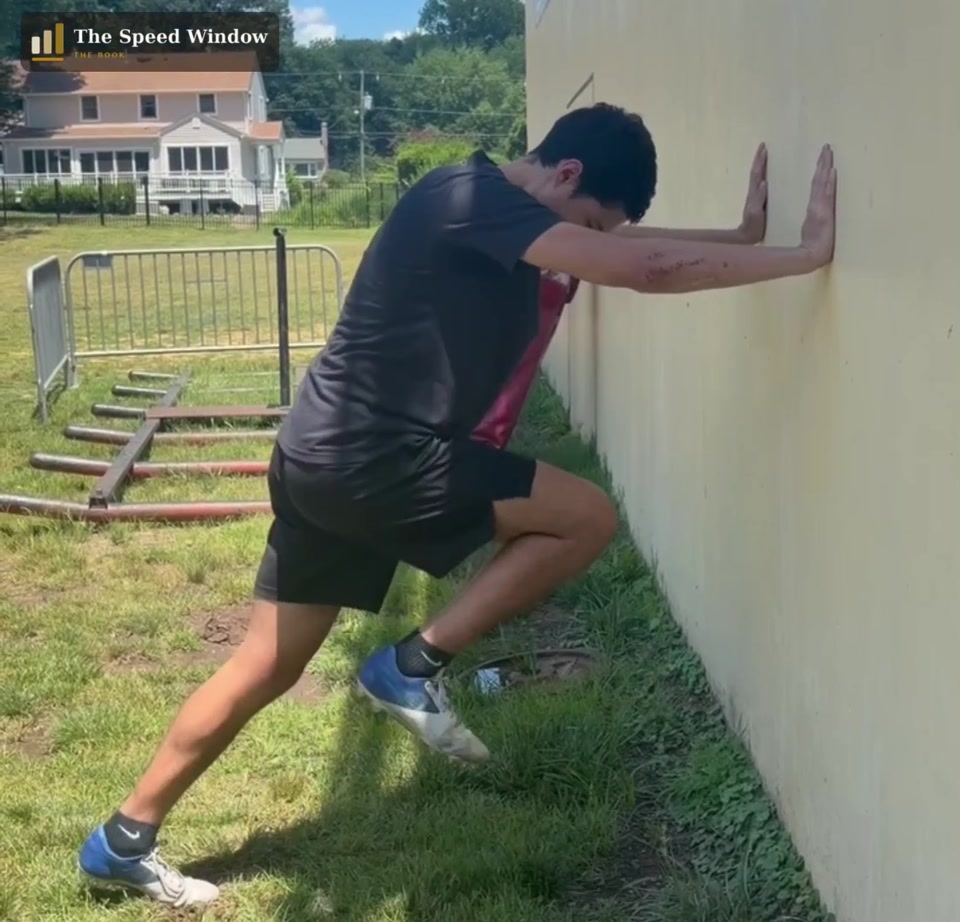
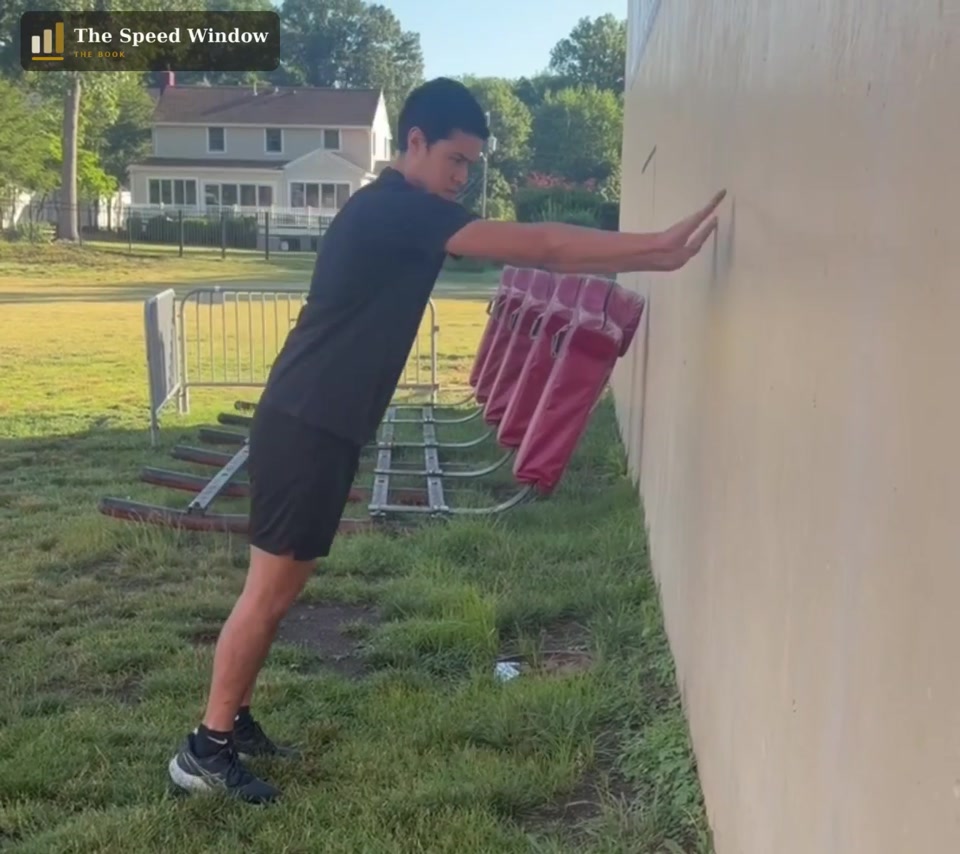
- Wall Drive Series: establishes the acceleration posture and hip drive mechanics before adding the lean initiation
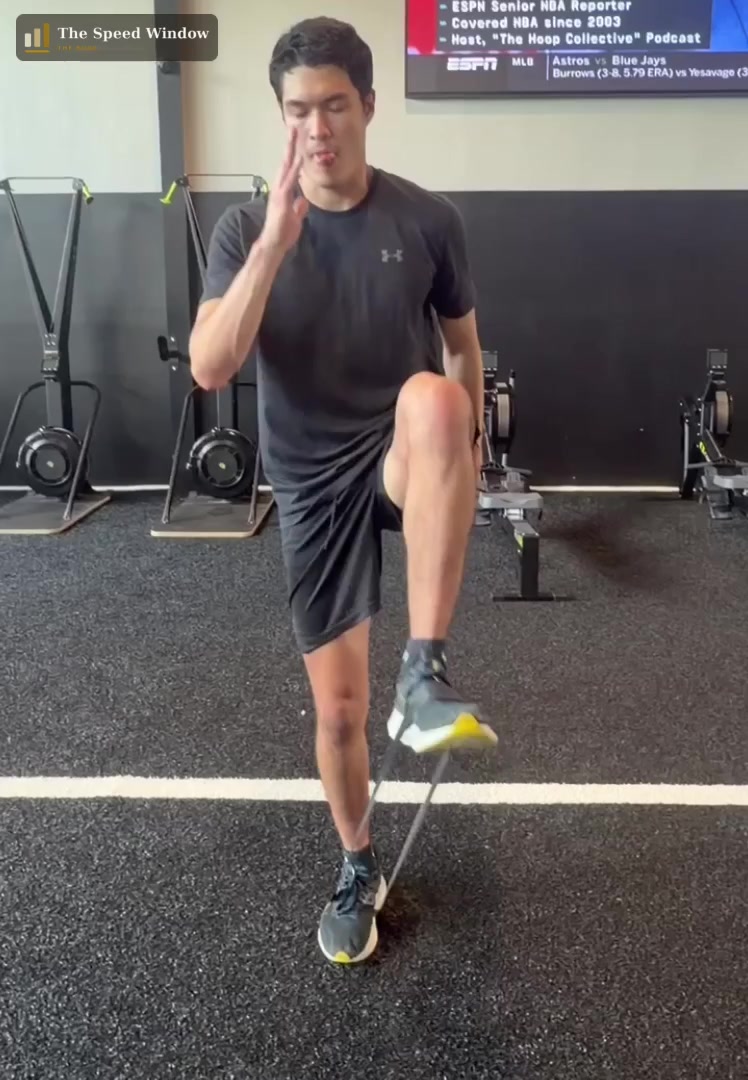
- March Drill: re-establishes sprint posture at slow speed for athletes who have lost mechanics through growth
Progress to: once the pattern is clean
- Falling Start at higher intensity: 90 to 95 percent effort once the lean-and-drive pattern is established
- Falling Start into wicket runs: connect the acceleration phase drill to the top-speed mechanics drill
- Resisted Sprint — 10 yd (Force Window): adds sled resistance to the drive phase mechanics
Programming Notes
When and how to use this drill in a session.
Place Falling Starts in the acceleration prep phase of Stabilization Window sessions: after the warm-up system, before any agility or strength work. 4 to 6 reps with full recovery between each. The drill is brief but neurologically demanding: fatigued reps teach compensated patterns.
Pair Falling Starts with the Wall Drive. Alternate in the same session. The Wall Drive establishes the drive-phase hip mechanics in a static position; the Falling Start takes those mechanics into a dynamic lean-and-sprint pattern.
Run Falling Starts on the same sessions as Wicket Runs. The acceleration mechanics of the Falling Start and the top-speed stride mechanics of the Wicket Runs together cover the full sprint cycle within a single session.
Stabilization Window · Ages 12–15
Re-coordination through growth.
Growth disrupts movement patterns. This window focuses on re-establishing mechanics, building foundational strength, and preparing the body for the demands of force-based training.
Explore the Stabilization WindowEvery drill here comes from the book.
The Speed Window maps all three windows: what to train, when, and why.
Get the Book