Purpose
What this drill trains, and why it matters.
The Resisted March overloads the hip flexion phase of the sprint cycle with a horizontal resistance, making the hip flexors work against a force that simulates the drive demands of acceleration. By adding load to the March Drill pattern from the Neural Window, the drill builds hip flexor strength specifically in the range and direction that sprinting demands: which static hip flexor exercises and conventional strength training do not replicate.
The resistance also reinforces the forward lean. Under light band tension, an athlete who is not leaning forward will feel the band pulling them backward and correcting the lean automatically. The resistance functions as both a training load and a proprioceptive cue: two training benefits from one tool.
The band resistance should be light enough to maintain perfect march mechanics at the same tempo as the unloaded version. If the mechanics are changing under the band, the resistance is too high. The goal is the same march pattern with the same posture, the same knee height, and the same arm action: with the addition of a forward force demand that the hip flexors must overcome on each step.
Setup
How to position your athlete before the first rep.
Loop a mini band around both feet
A light mini band around both feet, under the laces or at the midfoot, is the whole setup. Start with the lightest band available. The band should stay flat against both shoes and stretch as one knee drives up.
The band resists the knee drive directly
Every time one knee rises, the band pulls it back down. That is the drill: the exact muscles that lift the knee at top speed now work against load on every single rep. No anchor point and no partner needed.
March in place, or travel forward slowly
In place is the standard version and keeps band tension consistent. Advancing a few inches per step is fine once control is proven. This is a slow drill by design; distance is not the goal.
Execution
The drill, step by step.
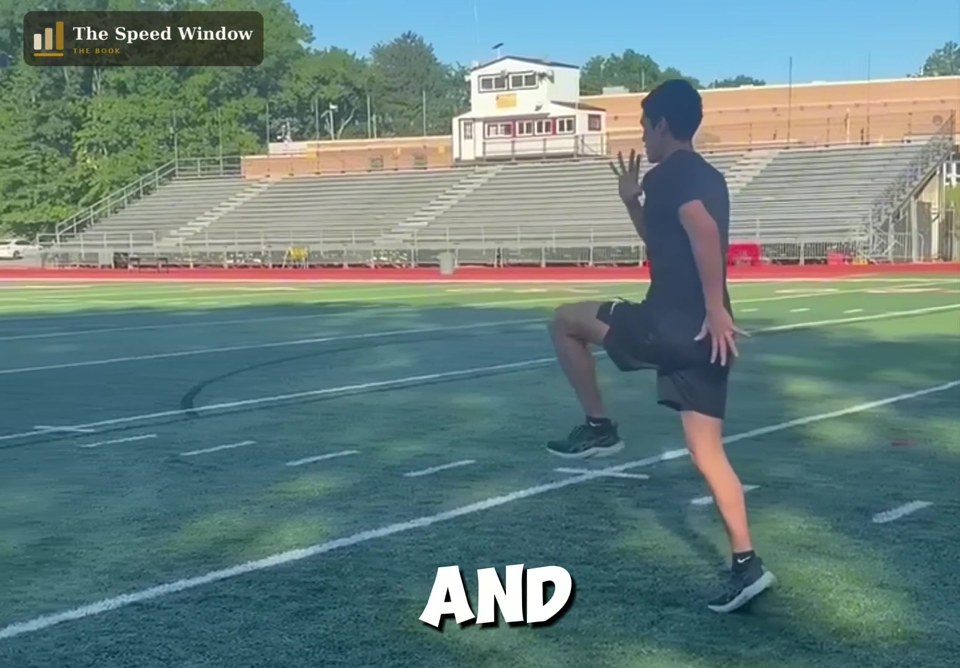
Execute the March Drill pattern: drive the knee, foot under the hip, arm drive
The mechanics are identical to the Neural Window March Drill. Drive the knee to hip height, keep the toes pulled up, step down with the foot under the hip, and drive the arms through the full cheek-to-cheek range.
Stay tall: the band will try to fold you
The natural cheat is leaning back or rounding forward to make the knee lift easier. Hold a tall spine, ribs down, eyes level. If posture cannot hold, the band is too heavy.
Keep every rep slow and identical
Slowing down against the band is expected. Losing mechanics is not. If knee height drops or the ankle stops dorsiflexing, end the set or switch to a lighter band.
Finish the set, then march unresisted
Immediately after the banded set, remove the band and march ten unresisted reps. The heavy-to-light contrast amplifies the carry-over: the knees feel light and fast, and the pattern sticks.
Common Errors
What to watch for and how to correct it.
Mechanics breaking down under resistance
Knee height decreases, posture rounds, or arm action shortens under the band load. This means the resistance is too high for the athlete's current capacity. Reduce band tension and rebuild. Hold the mechanics standard: resisted bad mechanics are worse than no resistance at all.
Leaning back to lift the knee
The athlete tilts the torso backward to help the knee beat the band. That trains the wrong pattern. Cue: 'tall spine, ribs down.' If the lean-back persists, use a lighter band.
Arm action shortening: arms stop swinging fully
The concentration on the hip drive against resistance causes the arms to shorten their range. Cue: 'arms full range, chin to pocket.' The arm drive range should be identical to the unresisted march.
Coaching Cue
The one thing to say when you need the rep to change.
"Same march, lean in, arms full range."
'Same march' tells the athlete the mechanics standard does not change with resistance. 'Lean in' instructs the correct response to the backward pull. 'Arms full range' prevents the arm-shortening compensation that resistance commonly produces. Three cues for three common resistance-induced errors.Progressions & Regressions
Where this drill fits in the sequence.
Regress to: if the athlete is struggling
- March Drill (Neural Window): unresisted version to re-establish mechanics before adding resistance
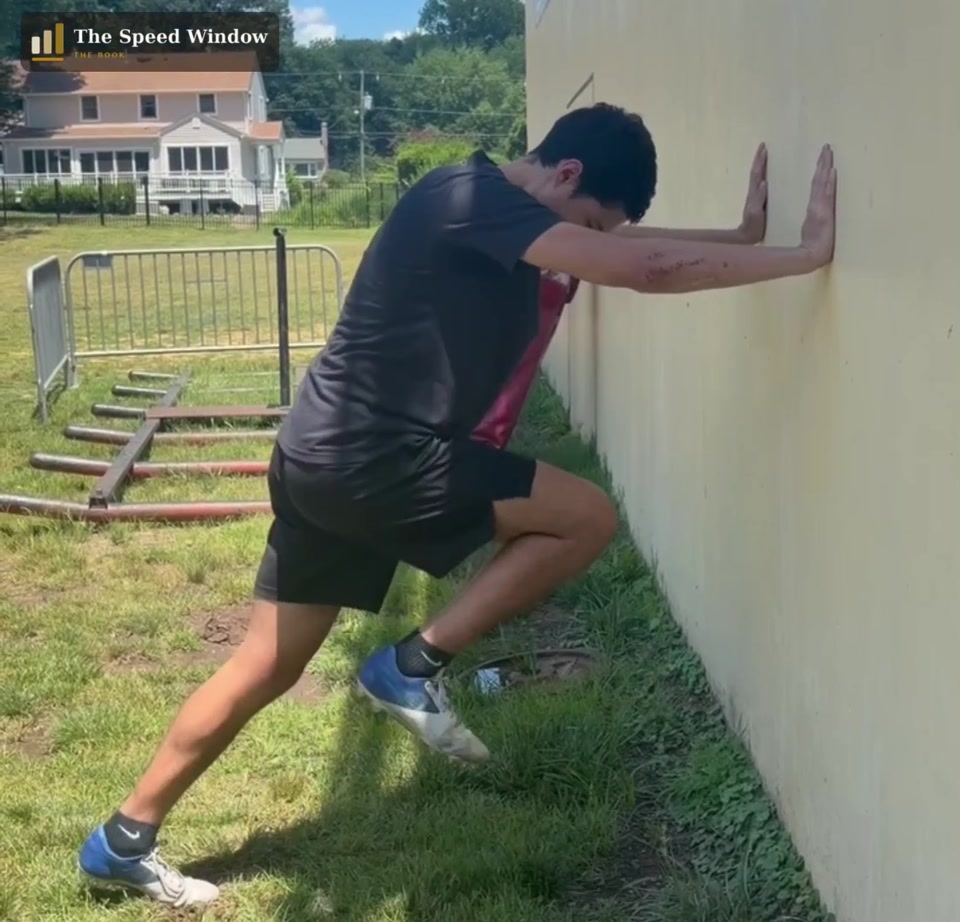
- Wall Drive (Alternate) static hip drive against the wall before adding locomotion
Progress to: once the pattern is clean
- Resisted Sprint — 10 yd (Force Window): full-speed sprint against resistance after the march mechanics are established
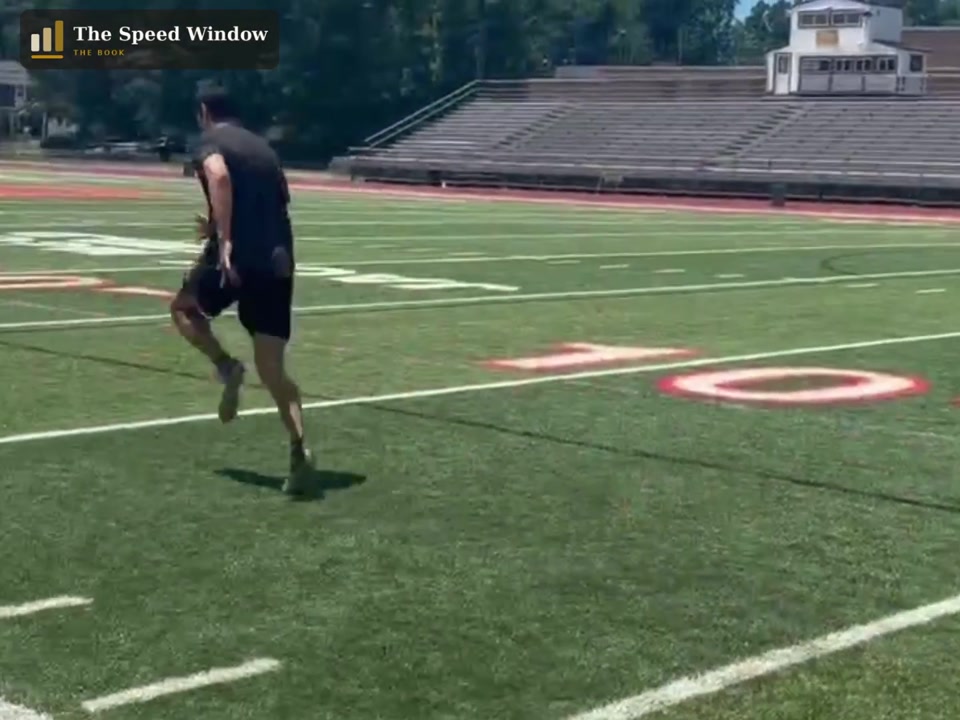
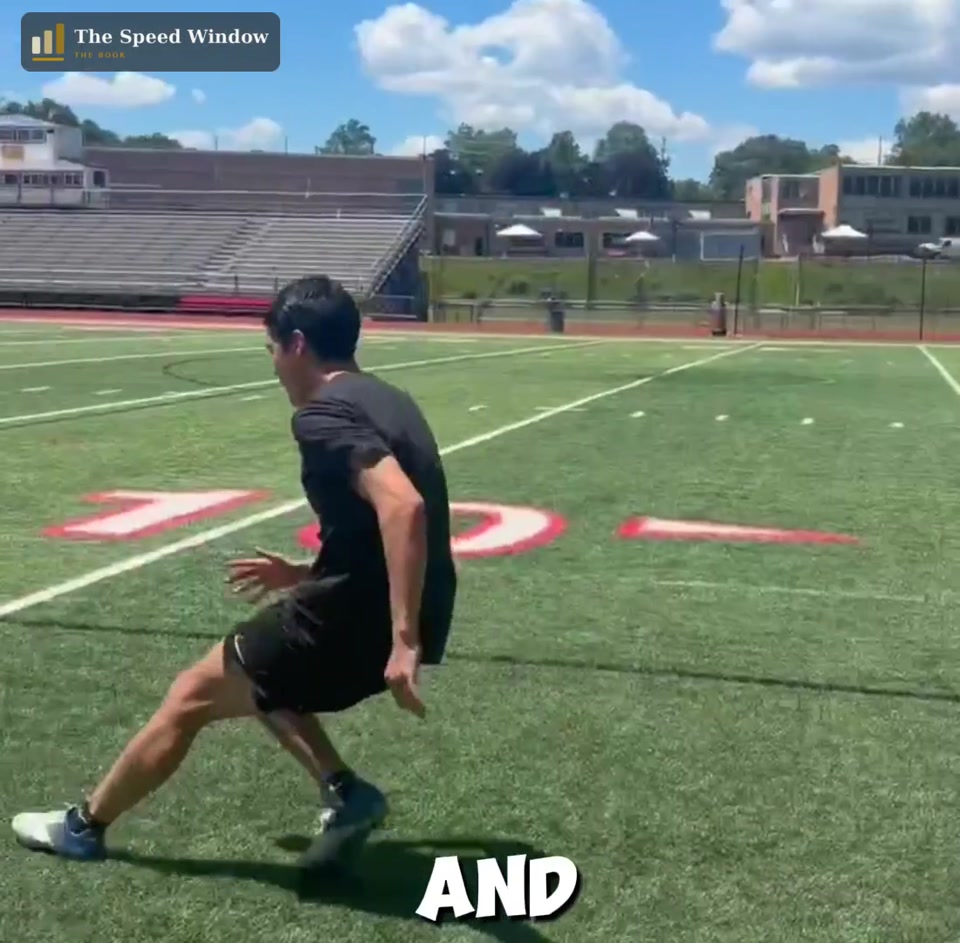
- Resisted Falling Start. Add band resistance to the Falling Start lean-to-sprint pattern
Programming Notes
When and how to use this drill in a session.
Program the Resisted March immediately after the Wall Drive. Alternate in sprint mechanics sessions. The sequence: Wall Drive (mechanics at zero velocity), Resisted March (mechanics with hip flexor load), Falling Start (mechanics into free sprint). This three-drill acceleration mechanics block covers the full spectrum of acceleration training for the Stabilization Window.
3 to 4 resisted passes of 15 to 20 yards, each followed immediately by an unresisted pass at the same distance. The contrast is as important as the resisted drill itself.
Adjust band resistance across the training block. Start with lighter resistance and increase over 4 to 6 weeks as the hip flexor strength and mechanics stability improve. The end-of-block resistance should feel moderate, not maximal.
Stabilization Window · Ages 12–15
Re-coordination through growth.
Growth disrupts movement patterns. This window focuses on re-establishing mechanics, building foundational strength, and preparing the body for the demands of force-based training.
Explore the Stabilization WindowEvery drill here comes from the book.
The Speed Window maps all three windows: what to train, when, and why.
Get the Book