Purpose
What this drill trains, and why it matters.
The Wall Drive. Alternate is the Stabilization Window's refinement of the Wall Drive Series first introduced in the Neural Window. The original Wall Drive Series established the acceleration posture and basic hip drive at slow, deliberate speeds. The alternating version increases the tempo and coordination demand, reconnecting the sprint mechanic to the faster neural patterning that growth disrupts.
During rapid growth, the Wall Drive Series from the Neural Window may need to be revisited at slower speeds before the alternating version is introduced. Coaches should assess where the athlete is before assuming the Stabilization Window version is the right entry point. If the basic posture has degraded, start with the Neural Window drill and rebuild before adding the alternating tempo.
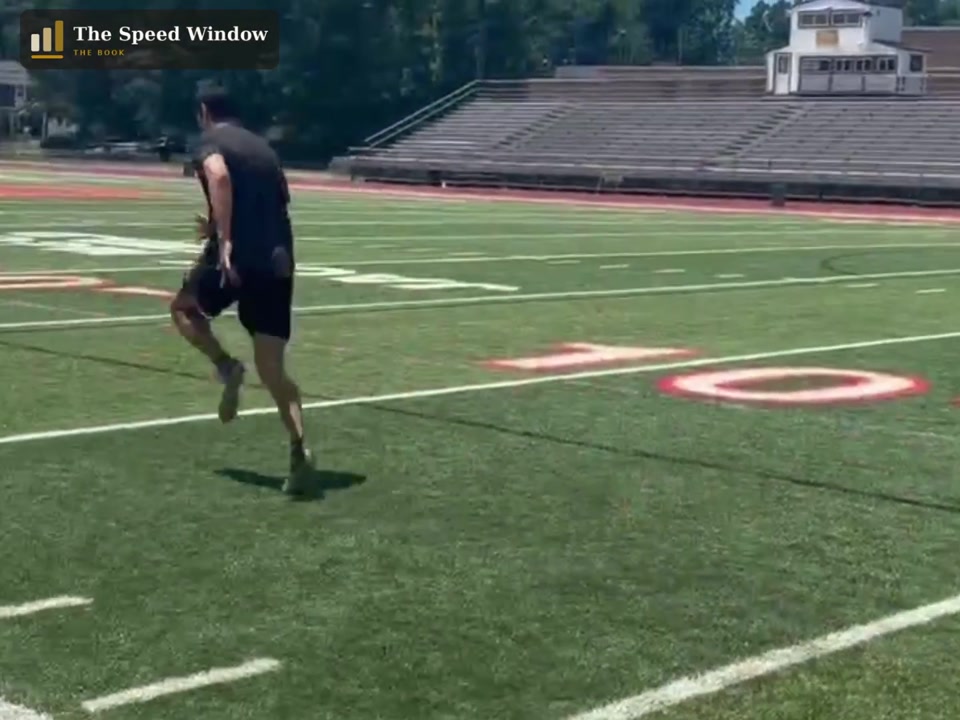
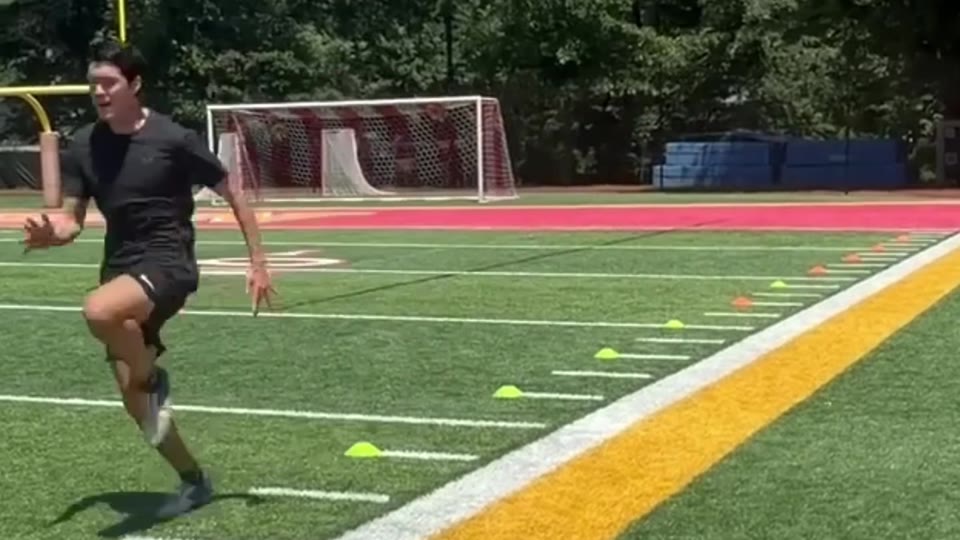
The alternating drive wall drill directly trains the hip drive mechanics that the Falling Start demands in a dynamic, gravitational context. Use these two drills together in the same session: wall drive to establish the posture and hip drive at zero velocity, Falling Start to transfer those mechanics into a sprinting context.
Setup
How to position your athlete before the first rep.
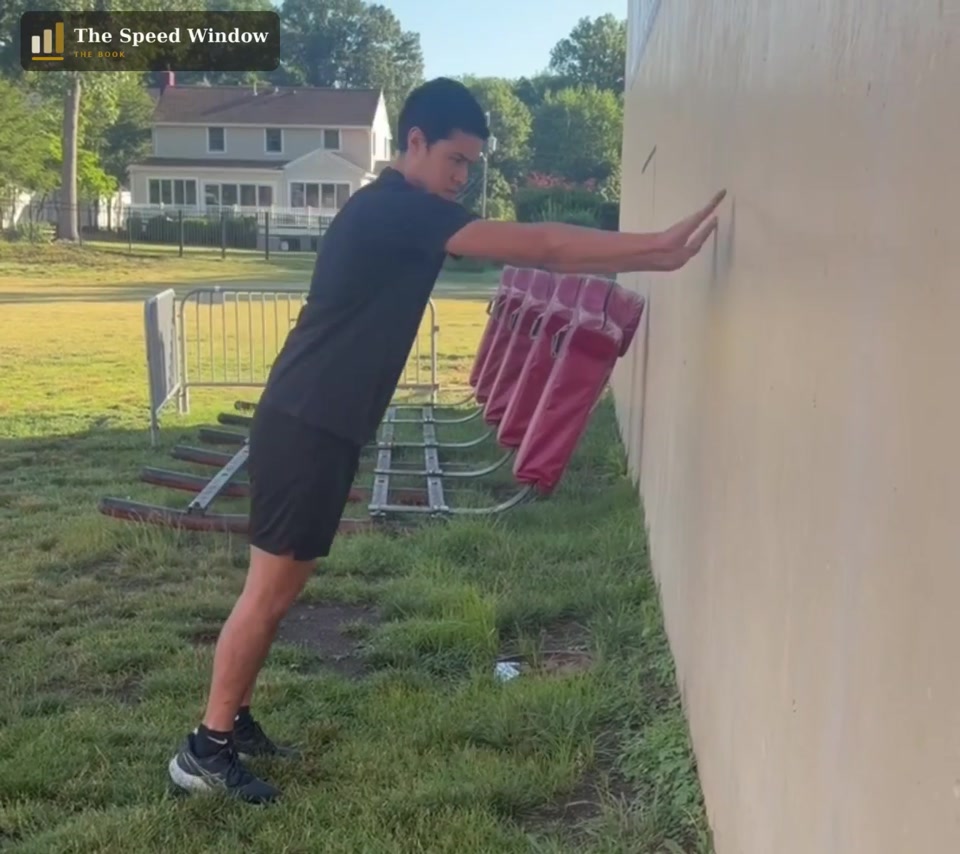
Hands flat on the wall at shoulder height and width
Arms fully extended, body at approximately 45 degrees to the wall. The line from hands through shoulders through hips through the foot on the ground should be straight: the acceleration posture. No bend at the waist.
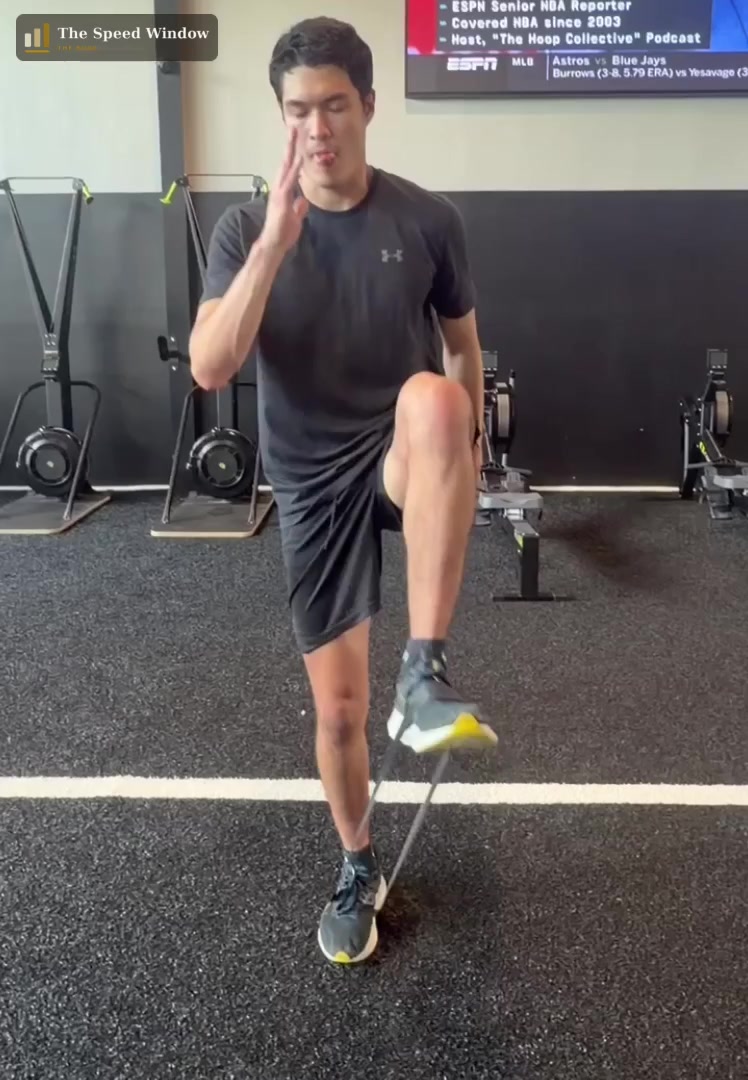
Start with one knee driven to hip height
Begin from the high-knee position rather than from the floor. This primes the hip flexion pattern immediately and establishes the drive position before the alternating motion begins.
Coach checks the body angle before the set begins
The 45-degree wall angle is important. Too upright (beyond 45 degrees) and the athlete is not loading the hip drive correctly. Too horizontal (below 45 degrees) and the wrist load increases uncomfortably. Adjust the foot distance from the wall.
Execution
The drill, step by step.
Alternate legs at a controlled tempo. Not a march, not a sprint
One leg drives down to the floor as the other drives up to hip height. The alternating motion is smooth and rhythmic. The tempo is moderate: faster than the Neural Window Wall Drive Series, slower than a sprint.
Each drive leg pushes actively down and back. Not just drops
The descending leg is not passive. It actively drives down and back, making contact on the ball of the foot directly under the hip. This is the paw-back mechanics from the B-Skip applied in a wall drive context.
The driving knee reaches hip height on every rep
The ascending leg drives the knee to hip height. Not lower. A knee that only reaches waist height indicates hip flexor tightness or insufficient drive. Cue: 'hip height, every rep.'
Arms mirror the legs: 90-degree elbow angle, shoulder-height drive
The arms drive forward and back in opposition to the legs. Arm action at the wall teaches the arm pattern that transfers directly to the sprint. Elbows stay at 90 degrees throughout.
Maintain the body angle throughout the full set
The most common drift in the Wall Drive. Alternate is the body angle rising toward vertical as the set progresses. Cue: 'stay at 45, if anything, more forward.' The angle should be maintained or increased, never allowed to drift upright.
Common Errors
What to watch for and how to correct it.
Body rising toward vertical during the set
The most common error. The athlete drifts upright as the set continues. Cue: 'lean into the wall. Drive back to 45.' The wall is the reference point. If the hands are barely touching the wall, the angle is wrong.
Knee not reaching hip height
The ascending knee only reaches waist height rather than hip height. Cue: 'higher, hip height, not waist.' Check for hip flexor tightness that may require targeted mobility work before the movement demand can be met.
Passive descending leg: just dropping the foot
The foot drops to the floor without active ground contact. The descending leg must actively drive down and back: the paw-back pattern. Cue: 'drive it down, claw it back.'
Arms freezing or losing 90-degree angle
The arm action breaks down: elbows flare or arms stop moving. The arm pattern is as important as the leg pattern in this drill. Cue: 'arms keep going, opposite arm, opposite leg.'
Coaching Cue
The one thing to say when you need the rep to change.
"Stay at 45, hip height, drive it down."
'Stay at 45' addresses the most common drift in the drill. 'Hip height' maintains the standard on the ascending knee. 'Drive it down' activates the descending leg's active paw-back. These three cues cover the three most impactful mechanics points of the alternating wall drive in sequence.Progressions & Regressions
Where this drill fits in the sequence.
Regress to: if the athlete is struggling
- Wall Drive Series: single-leg version at slower tempo for athletes who have lost mechanics through growth
- March Drill: re-establish the hip flexion standard before adding the alternating tempo
Progress to: once the pattern is clean
- Wall Drive. Alternate at increased tempo
- Falling Start: takes the wall drive mechanics into a dynamic lean-and-sprint context
- Resisted March: adds band resistance to the alternating drive pattern
Programming Notes
When and how to use this drill in a session.
Pair with the Falling Start in every Stabilization Window sprint mechanics session. Wall Drive. Alternate first (establish mechanics at the wall), Falling Start second (transfer mechanics into sprinting). This two-drill sequence covers the acceleration phase thoroughly in under 15 minutes.
3 sets of 10 alternating reps (5 each leg) per set. Controlled tempo. Not rushed. Rest 60 seconds between sets. If the body angle is drifting in the third set, reduce reps per set rather than accepting the compromised mechanics.
Revisit the Neural Window Wall Drive Series as a warm-up drill for the first 2 to 3 weeks of the Stabilization Window before advancing to the alternating version. Athletes who have been away from structured training over a summer break will need the lower-tempo drill to reestablish the posture before adding the alternating tempo.
Stabilization Window · Ages 12–15
Re-coordination through growth.
Growth disrupts movement patterns. This window focuses on re-establishing mechanics, building foundational strength, and preparing the body for the demands of force-based training.
Explore the Stabilization WindowEvery drill here comes from the book.
The Speed Window maps all three windows: what to train, when, and why.
Get the Book