Purpose
What this drill trains, and why it matters.
Wicket Runs are the Stabilization Window's primary sprint mechanics re-coordination drill. During rapid skeletal growth, stride length, ground contact time, and rear-foot clearance all shift as limb proportions change. An athlete who sprinted with excellent mechanics at 11 will often sprint with compromised mechanics at 13, not because they got worse, but because their body got bigger faster than their motor patterns adapted.
Wicket spacing creates a physical constraint that re-educates the stride cycle without requiring the athlete to consciously think about it. When the wickets are set at the correct spacing for the athlete's current stride length, the body must clear the wickets by lifting the rear foot at the correct timing. Athletes who do not lift the rear foot correctly will hit the wicket: instant mechanical feedback without a single verbal cue.
The coaching priority in Wicket Runs is spacing accuracy. Wickets set too close together shorten stride artificially. Wickets set too far apart force over-striding. Take the time to find the athlete's natural stride spacing before the drill begins. The drill is only as good as its setup.
Setup
How to position your athlete before the first rep.
Find the athlete's natural stride length before setting wickets
Have the athlete run through at 80 percent effort without wickets and mark where their feet land. Measure the average stride length across 5 to 6 strides. This is your starting wicket spacing. A typical spacing for this age group is 4 to 5.5 feet, but individual variation is significant.
Set 6 to 8 wickets at the measured spacing
Place the wickets in a straight line at the measured spacing. Wicket height should be 6 to 10 inches: high enough to require active rear-foot clearance, low enough not to disrupt the natural stride height.
Approach wickets with a rolling start from 10 yards back
Athletes should build into the wicket zone rather than starting from a stand inside the first wicket. A rolling entry at approximately 70 to 75 percent speed gives the stride cycle time to establish before the constraint begins.
Execution
The drill, step by step.
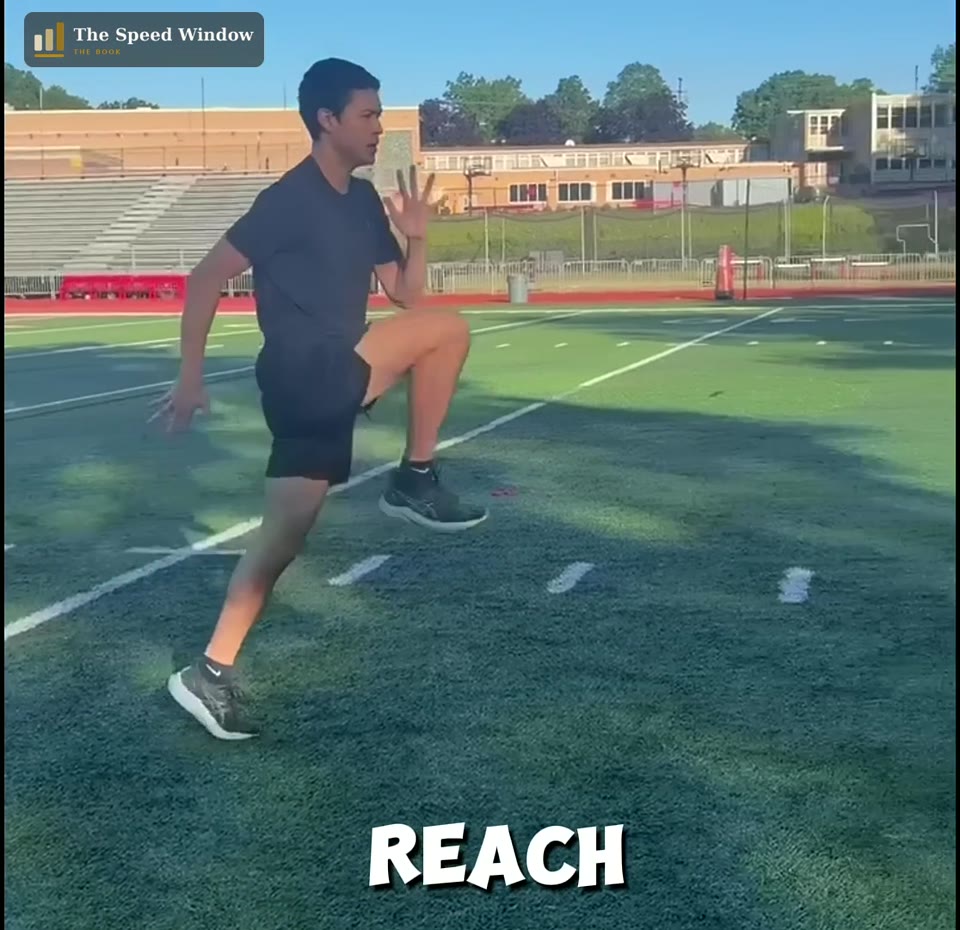
Maintain sprint posture entering the wickets
Upright torso, arms driving at the correct 90-degree angle, eyes forward. The wickets do not change the sprint posture requirements. They add the stride constraint on top of an already-established mechanical base.
Clear each wicket with active rear-foot lift
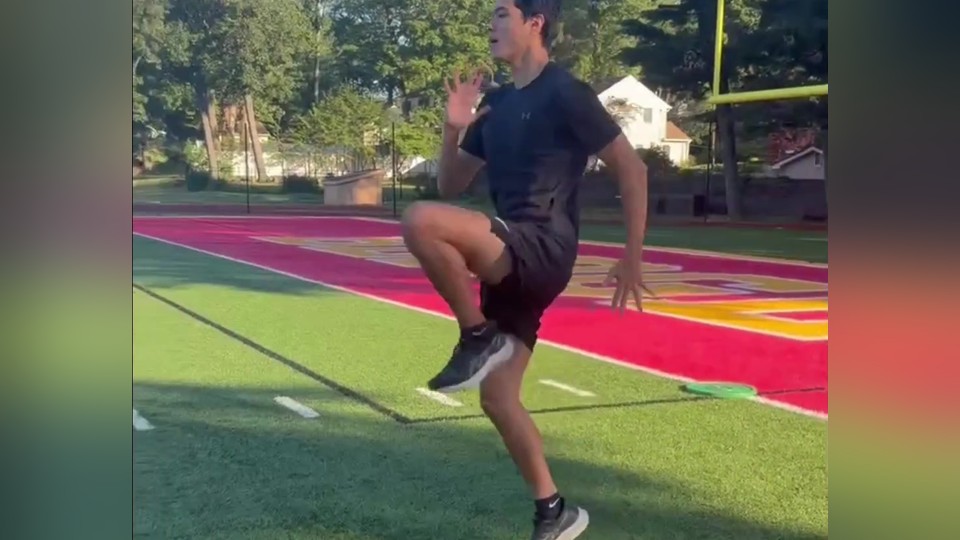
The heel must clear the wicket. This requires the hamstring to actively pull the rear foot up rather than allowing it to drag. Athletes who hit wickets with the heel are demonstrating the exact mechanical problem the drill is designed to correct.
Quick ground contacts: ball of the foot
Ground contact is on the ball of the foot, directly under the hip. The wicket spacing constrains the stride cycle so that over-striding (landing in front of the hip) is mechanically penalized. The athlete must contact within the wicket space.
Maintain arm cadence through the full pass
The arm drive sets the leg cadence. If the feet are losing rhythm through the wickets, coach the arms first. The arm-leg cross-pattern must remain consistent from the first wicket to the last.
Accelerate out of the last wicket
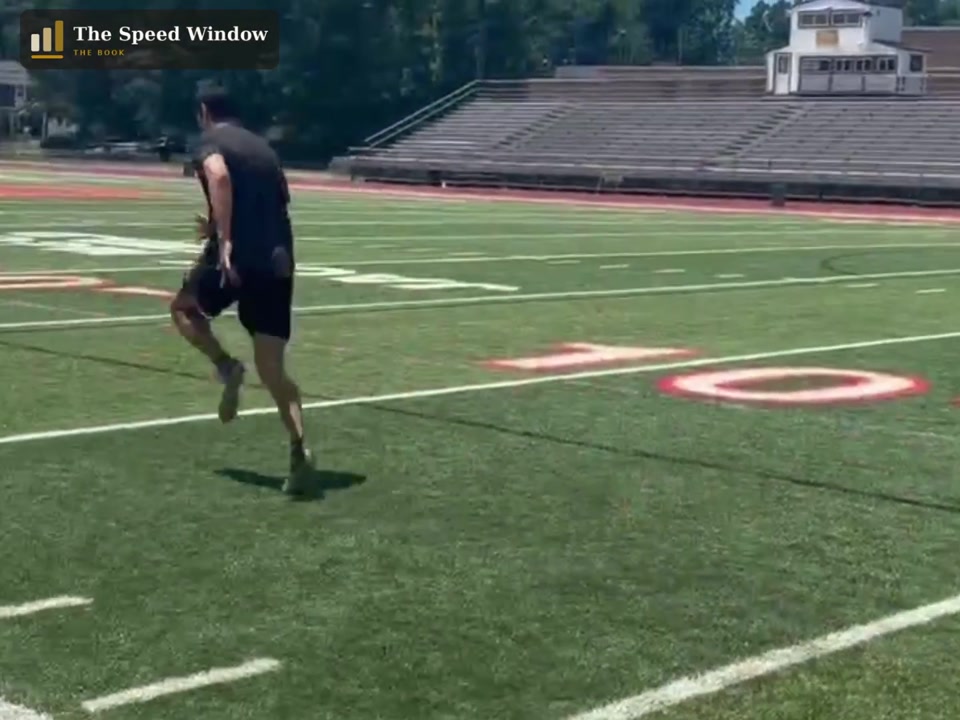
After clearing the final wicket, the athlete accelerates through a 5- to 10-yard continuation sprint. This bridges the constrained wicket mechanics into free sprint mechanics, reinforcing that the patterns are the same.
Common Errors
What to watch for and how to correct it.
Hitting wickets with the heel
The rear foot is not clearing the wicket: hamstring pull-through is insufficient. This is the primary error the drill is designed to reveal and correct. Cue: 'pull the heel up, clear it clean.' Reduce wicket height if the error persists across multiple passes, then gradually raise it as the hamstring pull-through improves.
Shortening the stride into the wickets: chopping steps
The athlete breaks into a quick, short-step pattern approaching the wickets rather than maintaining their natural stride. This usually means the wickets are slightly too close together. Widen the spacing by 3 to 4 inches and re-run.
Over-striding to clear the wickets
The athlete reaches the foot too far forward to clear the wicket, landing in front of the hip. This is the opposite error and indicates the wickets are set too far apart. Tighten the spacing.
Arm action stopping at the wickets
The athlete's focus shifts entirely to the foot clearance, and the arm drive freezes. Cue: 'arms keep going, don't watch your feet.' The arm drive is what keeps the stride cycle cadence consistent through the wicket run.
Coaching Cue
The one thing to say when you need the rep to change.
"Pull the heel up, arms keep going, run through."
This three-part cue addresses the rear-foot clearance (pull the heel up), the arm-action freeze (arms keep going), and the tendency to decelerate at the last wicket (run through). Deliver it as the athlete is entering the wicket zone, not after an error.Progressions & Regressions
Where this drill fits in the sequence.
Regress to: if the athlete is struggling
- A-Skip: reinforce hip flexion mechanics before adding the stride constraint of wickets
- B-Skip: re-establish the paw and pull-through pattern before running through wickets
- March Drill: slow-tempo hip flexion drill for athletes whose stride mechanics have degraded significantly
Progress to: once the pattern is clean
- Wicket Runs at increased speed: 85 to 90 percent effort once the clearance pattern is established
- Wicket Runs with resistance band. Add light resistance to overload the hip flexion phase
- Flying 10s (Force Window): wicket-refined mechanics applied to maximum velocity sprinting
Programming Notes
When and how to use this drill in a session.
Place Wicket Runs in the acceleration prep phase of Stabilization Window sessions: after the warm-up system and before any agility or strength work. They are a mechanics drill, not a conditioning drill. Full recovery between passes is required. Athletes taking wicket runs on tired legs develop fatigue-compensation patterns, which is the opposite of the goal.
4 to 6 passes of 30 to 40 yards per session. Re-measure stride spacing at the beginning of every training block. It will change as the athlete grows. Wickets set for a 13-year-old in September may need to be widened by November.
Wicket Runs are the Stabilization Window's answer to the coach's most common complaint about this age group: 'their mechanics have gotten worse since last year.' They have not gotten worse: their body has changed faster than their motor map. Wickets reset the map.
Stabilization Window · Ages 12–15
Re-coordination through growth.
Growth disrupts movement patterns. This window focuses on re-establishing mechanics, building foundational strength, and preparing the body for the demands of force-based training.
Explore the Stabilization WindowEvery drill here comes from the book.
The Speed Window maps all three windows: what to train, when, and why.
Get the Book