Purpose
What this drill trains, and why it matters.
The Goblet Squat is the first loaded squat variation in the entire Speed Window framework, and it is introduced only in the Stabilization Window: after the bodyweight squat pattern has been established. The anterior load (holding a weight at the chest) serves three functions simultaneously: it counterbalances the hips-back movement, it reinforces upright torso posture, and it loads the squat pattern without placing any compressive force on the developing spine.
This is deliberately not a heavy strength exercise. The Goblet Squat in the Stabilization Window is a loaded movement pattern drill. The weight is light enough that the athlete cannot compensate. The pattern must be correct or the weight comes forward. This self-correcting property makes it one of the best teaching tools for squat mechanics at this age.
Athletes entering the Stabilization Window with an already-clean bodyweight squat will find the Goblet Squat immediately accessible. Athletes who skipped the Neural Window bodyweight work will struggle. The Goblet Squat reveals exactly where the squat pattern still has gaps.
Setup
How to position your athlete before the first rep.
Select a light kettlebell or dumbbell
Start with a weight the athlete can hold comfortably at chest height for 10 reps without any compromise to posture. For most Stabilization Window athletes, this is 10 to 20 lbs.
Hold the weight at the chest: goblet position
Both hands cup the top of the kettlebell bell or hold one end of a dumbbell vertically. Elbows point down, weight against the chest, not held out away from the body.
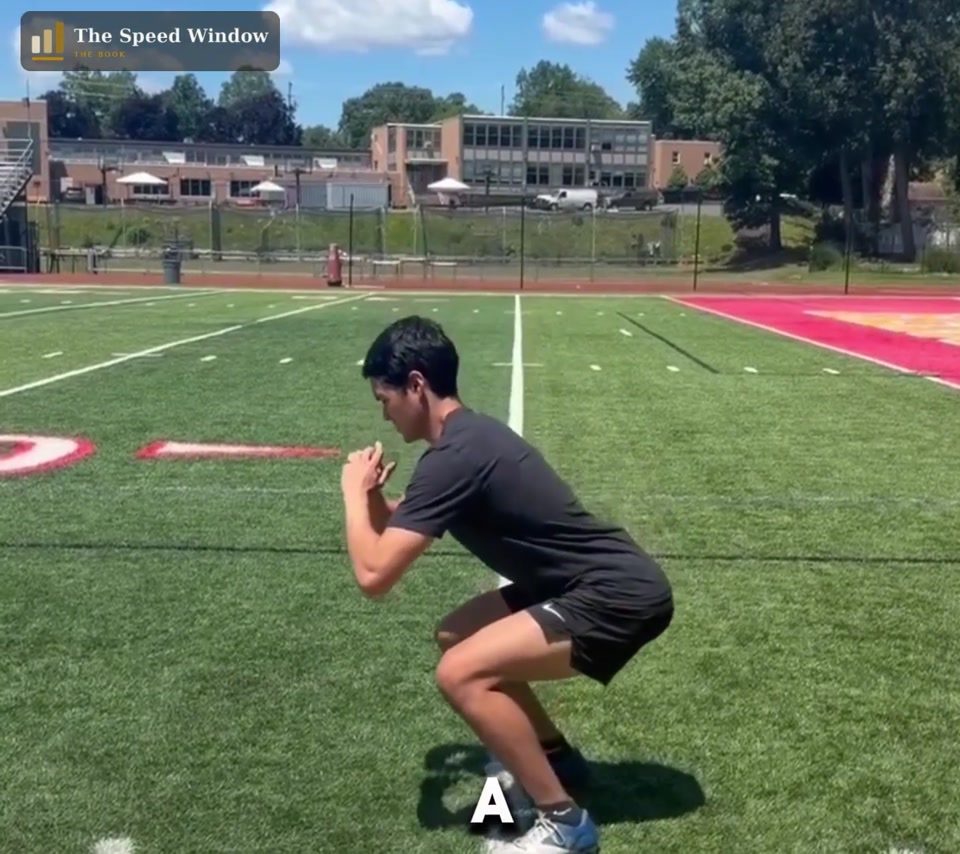
Feet shoulder-width, toes slightly out: same as bodyweight squat
The setup is identical to the bodyweight squat. The anterior load should improve the pattern, not introduce new positional compromises.
Execution
The drill, step by step.
Brace the core before descending
Before the first rep, the athlete takes a breath and braces the core: creating intra-abdominal pressure that stabilizes the spine. This is the beginning of proper loading mechanics.
Descend with elbows tracking inside the knees
As the athlete squats down, the elbows track on the inside of the knees. This reinforces knee tracking outward and prevents valgus collapse without the coach needing to cue it.
Full depth: pause at the bottom
The athlete descends to full depth (or parallel minimum) and pauses for a one-second hold before ascending. The pause eliminates momentum and forces the bottom position to be held actively.
Drive through the full foot, maintain the chest position
The ascent mirrors the descent. The weight stays against the chest as the athlete stands. If the weight tips forward on the way up, the athlete is losing core tension.
Common Errors
What to watch for and how to correct it.
Weight drifting away from the chest on the descent
The athlete extends the arms as they descend, moving the weight away from the body. This shifts the center of mass forward and loads the lower back. Cue: 'keep the weight against your chest all the way down.'
Heels rising: same as bodyweight squat
If ankle mobility was not addressed in the Neural Window, it will appear here under load. Do not increase weight until ankle mobility allows full-depth squatting with flat heels.
Valgus collapse: knees caving under load
The added weight exposes knee stability weakness that may not have appeared in bodyweight squatting. Reduce the weight immediately. The Goblet Squat's self-correcting property only works if the weight is light enough to be controlled.
No pause at the bottom: bouncing out of the hole
Athletes use the elastic rebound at the bottom of the squat to avoid developing strength in the weakest range. The one-second pause eliminates this. Count aloud to enforce it.
Coaching Cue
The one thing to say when you need the rep to change.
"Chest up, elbows in, pause at the bottom."
'Chest up' maintains the upright torso. 'Elbows in' enforces knee tracking without a direct knee cue. 'Pause at the bottom' eliminates momentum and forces active bottom-position control. Use this as a pre-rep sequence, not reactive correction.Progressions & Regressions
Where this drill fits in the sequence.
Regress to: if the athlete is struggling
- Bodyweight Squat. Return to unloaded pattern if any errors appear under load
- Box Goblet Squat: squat to a box at parallel height with the goblet position to build confidence at the target depth
Progress to: once the pattern is clean
- Goblet Squat with increased load. Add 5 lbs when 3 × 10 is clean and the pause is consistent
- Pause Goblet Squat: extend the bottom pause to 3 seconds
- Goblet Squat into Stabilization Window barbell progressions (Back Squat introduced in Force Window)
Programming Notes
When and how to use this drill in a session.
The Goblet Squat is programmed 2 to 3 times per week as the primary lower-body strength movement in the Stabilization Window. Three sets of 8 to 10 reps is the foundation. Progress the load slowly. The emphasis is pattern quality, not maximum weight.
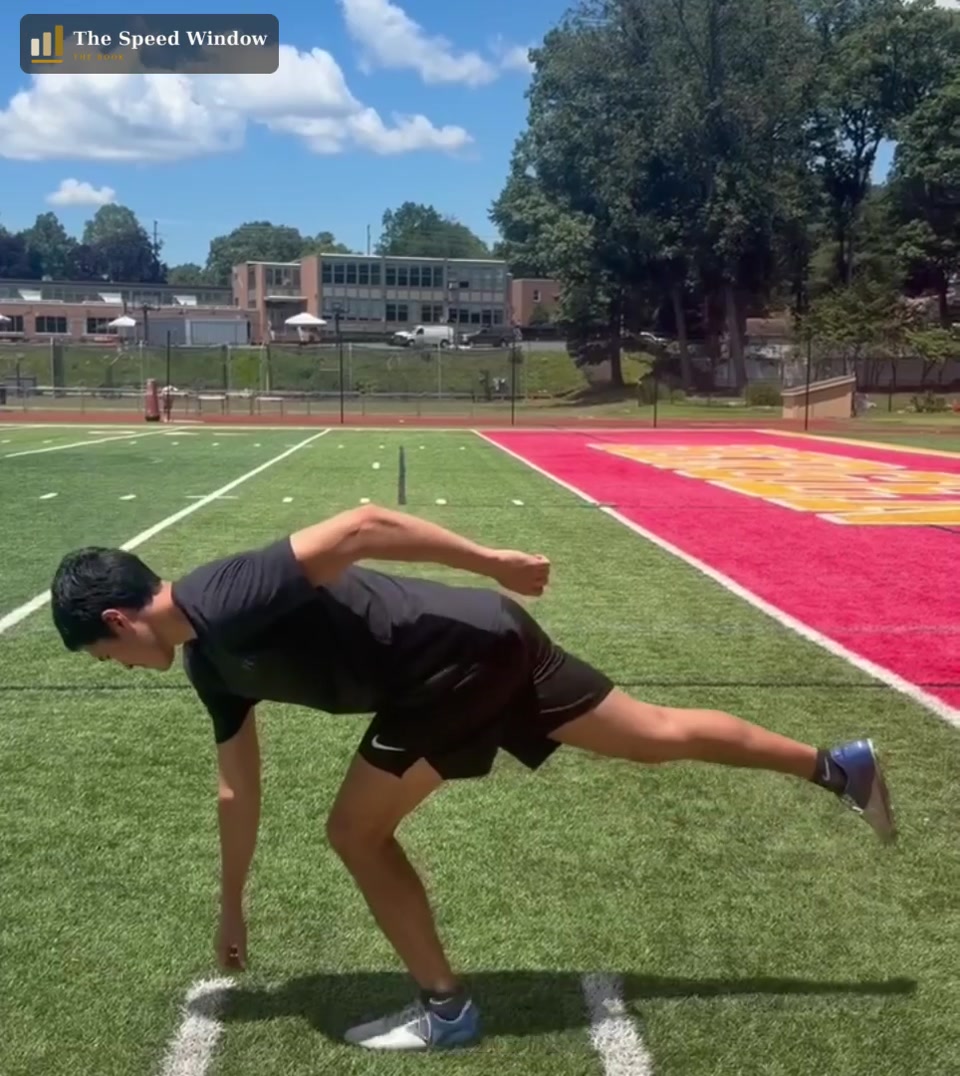
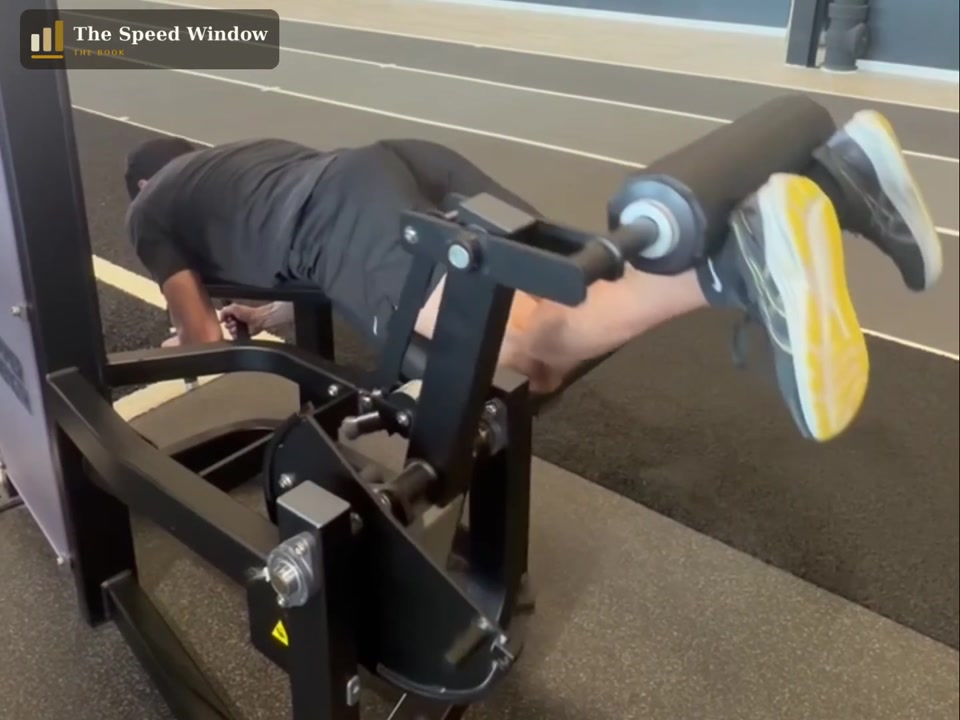
Pair the Goblet Squat with a posterior chain exercise (Hamstring Curl or Single-Leg RDL) in a superset format to develop balanced lower-body strength without excessive volume.
Athletes who complete the full Stabilization Window with clean Goblet Squat mechanics will enter the Back Squat in the Force Window with a significant structural advantage.
Stabilization Window · Ages 12–15
Re-coordination through growth.
Growth disrupts movement patterns. This window focuses on re-establishing mechanics, building foundational strength, and preparing the body for the demands of force-based training.
Explore the Stabilization WindowEvery drill here comes from the book.
The Speed Window maps all three windows: what to train, when, and why.
Get the Book