Purpose
What this drill trains, and why it matters.
The hamstring curl is one of the most important exercises in the Stabilization Window because the hamstrings are the primary sprint injury site in youth athletics and one of the muscle groups most disrupted by growth. During rapid skeletal growth, the femur and tibia lengthen while the hamstring muscle-tendon unit adapts more slowly, creating a period of relative hamstring insufficiency and elevated injury risk. Targeted hamstring strengthening during this period is not optional. It is protective.
The stability ball hamstring curl is preferred over the machine version for most athletes in this window because it also requires core stabilization and hip extension simultaneously: making it a more complete posterior chain exercise than the isolated prone machine curl. For athletes with access only to a machine, the prone curl is still valuable and appropriate.
The Nordic hamstring curl is the gold-standard eccentric hamstring exercise and has the strongest evidence base for hamstring injury prevention of any exercise in the literature. It is, however, extremely demanding: most athletes in the Stabilization Window are not ready for full Nordic curls. The bridge progression and stability ball curl build the capacity required to eventually load the Nordic pattern.
Setup
How to position your athlete before the first rep.
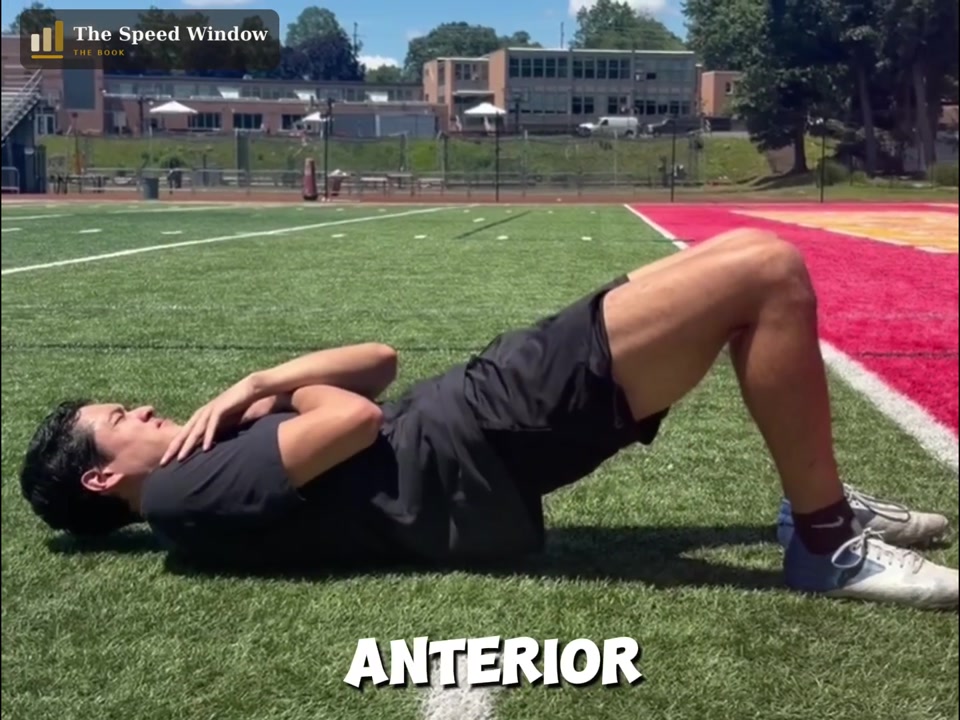
Stability ball option: lie supine, heels on the ball, arms flat on the floor
The athlete lies on their back with arms extended alongside the body for stability. Heels are centered on the stability ball, with the legs nearly straight. Hips start on the floor.
Machine option: set the pad to contact the lower calf, just above the heel
The resistance pad should contact the lower leg, not the ankle. Too-low pad placement creates ankle discomfort and reduces the effective hamstring range. Lie prone with the knees just off the edge of the pad for full range.
Brace the core and glutes before the first rep
On the stability ball version, the hips rise into a bridge before the curl begins. The core must be engaged to prevent the hips from sagging during the curl phase.
Execution
The drill, step by step.
Stability ball: bridge up, then curl
Press through the heels to raise the hips into a bridge position: body forms a straight line from shoulders to heels. Maintaining the bridge, curl the heels toward the glutes by bending the knees. The ball rolls toward the athlete. Extend back to full length, then lower the hips.
Machine: full range with controlled eccentric
Curl the lower leg toward the glutes through the full range of motion available. Pause briefly at the top of the range, then lower with a controlled 2- to 3-count eccentric. Do not let the weight stack touch down between reps.
Focus on the eccentric: slow the descent
The eccentric (lowering) phase of the hamstring curl is where the protective benefit is greatest. A 2- to 3-count lowering on every rep is the standard. Athletes who drop quickly through the eccentric are undertraining the most important part of the movement.
Keep the hips level. No rotation
On the stability ball version, the hips must not rotate or sag during the curl. A sagging hip indicates the core is no longer able to maintain the bridge position. Lower the hips and rest before continuing.
Common Errors
What to watch for and how to correct it.
Hips sagging during the stability ball curl
The bridge collapses as the athlete begins the curl, reducing the hamstring demand and shifting load to the low back. Cue: 'keep the hips up, hold the bridge.' Reduce reps per set until the core can maintain the bridge for the full set.
Rapid eccentric: letting the weight down fast
The machine weight stack drops quickly or the athlete straightens the legs on the stability ball without control. Cue: 'count to three on the way down.' A controlled eccentric is where the hamstring strength benefit is highest.
Limited range. Not curling to full knee flexion
The athlete curls 60 to 70 percent of the available range and returns. Full range of motion (heel toward glute) is the standard. Reduce load if full range cannot be achieved.
Feet turning out during the curl
On the machine version, the feet externally rotate during the curl, which shifts some load from the biceps femoris to the medial hamstrings. This asymmetric loading is acceptable occasionally but should not be the default. Cue: 'feet neutral, straight up.'
Coaching Cue
The one thing to say when you need the rep to change.
"Slow on the way down: full range."
The two most impactful mechanics in the hamstring curl for injury prevention purposes are the eccentric control and the range of motion. Both are addressed in this single cue. Emphasize the eccentric phase in every coaching interaction: athletes naturally prefer the concentric and rush the eccentric.Progressions & Regressions
Where this drill fits in the sequence.
Regress to: if the athlete is struggling
- Hip Bridge: bodyweight glute and hamstring activation without knee flexion demand
- Single-Leg Hip Bridge: increases unilateral hamstring demand without equipment
Progress to: once the pattern is clean
- Nordic Hamstring Curl. The most evidence-supported hamstring injury prevention exercise; introduced when the athlete can complete 3 × 10 stability ball curls with full control
- Romanian Deadlift (Force Window): loaded eccentric hamstring training with a hip-hinge pattern
Programming Notes
When and how to use this drill in a session.
Program the hamstring curl in every Stabilization Window strength session. This is not optional. The hamstring injury prevention evidence for this age group is clear, and the window for establishing eccentric hamstring strength before Force Window loading begins is limited.
3 sets of 10 to 12 reps. Controlled eccentric on every rep: 2 to 3 counts down. Rest 60 to 90 seconds. On the stability ball version, the bridge hold is part of the exercise. Do not let athletes sag the hips and rush the curl.
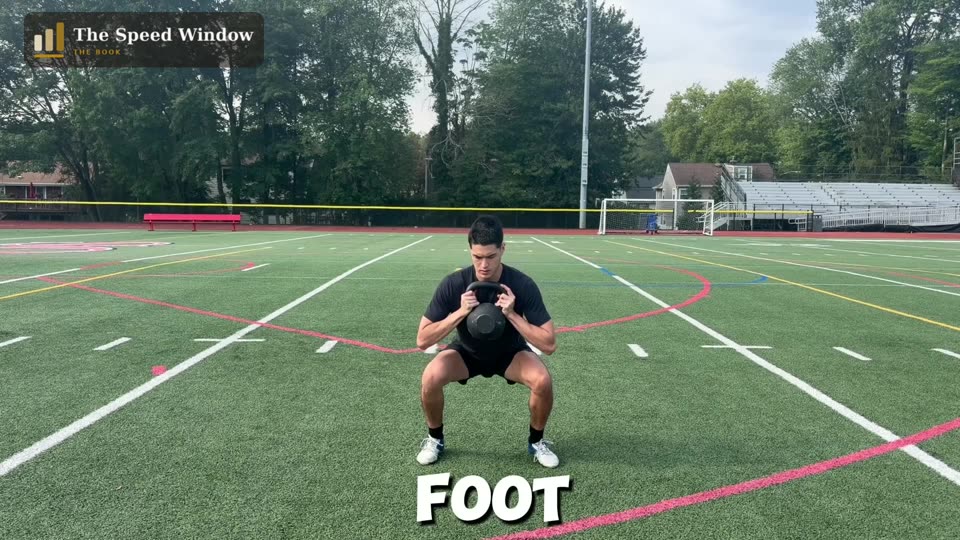
Pair hamstring curls with the goblet squat or split squat in the same session as a posterior-chain-anterior-chain balance. If the session has heavy quad-dominant work (squats, step-ups), the hamstring curl is the necessary counterbalance.
Stabilization Window · Ages 12–15
Re-coordination through growth.
Growth disrupts movement patterns. This window focuses on re-establishing mechanics, building foundational strength, and preparing the body for the demands of force-based training.
Explore the Stabilization WindowEvery drill here comes from the book.
The Speed Window maps all three windows: what to train, when, and why.
Get the Book