Purpose
What this drill trains, and why it matters.
The Deceleration Drill — 5-3-1 is the Stabilization Window's foundational braking mechanics tool. It names the three phases of controlled deceleration: a 5-yard sprint to full speed, a 3-step deceleration, and a 1-step stabilization hold. Each phase has a distinct mechanical demand, and training them in sequence builds the complete deceleration skill that precedes all change-of-direction training.
Deceleration is the most commonly undertrained athletic quality in youth programs. Most programs teach athletes how to accelerate and how to change direction, but skip the biomechanical bridge between the two: how to slow down under control, absorb the force correctly, and stabilize before redirecting. The injury data on ACL tears and ankle sprains in youth athletes consistently shows deceleration mechanics failure (not acceleration failure) as the primary contact event.
The 5-3-1 structure makes deceleration trainable by breaking it into phases small enough to coach. The 5-yard sprint provides realistic velocity to decelerate from. The 3-step deceleration is the primary training stimulus: lowering the hips, widening the base, and absorbing force over three ground contacts. The 1-step stabilization holds the braking position long enough for the athlete to receive feedback on their landing quality.
Setup
How to position your athlete before the first rep.
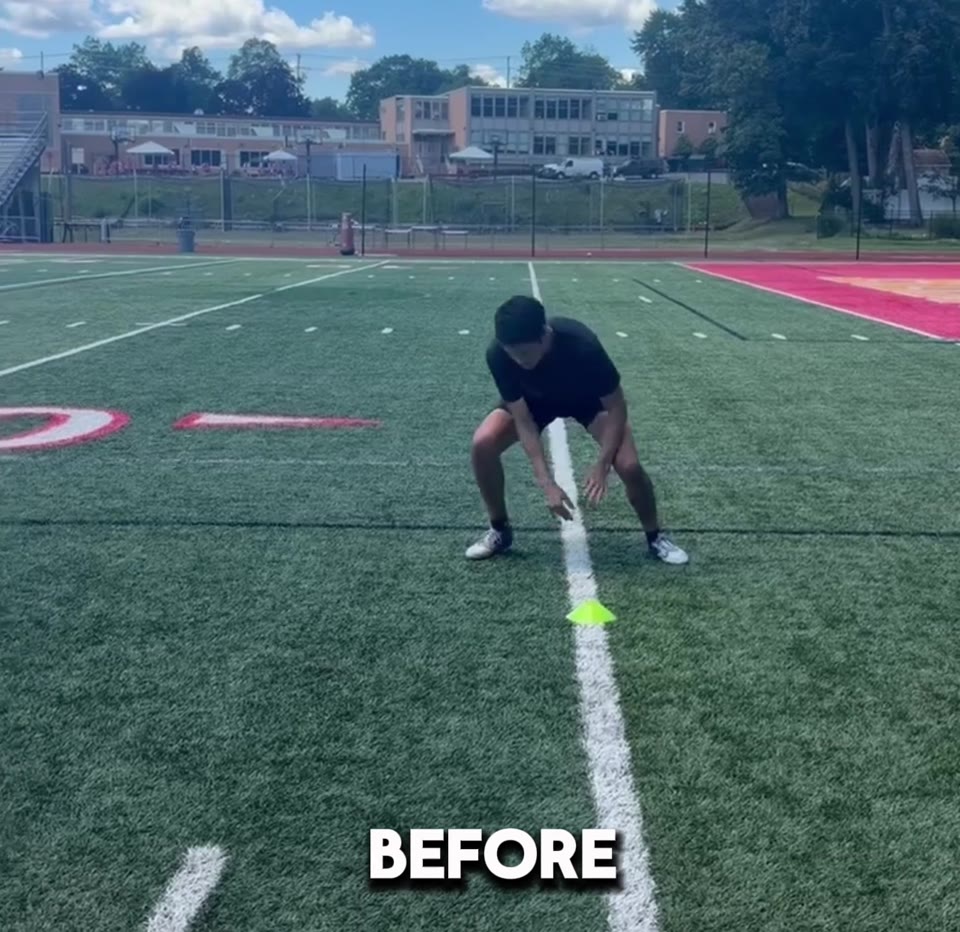
Set three cones: start, 5 yards, 9 yards
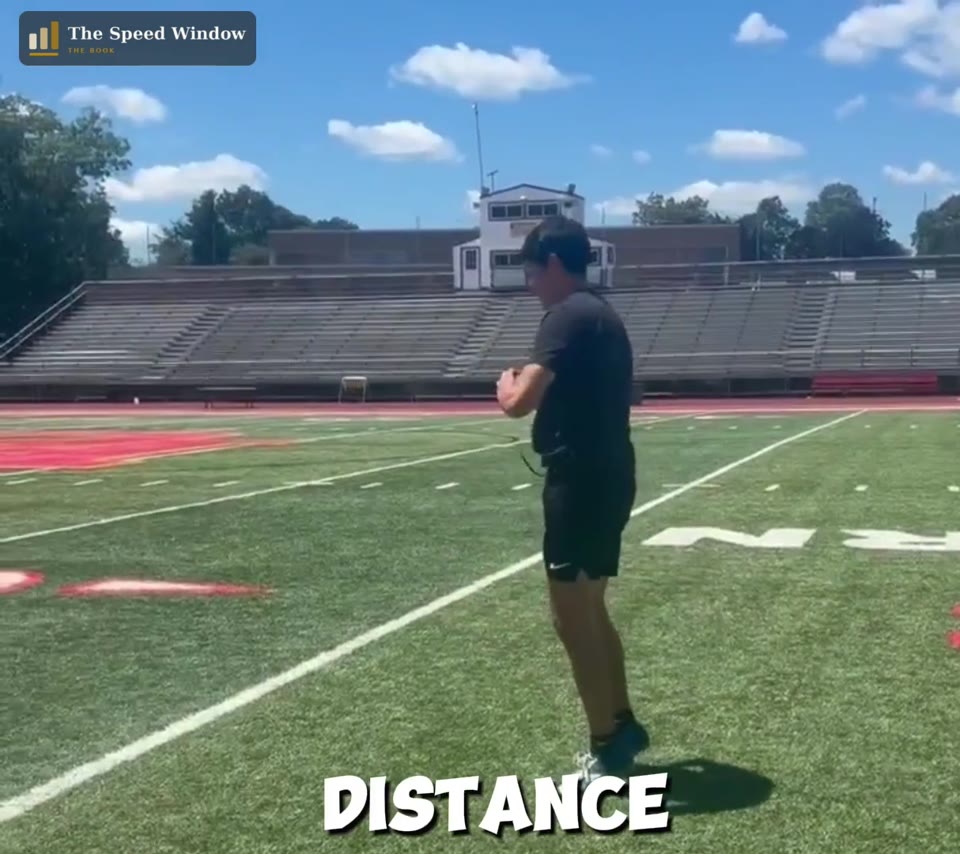
Cone 1 is the start. Cone 2 is 5 yards ahead (this is where deceleration begins). Cone 3 is 9 yards (4 yards beyond cone 2. This is the stabilization target). The entire drill takes place in 9 yards.
Coach positions at cone 2
The deceleration phase begins at cone 2. This is where all the mechanics coaching happens. Position yourself to see the hip height, knee tracking, and foot position of the three deceleration steps.
Walk through the phases before speed
Walk the athlete through each phase at slow speed: jog the 5 yards, take 3 deliberate deceleration steps, hold the final position. The phase structure should be understood before any intensity is added.
Execution
The drill, step by step.
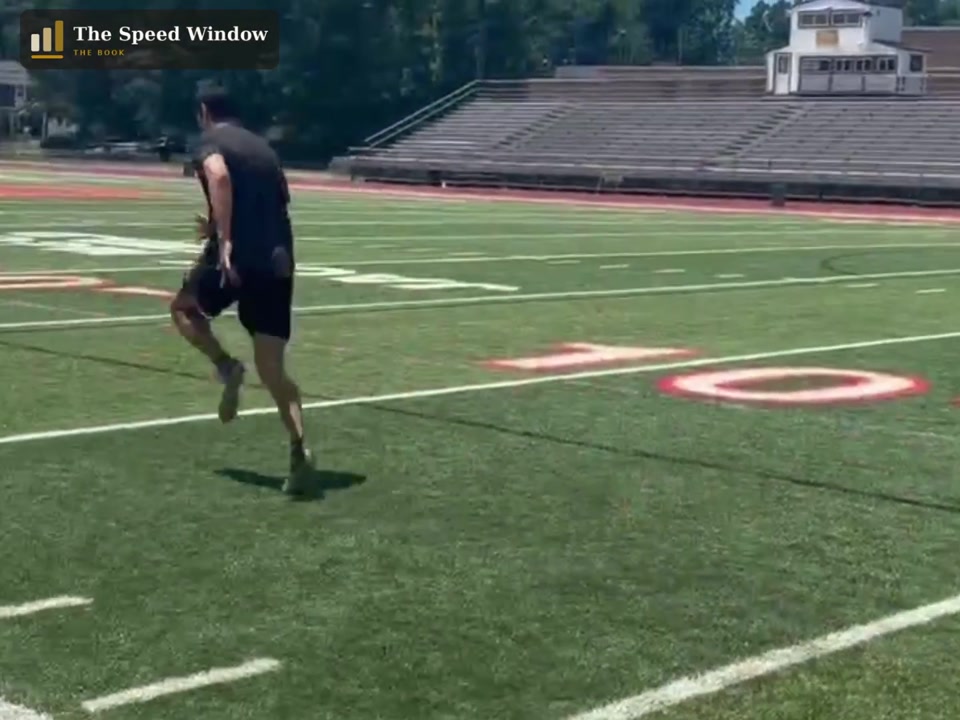
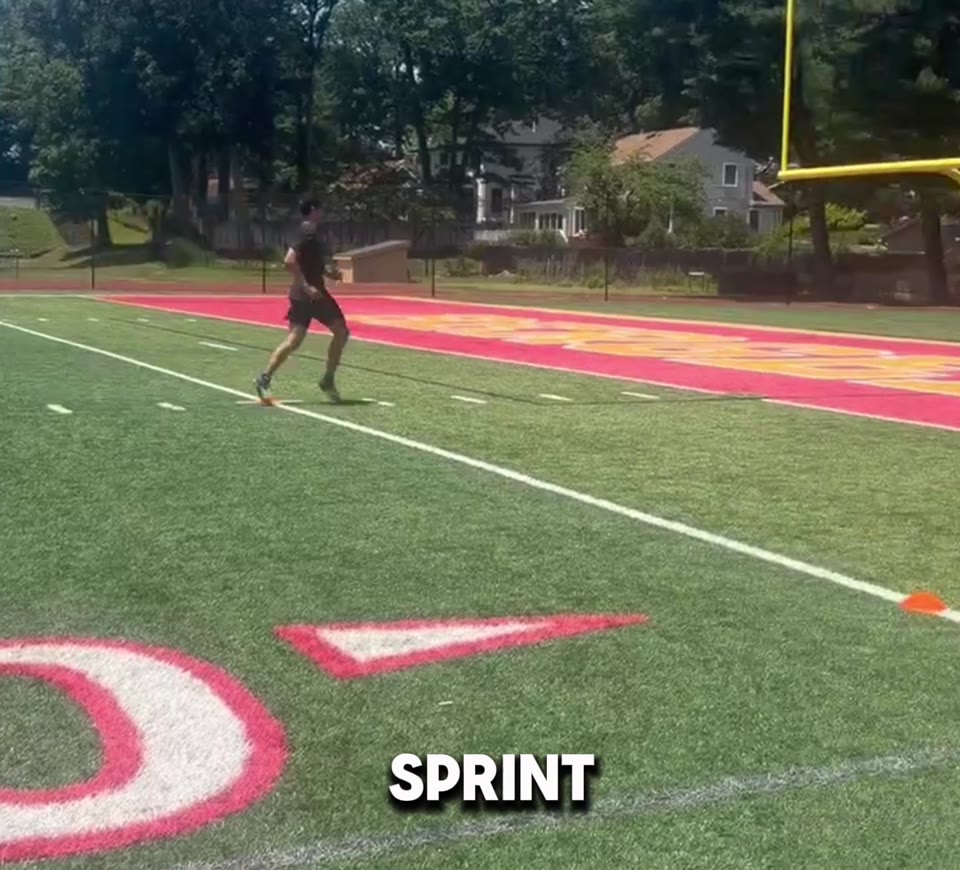
Phase 1. Sprint 5 yards at 80 to 90 percent effort
Accelerate hard from cone 1 to cone 2. The sprint provides realistic velocity to decelerate from. An athlete who jogs the first 5 yards will not experience meaningful deceleration demand in the second phase.
Phase 2. Three deceleration steps: wide, wider, widest
At cone 2, the athlete takes three deliberate braking steps. Each step lands wider and lower than the previous: the first step begins lowering the center of gravity, the second step widens the base and deepens the hip hinge, and the third step establishes a stable braking position. Feet land slightly in front of the hips: controlled forward lean absorbed through the hip and knee, not just the ankle.
Phase 3. One stabilization step: hold for 2 seconds
After the three deceleration steps, the fourth step holds. The athlete should be in a controlled athletic stance: hips low, knees bent, weight balanced on the balls of both feet. Hold this position for 2 seconds before resetting. This is the quality check.
Assess the stabilization position before repeating
The 2-second hold gives the athlete and coach a moment to assess: are the knees tracking correctly? Is the weight balanced? Is the spine neutral? This self-assessment is part of the rep.
Common Errors
What to watch for and how to correct it.
High center of gravity in the deceleration steps: staying upright
The athlete decelerates without lowering the hips, absorbing all force through the ankles and knees rather than distributing it through the full kinetic chain. Cue: 'drop your hips, get lower on each step.' The deceleration should look like a controlled descent into an athletic stance.
Only one or two deceleration steps: stopping abruptly
The athlete brakes in one or two contacts rather than distributing the force over three. This is how ankle sprains happen. Cue: 'three steps, spread it out.' The three-step structure is the drill. Reduce the sprint speed if three-step deceleration cannot be achieved.
Knee valgus in the deceleration steps
One or both knees collapse inward during the braking steps. This is the same pattern as in the lateral step-down and single-leg hop stick. Cue: 'knees out, track over the toes.' If this pattern persists, address hip abductor strength before increasing sprint intensity in this drill.
No stabilization hold: immediate reset
The athlete completes the three steps and immediately resets without the 2-second hold. The hold is the feedback mechanism. Cue: 'freeze, hold it for two.' The coach should count aloud.
Coaching Cue
The one thing to say when you need the rep to change.
"Drop the hips, three steps, hold it."
'Drop the hips' cues the lowering of the center of gravity that characterizes effective deceleration. 'Three steps' enforces the three-contact distribution standard. 'Hold it' ensures the stabilization check occurs. This cue works as a verbal countdown for the drill: drop the hips (entering deceleration), three steps (counting the contacts), hold it (executing the quality check).Progressions & Regressions
Where this drill fits in the sequence.
Regress to: if the athlete is struggling
- Broad Jump + Stick (Neural): establishes bilateral landing quality before the sprint-to-decel sequence
- Box Jump (Step Down (Neural)) builds deceleration control from a jump context
Progress to: once the pattern is clean
- 5-3-1 at higher sprint speed: 90 to 95 percent once the 3-step deceleration is consistent
- Pro Agility — Technical: applies the deceleration mechanics to a change-of-direction context
- 5-3-1 to change of direction: after the hold, the athlete redirects and sprints in a new direction
Programming Notes
When and how to use this drill in a session.
Place the Deceleration Drill — 5-3-1 in the acceleration prep phase of Stabilization Window sessions, on days when agility work follows. Run it before the controlled agility drills (Pro Agility Technical, Box Drill) so the deceleration mechanics are activated and coached before being demanded under a more complex agility pattern.
4 to 6 reps with full recovery between each. The sprint intensity should build across the training block. Start at 75 to 80 percent and build to 85 to 90 percent over 4 to 6 weeks as the deceleration quality improves.
This drill is the bridge between the sprint mechanics work and the agility work in the Stabilization Window curriculum. It belongs in any session that contains both: which should be most sessions in this window.
Stabilization Window · Ages 12–15
Re-coordination through growth.
Growth disrupts movement patterns. This window focuses on re-establishing mechanics, building foundational strength, and preparing the body for the demands of force-based training.
Explore the Stabilization WindowEvery drill here comes from the book.
The Speed Window maps all three windows: what to train, when, and why.
Get the Book