Purpose
What this drill trains, and why it matters.
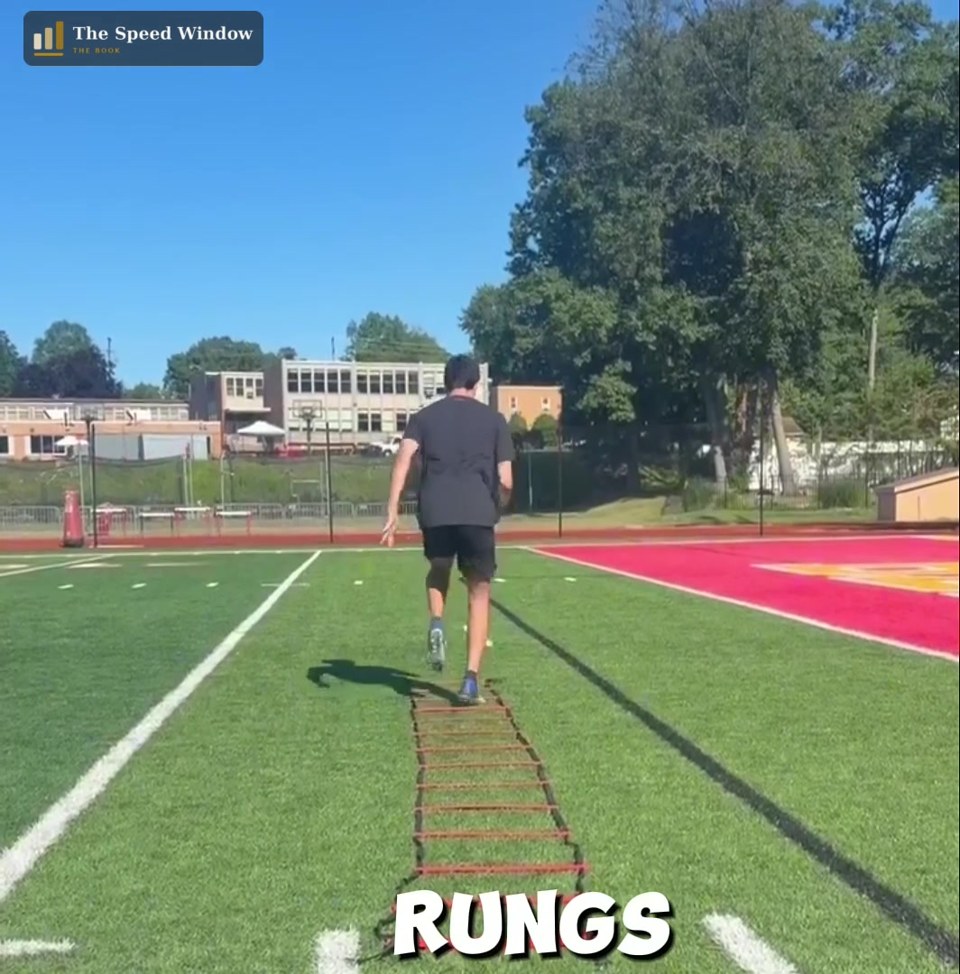
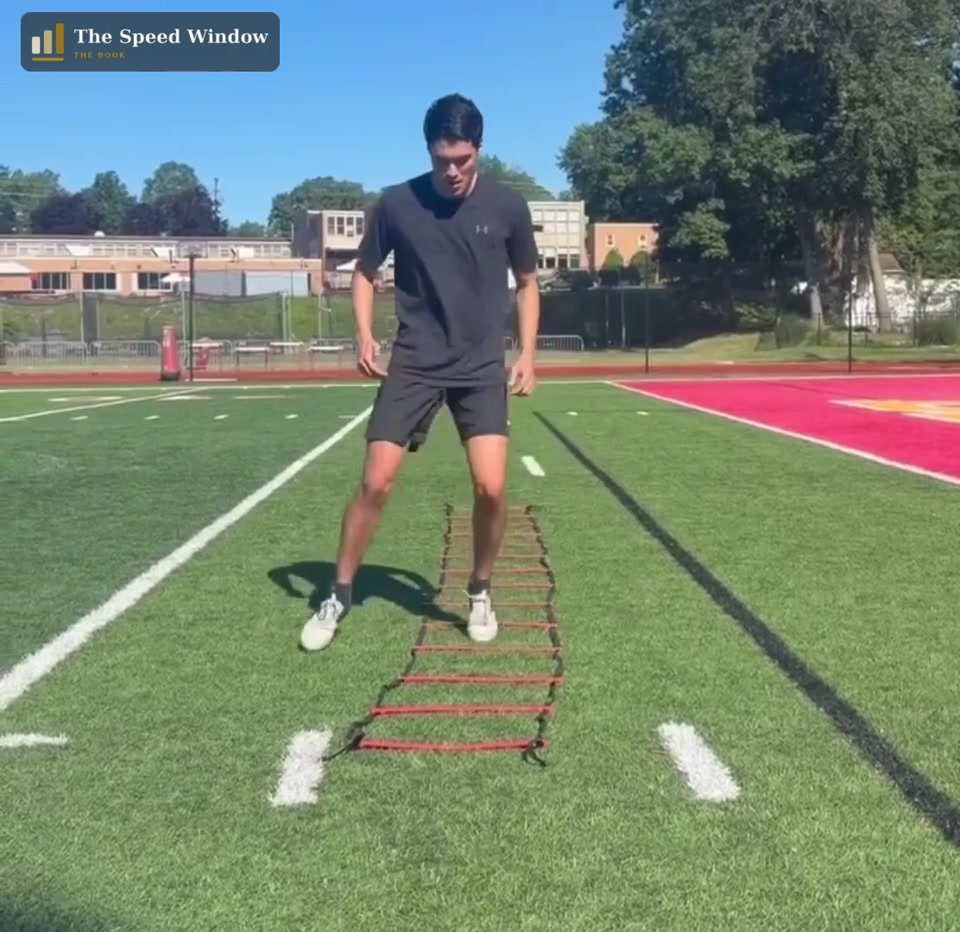
The Up and Down is the Two-In with a reverse gear. The athlete steps both feet into the rung, steps both feet back out behind it, then advances diagonally into the next rung and repeats. Forward, backward, forward, all the way down the ladder.
The backward step is the point. Young athletes almost never practice controlled backward movement, yet retreating, dropping, and recovering are constant demands in every field and court sport. The Up and Down introduces backward control in the smallest possible dose: one step, low speed, clear target.
The pattern also teaches weight-shift discipline. Moving in, back, and diagonally forward again forces the athlete to keep their weight centered over the balls of the feet in both directions. An athlete who rocks onto their heels on the back step will feel it immediately, which makes the fault easy to coach.
Setup
How to position your athlete before the first rep.
Lay the ladder flat on a firm surface
Fully extended on a hard court or short turf. Check the athlete's backward path is clear: this drill steps behind the body, and stray cones or bags behind the ladder become hazards.
Start centered on the first rung, feet outside
Athlete faces down the ladder with both feet just behind the first rung, weight on the balls of the feet.
Rehearse the box shape once at walking pace
In, in, back, back, then a small diagonal advance to the next rung. Walk it once so the shape is understood before any tempo is added.
Execution
The drill, step by step.
Step in: lead foot, then trail foot
Both feet touch down inside the rung, one after the other, on the balls of the feet. Keep the steps small: this is footwork, not jumping.
Step back out: same order
Lead foot steps back out behind the rung, trail foot follows. The weight stays forward on the balls of the feet even while moving backward. Heels never plant.
Advance diagonally to the next rung
The next in-step lands in the following rung, so the pattern climbs the ladder one rung per cycle. The advance comes from the in-step, not from a separate travel step.
Keep the posture tall in both directions
Chest up, hips under the shoulders. The common instinct is to bend at the waist on the backward step. The legs move; the trunk stays quiet.
Hold one steady tempo
The in-in-out-out beat should sound even, like a drum pattern. Speed comes later. Rhythm first, always.
Common Errors
What to watch for and how to correct it.
Weight rocks onto the heels on the back step
The most common and most important fault. On the heels, the athlete cannot react or reverse. Cue 'nose over toes' and shrink the backward step until balance holds.
The back step drifts too deep
Stepping far behind the rung turns a quick pattern into a lunge and wrecks the tempo. The out-step lands just clear of the rung. Small box, quick feet.
Skipping the pattern under fatigue
Late in a pass the athlete starts stepping in and forward without the back step. That is a signal the set is over. End the pass; never let a degraded pattern get reps.
Looking down at the feet
Eyes drop, posture follows. Set a target at the end of the ladder and keep the eyes on it. The feet learn the geometry without visual checking.
Coaching Cue
The one thing to say when you need the rep to change.
"In, in, back, back. Nose over toes."
The first half is the rhythm, spoken at the tempo you want performed. The second half is the balance rule that makes the backward step safe and athletic. Together they cover the whole drill in eight words.Progressions & Regressions
Where this drill fits in the sequence.
Regress to: if the athlete is struggling
- Walking pace pass: rehearse the box shape with zero tempo pressure
- Ladder: Two-In. Re-establish forward-only rhythm first
- In-in-out-out on a single rung: repeat the cycle in place before traveling
Progress to: once the pattern is clean
- Ladder: Side Step. Move the coordination demand laterally
- Up and Down at speed: same pattern, faster beat, once the shape is automatic
- Backpedal-to-sprint transitions: take the backward control into open space
Programming Notes
When and how to use this drill in a session.
Program the Up and Down in the agility prep block alongside the Two-In. The two patterns pair naturally: one trains pure forward rhythm, the other adds direction change to the same footwork base.
3 to 4 passes per session with full rest between them. Younger athletes will fatigue faster on this pattern than on the Two-In because the back step doubles the number of decisions per rung. Shorter, cleaner passes beat longer, sloppier ones.
The pattern is also a useful screen. An athlete who cannot keep weight off the heels moving backward here will show the same fault when learning to decelerate. Fix it now, at walking speed, and the deceleration work in later windows starts from a better place.
Neural Window · Ages 7–12
The critical learning window.
Between ages 7 and 12, the nervous system acquires movement patterns faster than at any other stage of development. The drills trained here are not fitness drills. They are wiring sessions.
Explore the Neural WindowEvery drill here comes from the book.
The Speed Window maps all three windows: what to train, when, and why.
Get the Book