Purpose
What this drill trains, and why it matters.
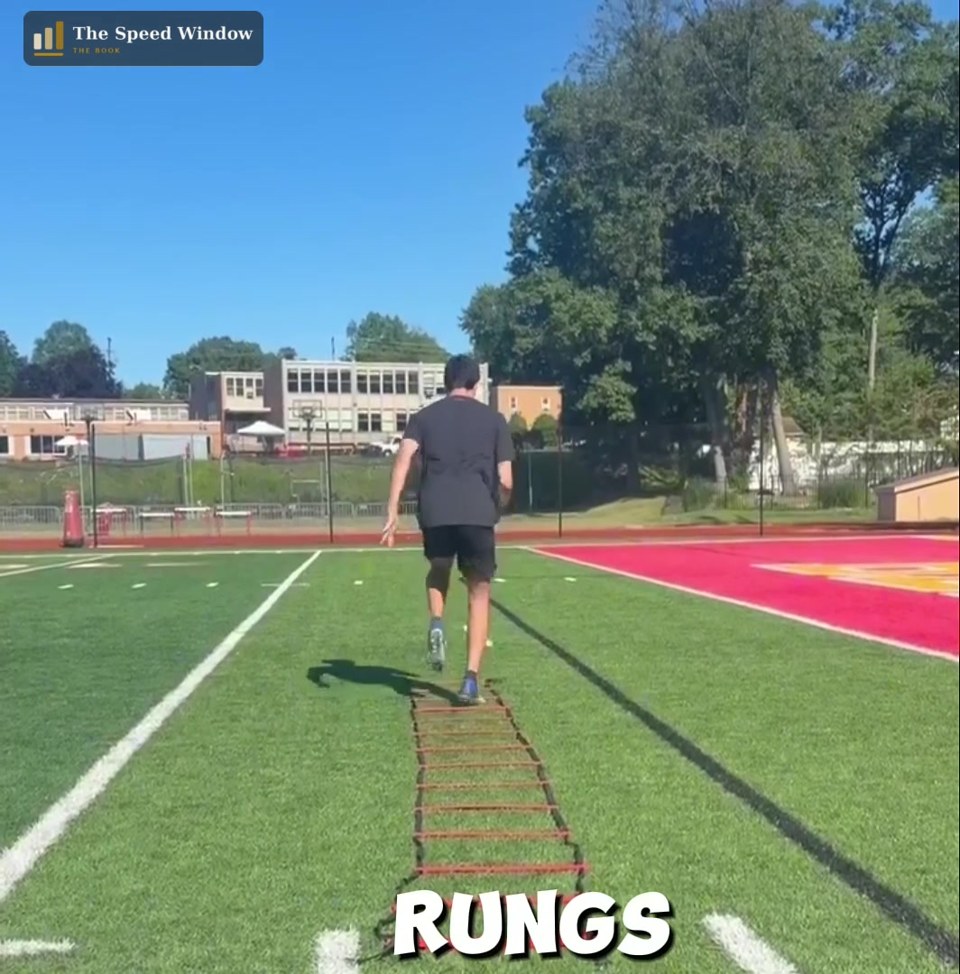
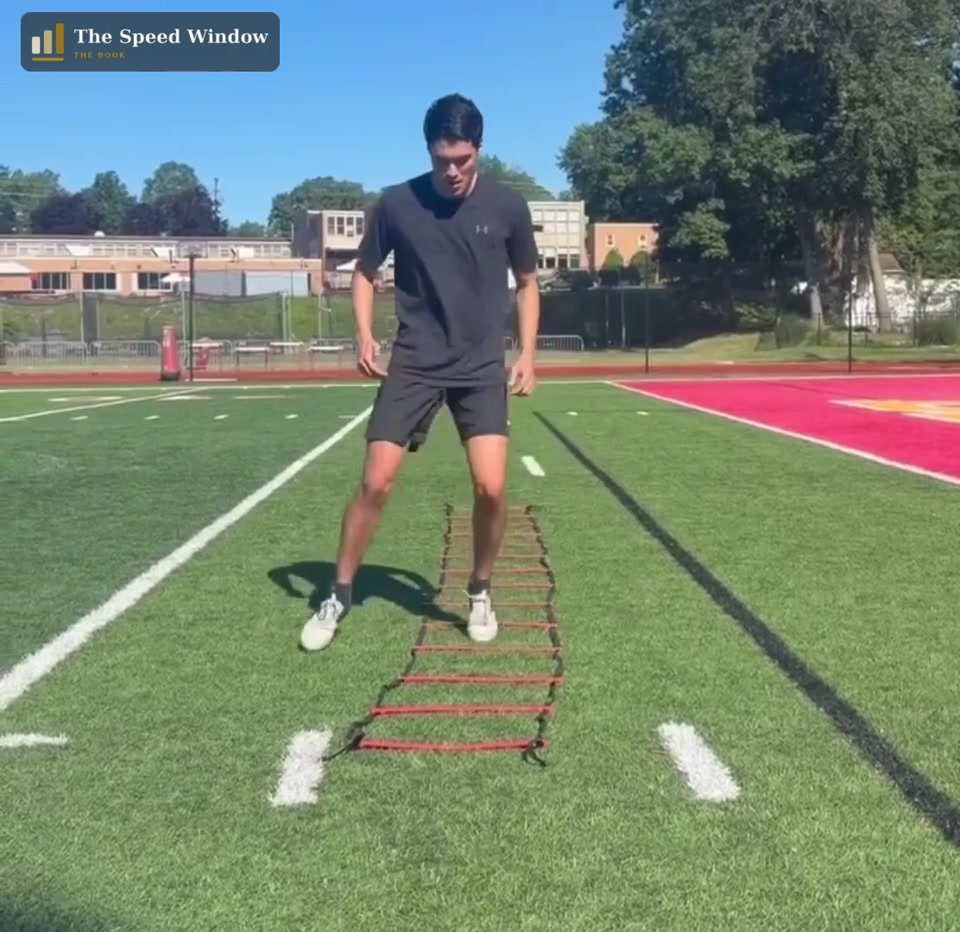
The Straddle Hop changes the ladder from a stepping tool into a hopping tool. The athlete jumps with both feet into the rung, then jumps out into a straddle with one foot on each side of the ladder, and repeats the in-out cycle while advancing one rung at a time.
Two things are being trained at once. The first is bilateral rhythm: both feet leaving and landing together, over and over, on a beat. The second is landing quality at very low amplitude: every hop is a small landing, and every landing is a rep of soft knees, level hips, and balls-of-feet contact. It is landing mechanics practice disguised as a rhythm game.
The straddle position adds a hip-width control demand that two-in patterns never touch. Opening the legs to land outside the ladder and closing them to land inside forces the abductors and adductors to manage the base of support dynamically. That control is the raw material for cutting and lateral movement later on.
Setup
How to position your athlete before the first rep.
Lay the ladder flat on a firm surface
Hard court or short turf, fully extended. Because this pattern is airborne, surface quality matters more than for stepping drills: no slick spots, no soft edges.
Start in a straddle over the ladder, before the first rung
One foot on each side of the ladder, weight on the balls of the feet, slight knee bend. The straddle is the home position; the drill starts and ends there.
Rehearse two slow cycles in place
Hop in together, hop out to straddle, without traveling. Two clean cycles in place confirm the athlete understands the shape before adding the forward drift.
Execution
The drill, step by step.
Hop in: both feet land together inside the rung
Feet close together, landing on the balls of the feet with a soft knee. The landing should be nearly silent. Loud feet mean stiff landings.
Hop out: both feet land in the straddle
Feet land simultaneously outside the ladder, one each side, about shoulder width. Hips stay level; the trunk does not pitch forward.
Advance one rung per cycle
Each in-hop lands one rung farther down the ladder. The travel is small and comes from a slight forward angle on the hop, not from a leap.
Keep amplitude low
These are quick, small hops an inch or two off the ground. Height destroys tempo and turns a coordination drill into a fatigue drill.
Land every cycle on the beat
In and out land on an even count. When the rhythm breaks, the pass is over: reset rather than scramble.
Common Errors
What to watch for and how to correct it.
Loud, stiff landings
Sound is the best coaching tool in this drill. Slapping contacts mean locked knees and heel involvement. Cue 'silent landings' and lower the tempo until the sound softens.
Feet land out of sync
One foot touches before the other, turning hops into gallops. Rebuild in place at slow tempo: both feet leave together, both feet land together, before traveling resumes.
The straddle narrows over the pass
Fatigue pulls the outside landings closer to the ladder until the athlete clips it. The straddle stays shoulder width from first rung to last. If it cannot, end the pass.
Jumping for height instead of rhythm
Big vertical hops look impressive and train nothing this drill is for. Keep the hops low and quick: the beat is the workload.
Coaching Cue
The one thing to say when you need the rep to change.
"Small hops, silent landings, same beat."
Amplitude, landing quality, and rhythm in six words. 'Small hops' caps the height. 'Silent landings' forces soft knees and ball-of-foot contact. 'Same beat' holds the tempo even. If you only say one thing, say 'silent.'Progressions & Regressions
Where this drill fits in the sequence.
Regress to: if the athlete is struggling
- In-place cycles: hop in and out over a single rung without traveling
- Ladder: Two-In. Return to stepping rhythm if the hop pattern overwhelms
- Line hops: hop side to side over a flat line before adding the rung constraint
Progress to: once the pattern is clean
- Straddle Hop at speed: faster beat once landings stay silent
- Pogo Hops: pure ankle-stiffness work at higher amplitude
- Broad Jump + Stick: take the landing quality into a single maximal effort
Programming Notes
When and how to use this drill in a session.
Place the Straddle Hop after the stepping patterns in the coordination block, and before any dedicated plyometric work in the session. It is the natural bridge between the two: rhythm work on the front end, landing work underneath.
3 to 4 passes per session. Watch total foot contacts: a 10-rung pass is 20 landings, so four passes is 80. That is plenty for a Neural Window athlete in one session when combined with other jumping.
The drill doubles as a landing-quality screen. An athlete whose landings are loud here should not be progressed into higher plyometrics, whatever their age says. Silent Straddle Hops are a prerequisite worth enforcing.
Neural Window · Ages 7–12
The critical learning window.
Between ages 7 and 12, the nervous system acquires movement patterns faster than at any other stage of development. The drills trained here are not fitness drills. They are wiring sessions.
Explore the Neural WindowEvery drill here comes from the book.
The Speed Window maps all three windows: what to train, when, and why.
Get the Book