Purpose
What this drill trains, and why it matters.
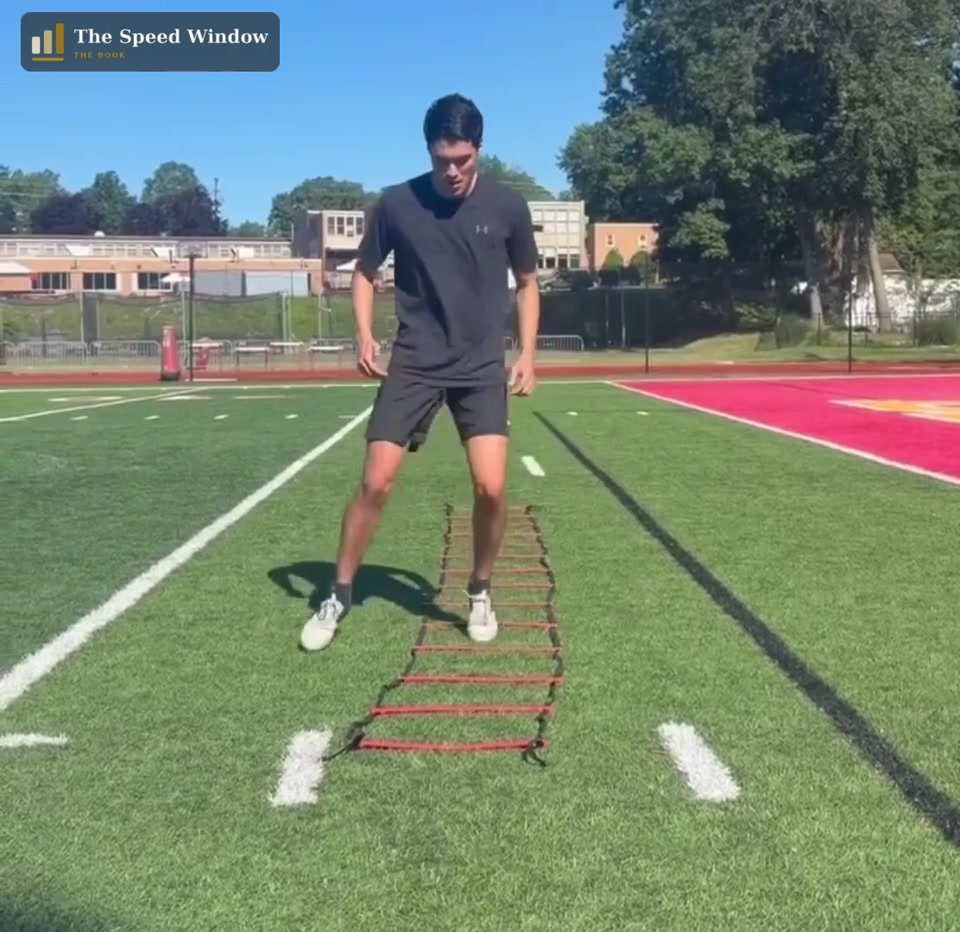
The River Dance earns its name. One foot taps inside the rung while the other foot works outside the ladder, and the roles switch on every beat as the athlete advances. The feet never stop. It is the most rhythm-dense pattern in the ladder series, and it should only be introduced after the forward and lateral basics are clean.
What it trains is cadence control: the ability to keep a fast, even beat with the feet while the brain manages a switching pattern. That combination, fast feet plus pattern management, is precisely what game agility demands. Most drills train one or the other. This one trains both at once.
Because the tempo is high and the contacts are tiny, the River Dance also develops ankle stiffness and reactive foot speed in a way slower ladder patterns cannot. It is a coordination drill first, but it quietly builds the elastic qualities that show up later in sprinting and cutting.
Setup
How to position your athlete before the first rep.
Lay the ladder flat on a firm surface
Hard court or short turf, fully extended. At this tempo a folded rung or hidden edge is a real trip hazard: walk the ladder before the first rep.
Start square to the ladder, one foot ready to enter
Athlete faces down the length of the ladder, feet outside the first rung, weight on the balls of the feet, arms at 90 degrees.
Establish the beat before establishing speed
Count a steady rhythm out loud (or clap it) at a tempo the athlete can hold. The pattern is learned at the speed of the beat, and the beat gets faster only when the pattern holds.
Execution
The drill, step by step.
Tap in with the lead foot
The lead foot taps inside the first rung while the trail foot stays outside the ladder. Contacts are taps, not steps: minimal weight, minimal ground time.
Switch on the beat
The lead foot pops back out as the trail foot taps in. In, out, in, out: the two feet trade places on every beat like pedaling.
Advance one rung per switch cycle
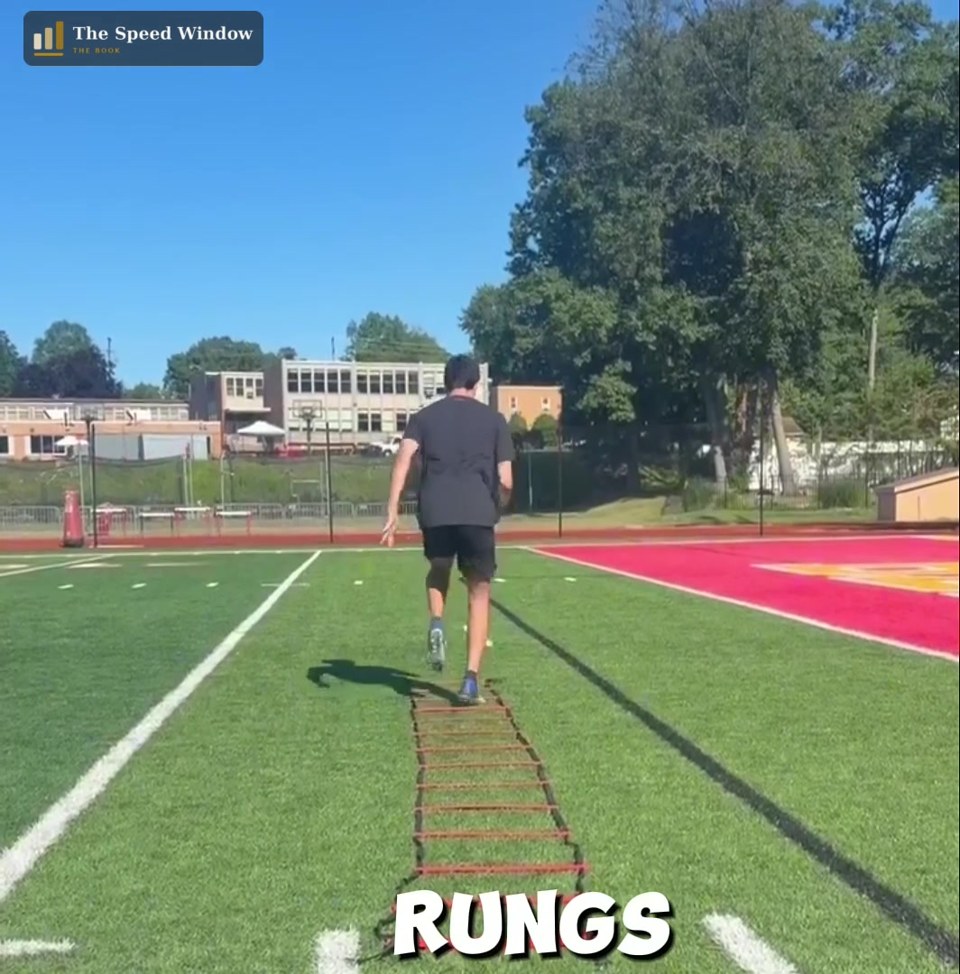
Each full in-out exchange moves the athlete forward one rung. The forward drift should be smooth and constant, carried by the rhythm rather than by reaching.
Arms hold the tempo
Fast, compact arm action sets the cadence. When the feet start to tangle, the fix is almost always in the arms: reset the arm rhythm and the feet reorganize.
Hold the beat to the last rung
The pattern is only as good as its worst rung. Same tempo from rung one to rung ten. If the last two rungs turn into a scramble, the tempo was too high.
Common Errors
What to watch for and how to correct it.
The pattern collapses mid-ladder
The feet tangle and the athlete stutters to reset. Tempo exceeded pattern control. Drop back to the counted beat at a slower speed and rebuild. Speed is the last ingredient, not the first.
Stomping instead of tapping
Heavy, flat contacts mean the athlete is stepping through the pattern rather than bouncing through it. Cue 'taps, not steps' and shrink the contact time before raising the speed.
Watching the feet
Head down, eyes on the rungs. The rhythm becomes visual instead of felt, and posture collapses with it. Eyes on a target at the end of the ladder.
Rushing the forward drift
The athlete lunges rungs ahead of the rhythm to finish faster. Forward travel is a byproduct of the beat, not the goal. Same beat, and the ladder ends when it ends.
Coaching Cue
The one thing to say when you need the rep to change.
"Find the beat, then feed it speed."
The order matters and this phrase locks it in. The athlete first owns the rhythm at a manageable tempo, then adds speed in small steps without breaking it. Any rep where the beat survives is a good rep, at any speed.Progressions & Regressions
Where this drill fits in the sequence.
Regress to: if the athlete is struggling
- Ladder: Ickey Shuffle. A slower switching pattern that builds the same in-out logic
- Half-tempo River Dance with a counted or clapped beat
- Partial ladder (5 rungs): hold the pattern over a shorter run before extending
Progress to: once the pattern is clean
- Full-speed passes with a metronome or music tempo push
- River Dance into sprint: hold the beat through the ladder, then release into a 5-yard acceleration
- Star Drill: take the fast-feet quality into open multi-directional movement
Programming Notes
When and how to use this drill in a session.
The River Dance is a finisher for the coordination block, not an entry point. Program it only after the Two-In, Side Step, and Ickey Shuffle run clean. In the Neural Window that usually means the second month of consistent ladder work, not the first week.
3 to 4 passes per session with full recovery between them. The drill looks like conditioning because the feet are fast, but treating it as conditioning ruins it: the moment the beat degrades, the neural work is over.
Use it as a rhythm test as much as a drill. If an athlete can hold the River Dance beat at speed, their ladder coordination is essentially complete and training time is better spent in open agility patterns like the Star Drill.
Neural Window · Ages 7–12
The critical learning window.
Between ages 7 and 12, the nervous system acquires movement patterns faster than at any other stage of development. The drills trained here are not fitness drills. They are wiring sessions.
Explore the Neural WindowEvery drill here comes from the book.
The Speed Window maps all three windows: what to train, when, and why.
Get the Book