Purpose
What this drill trains, and why it matters.
The Split Squat is the first strength exercise introduced in the Stabilization Window for one specific reason: it develops single-leg strength, hip flexor mobility, and knee stability simultaneously without loading the spine. During the growth phase, an athlete's center of mass, limb proportions, and proprioception are all shifting. The split squat meets them where they are: one leg at a time, with full control.
What growth disrupts most in the 12- to 15-year-old athlete is the sense of where the body is in space. Proprioception degrades during rapid skeletal growth because the nervous system has not yet remapped to the new limb lengths. Every single-leg exercise forces the body to solve that remapping problem. The split squat is the safest, most controllable environment to begin that process.
Do not rush to add load. The bodyweight split squat, done with genuine depth and upright posture on both sides equally, is a real training stimulus for most athletes in this window. An athlete who cannot perform 10 clean bodyweight split squats on each leg has no business holding dumbbells. The pattern quality must lead the load.
Setup
How to position your athlete before the first rep.
Take a staggered stance: front foot forward, rear foot back
The front foot steps forward approximately 2 to 2.5 feet from the rear foot. Both feet point forward. The distance should allow the front knee to bend to 90 degrees without the heel lifting off the floor.
Hands on hips or arms crossed at chest
Removing the arms from the equation isolates the leg and hip demand. Once the pattern is stable, add a light dumbbell in each hand. Never add weight before the pattern is clean.
Coach checks the stance width before the first rep
Too narrow: the front heel lifts on descent. Too wide: the rear knee cannot approach the floor. Adjust before the set begins, not during.
Execution
The drill, step by step.
Lower straight down. Not forward
The movement is a vertical descent, not a lunge forward. The hips lower toward the floor, the front knee bends, and the rear knee approaches the ground. The torso stays upright throughout. Think elevator, not ramp.
Front knee tracks over the second toe
The front knee must not collapse inward during the descent. It should track directly over the second toe of the front foot. This is the most important tracking cue in the drill and the one coaches must watch most carefully.
Rear knee stops 1 to 2 inches above the floor
Touch-and-go is not the goal. The rear knee approaches the ground with control and stops short of contact. Athletes who let the rear knee slam down have lost the eccentric control that makes the exercise valuable.
Drive up through the front heel
Press through the front heel to return to the starting position. The rear leg assists but should not be the primary driver. The front glute and quad do the work.
Complete all reps on one side before switching
Do not alternate legs on every rep. Complete the full set on the right leg, then the full set on the left. This allows the proprioceptive challenge to accumulate on each side individually.
Common Errors
What to watch for and how to correct it.
Knee caving inward: valgus collapse
The front knee collapses toward the midline during descent or ascent. This is a hip abductor weakness pattern and the most critical error to address. Cue: 'push your knee out over your second toe.' If the collapse persists, regress to a shorter range of motion until control is established.
Front heel rising off the floor
The front heel lifts as the athlete descends, indicating restricted ankle dorsiflexion or a stance that is too narrow. Widen the stance and cue: 'heel stays flat, press through it.'
Forward torso lean: hinging at the waist
The trunk pitches forward on the descent rather than staying upright. This shifts load from the quads and glutes to the lower back. Cue: 'tall chest, ribs over hips.' Place a hand on the athlete's upper back to give them tactile feedback of the upright position.
Rear foot turning outward
The rear foot rotates to the outside rather than pointing forward. This changes the hip position and allows a compensated pattern. Both feet should face forward for the full set.
Coaching Cue
The one thing to say when you need the rep to change.
"Straight down, knee out, heel flat."
These three cues correspond to the three most commonly observed errors in the Stabilization Window split squat: the forward lean (straight down), the valgus collapse (knee out), and the heel rise (heel flat). Deliver all three before the first rep of every set.Progressions & Regressions
Where this drill fits in the sequence.
Regress to: if the athlete is struggling
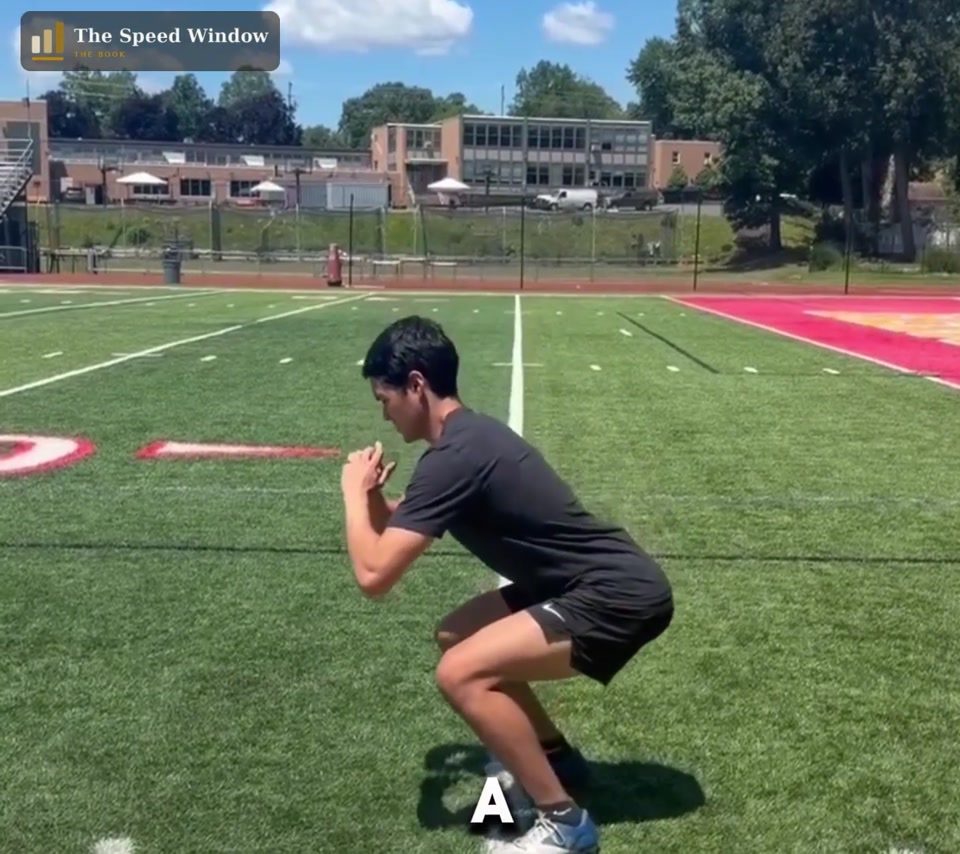
- Bodyweight Squat: establish bilateral squat mechanics before unilateral split stance
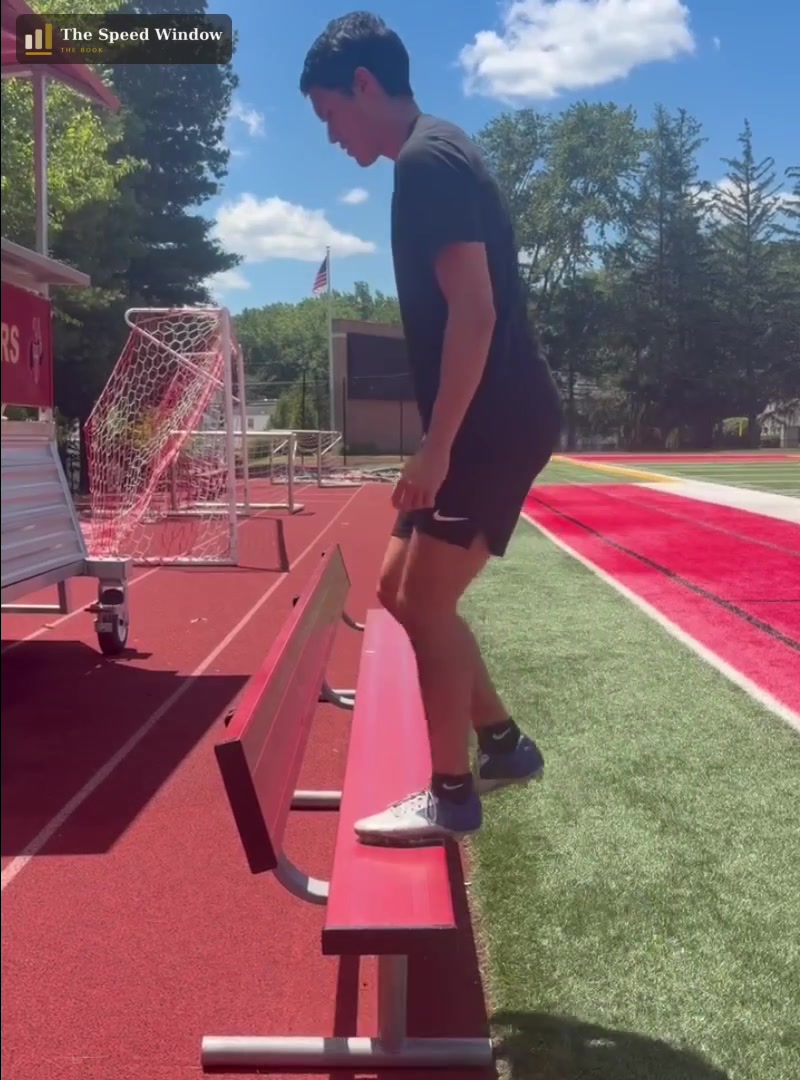
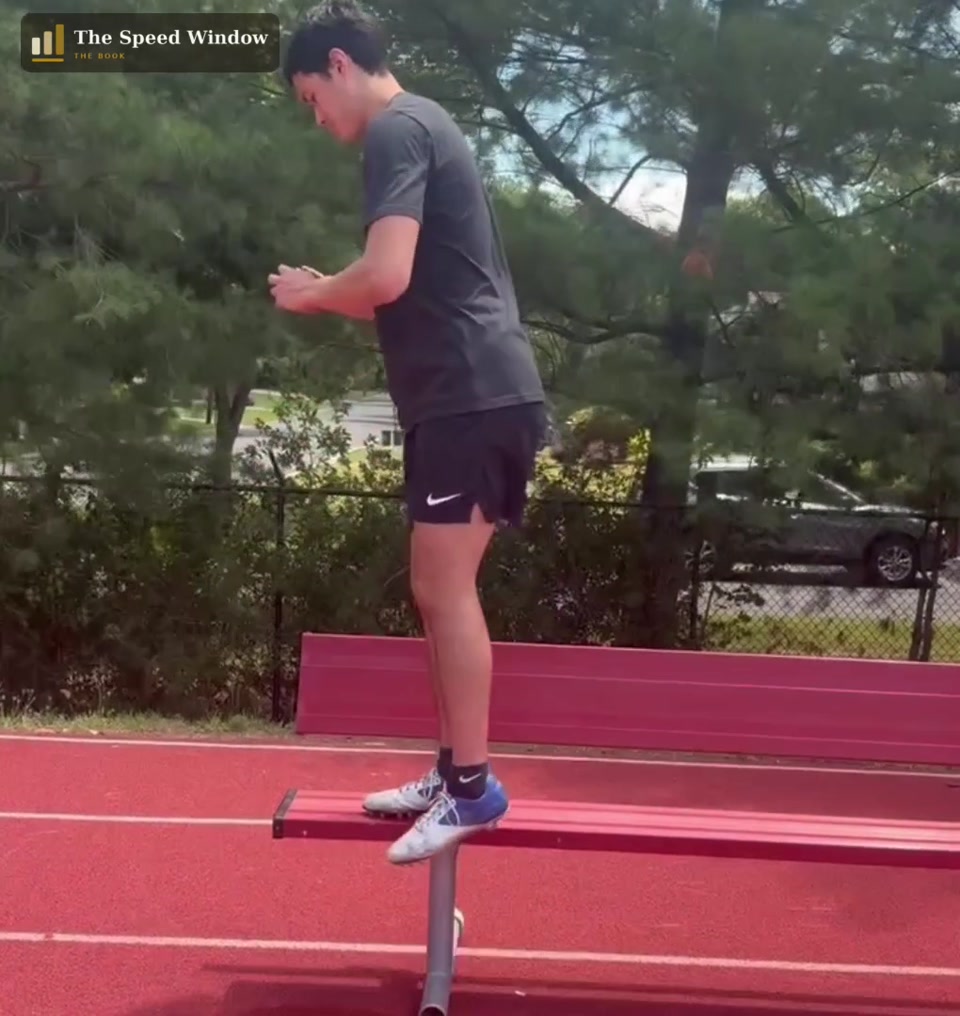
- Step-Up. Build single-leg drive without the hip flexor mobility demand of the split squat
- Wall-supported Split Squat: place one hand on a wall for balance while the pattern is established
Progress to: once the pattern is clean
- Dumbbell Split Squat. Add light dumbbells once 3 × 10 is clean on each side
- Rear-Foot Elevated Split Squat (Bulgarian): increases the range and instability demand (Force Window)
- Lateral Step-Down: builds eccentric single-leg control in a different plane
Programming Notes
When and how to use this drill in a session.
Place the split squat in the strength section of Stabilization Window sessions, after re-coordination warm-up and any sprint mechanics work. It is a structural exercise. It goes before single-joint accessory work like hamstring curls or hip thrusts.
3 sets of 8 to 10 reps per leg. Rest 60 to 90 seconds between legs. Start with bodyweight only. Progress to 2 × 5 lb dumbbells when 3 × 10 is consistently clean and symmetrical. The standard for adding weight is not completion. It is clean completion with no cues needed.
Check bilateral symmetry every session. Most athletes in this window have a dominant leg that is significantly stronger and more stable than the non-dominant leg. Identify it and give the weaker leg the first set of every session, when the athlete is freshest.
Stabilization Window · Ages 12–15
Re-coordination through growth.
Growth disrupts movement patterns. This window focuses on re-establishing mechanics, building foundational strength, and preparing the body for the demands of force-based training.
Explore the Stabilization WindowEvery drill here comes from the book.
The Speed Window maps all three windows: what to train, when, and why.
Get the Book