Purpose
What this drill trains, and why it matters.
Crawling is the earliest form of coordinated movement the human body learns: and the most direct training tool for contralateral coordination, the cross-body pattern where the right arm moves with the left leg and vice versa. This is not a regression drill. It is a foundational neural training tool that many young athletes have never properly developed, and that coaches working with older athletes often use to address persistent movement dysfunction.
The bear crawl and its variations develop shoulder loading tolerance (the ability of the shoulder girdle to accept and distribute compressive force) without any of the joint risk associated with overhead pressing. For ages 7 to 12, this is the safest and most effective way to build the shoulder stability that gymnastics, wrestling, swimming, and all overhead sport activities require.
Reverse and lateral crawling add pattern complexity and directional demand that the forward crawl does not reach. All three patterns belong in the Neural Window curriculum. Forward crawl is the prerequisite; reverse and lateral crawls are the progressions. Build them in sequence.
Setup
How to position your athlete before the first rep.
Mark 10 yards of clear, flat surface
Grass, turf, or a firm floor all work. Avoid rough concrete for younger athletes whose wrists may fatigue quickly. If wrist discomfort is a consistent issue, use thin gloves or wrist wraps.
Start in the bear crawl position
Hands under the shoulders, knees under the hips, knees lifted approximately 2 inches off the ground. The back is flat. Not rounded, not arched. This is the starting position for all three crawling patterns.
Introduce the forward crawl first
All sessions begin with forward crawling before adding reverse or lateral. The forward crawl establishes the contralateral coordination pattern; the other variations add directional complexity.
Execution
The drill, step by step.
Forward Bear Crawl: right hand and left knee advance simultaneously
Move the right hand and left knee forward at the same time, then left hand and right knee. This cross-pattern (the contralateral coordination) is the training stimulus. If the athlete moves the right hand and right knee together, stop and reset. That pattern is the error.
Keep the knees 2 inches off the ground throughout
The knees never touch the ground after the starting position. This requires continuous core and hip flexor engagement. The moment the knees drop, the athlete is resting. Not training.
Flat back. No rounding, no arching
The spine stays neutral throughout the crawl. Rounding the lower back or arching the lumbar spine both indicate a core engagement breakdown. Cue: 'flat back, like a table.'
Reverse Bear Crawl: same contralateral pattern, moving backward
The same right-hand-left-knee pattern, but the direction of travel reverses. The hand reaches behind the body; the knee drives backward. This is significantly harder than the forward crawl for most athletes.
Lateral Bear Crawl: step to the side, maintaining square hips
The lead hand and lead knee step to the side simultaneously; the trailing hand and knee follow. Hips stay square. They should not rotate laterally. This is the most coordination-demanding of the three patterns.
Common Errors
What to watch for and how to correct it.
Ipsilateral pattern: same-side hand and knee moving together
The athlete moves the right hand and right knee simultaneously: the opposite of the intended contralateral pattern. Correct this error first. Stop immediately. Walk through the pattern hand-by-hand, knee-by-knee, with verbal coaching: 'right hand, left knee, left hand, right knee.' This error is common and resolves with consistent practice.
Knees dragging or touching the floor
The knees collapse to the floor, reducing the drill to a slow walk on all fours. Cue: 'knees off the ground, hold them up.' If this persists, the athlete may need plank and core activation work before attempting crawling.
Hips hiking laterally during lateral crawl
On the lateral crawl, the hips shift side-to-side rather than staying level. Cue: 'hips stay square, step, don't shift.' Lateral hip hiking reduces the core stability demand and is a compensation for insufficient hip stability.
Rushing the pattern
The athlete crawls as fast as possible, breaking the contralateral coordination in the process. Crawling is a slow drill. Faster does not mean better. Cue: 'slow and steady, right hand, left knee.'
Coaching Cue
The one thing to say when you need the rep to change.
"Right hand, left knee: flat back, knees up."
The first half ('right hand, left knee') hits the most common error head-on: the ipsilateral pattern. The second half ('flat back, knees up') maintains the two body-position standards that determine whether the drill is actually training the intended qualities. Say the full cue at the start of each pass.Progressions & Regressions
Where this drill fits in the sequence.
Regress to: if the athlete is struggling
- Stationary bear crawl position: hold the starting position for 10 to 15 seconds to build shoulder and core endurance before moving
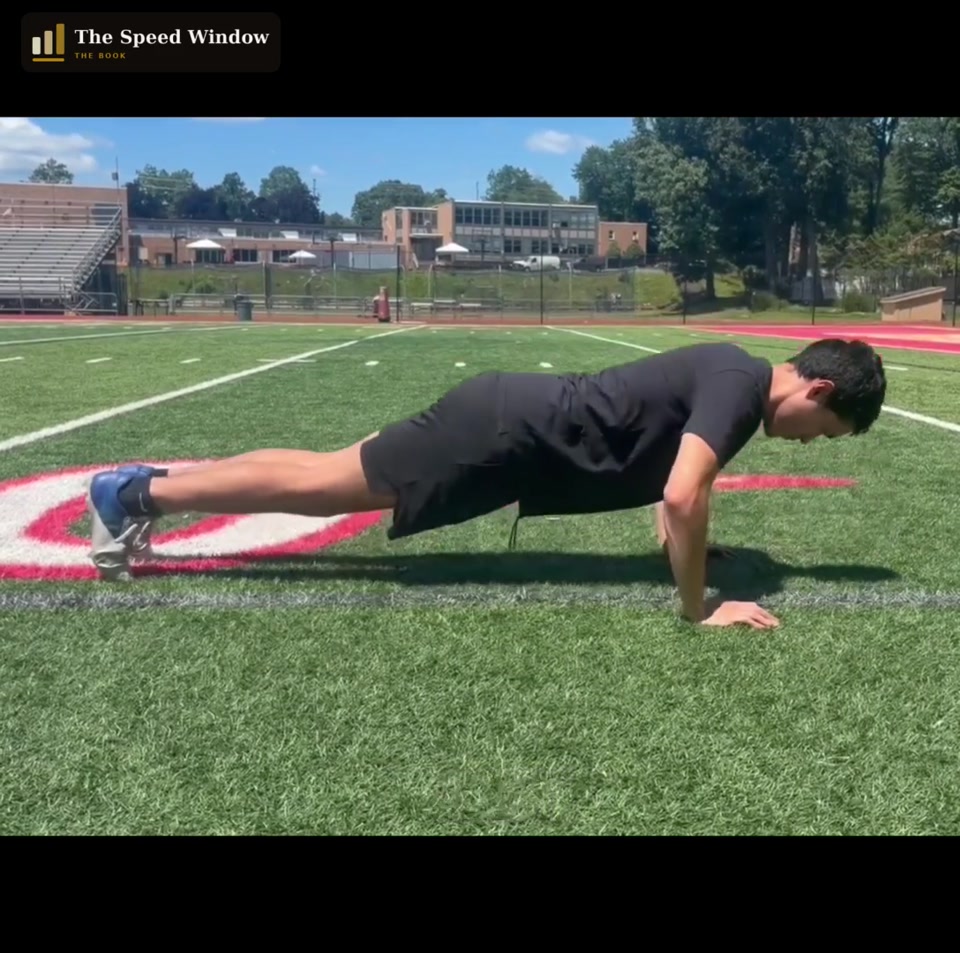
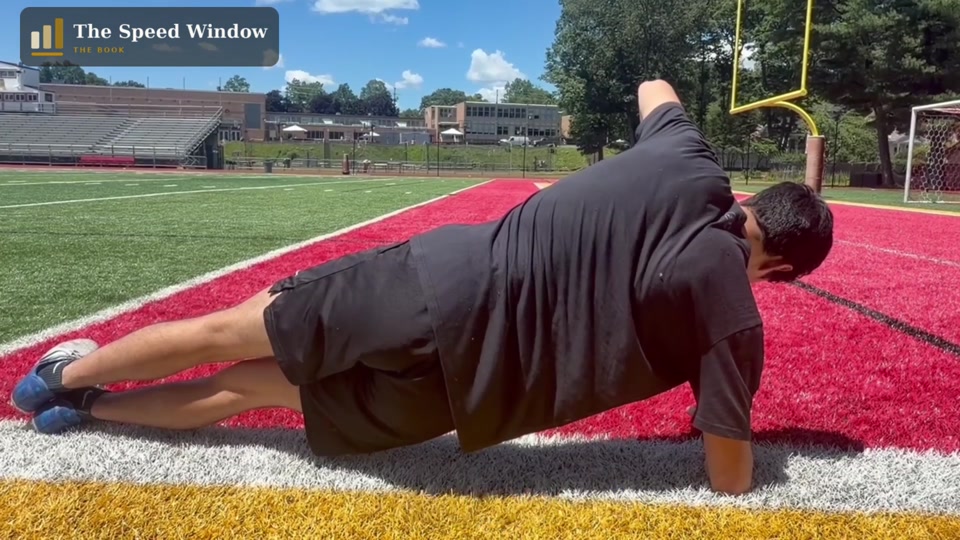
- Plank hold: if the bear crawl position cannot be maintained, build plank endurance first
Progress to: once the pattern is clean
- Reverse Bear Crawl: same pattern, backward direction
- Lateral Bear Crawl: same pattern, sideways direction
- Bear Crawl with shoulder tap: forward crawl with alternating shoulder taps to increase core rotation demand
- Push-Up Progression. The pressing complement to the crawl's shoulder stability development
Programming Notes
When and how to use this drill in a session.
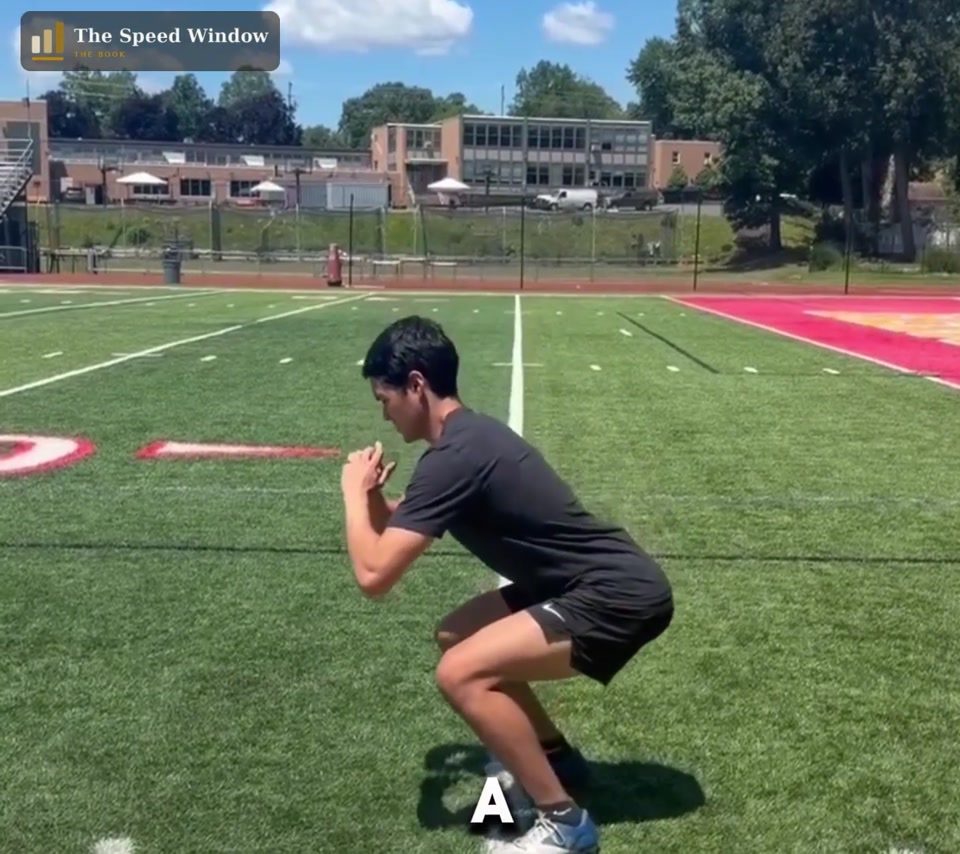
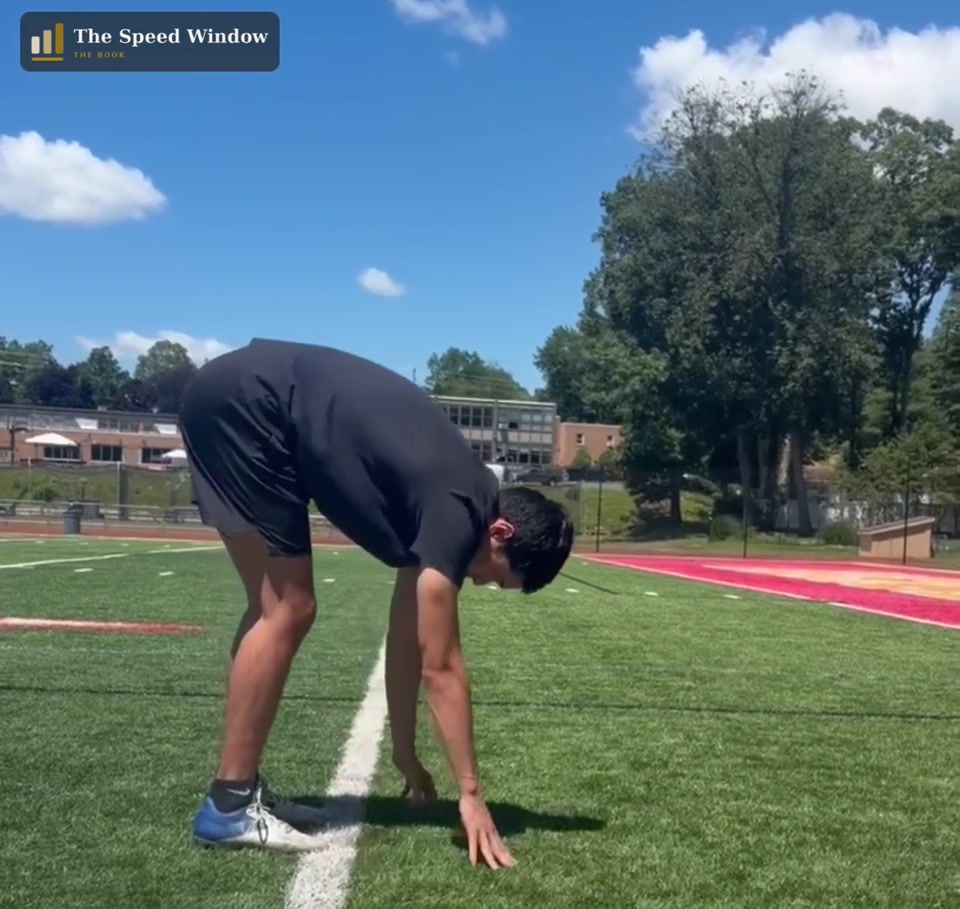
Program crawling patterns in the strength section of Neural Window sessions, alongside the Bodyweight Squat and Push-Up Progression. These three drills together cover lower-body strength (squat), upper-body pressing (push-up), and core/shoulder stability in a carrier position (crawl).
2 to 3 passes of 10 yards per pattern per session. Start with forward crawl only for the first 2 to 3 sessions. Add the reverse crawl once the forward pattern is consistently contralateral. Add the lateral crawl once the reverse is established.
The crawling block is typically the final training element in a Neural Window session before the cool-down. It serves as both a strength stimulus and a nervous system reset. The slow, deliberate, coordinated nature of crawling at the end of a high-speed session helps transition the athlete out of sympathetic activation.
Neural Window · Ages 7–12
The critical learning window.
Between ages 7 and 12, the nervous system acquires movement patterns faster than at any other stage of development. The drills trained here are not fitness drills. They are wiring sessions.
Explore the Neural WindowEvery drill here comes from the book.
The Speed Window maps all three windows: what to train, when, and why.
Get the Book