Purpose
What this drill trains, and why it matters.
The Single-Leg Squat with Rear Elevation (also called the Bulgarian Split Squat) is the Force Window's primary unilateral lower-body strength movement. Where the Back Squat and Trap Bar Deadlift develop bilateral strength, the rear-elevated single-leg squat targets each leg independently and exposes strength asymmetries that bilateral exercises mask.
Bilateral strength asymmetries greater than ten to fifteen percent between legs are associated with increased ACL and hamstring injury risk in sprint and change-of-direction sports. The rear-elevated single-leg squat is the most effective exercise for correcting these asymmetries because it loads each leg independently and allows the coach to observe and quantify the difference in rep quality, range of motion, and stability between sides.
This is a challenging exercise. Athletes new to it will struggle with balance, depth, and stability before they struggle with the load. Do not add significant external weight until the bodyweight version is performed with full depth, stable hips, and consistent rep quality. The balance and hip stability demands of this movement are high.
Setup
How to position your athlete before the first rep.
Elevate the rear foot on a bench or box: 12 to 18 inches
The rear foot rests on a bench or box behind the athlete. The top of the foot rests on the surface (not the heel, not the shin). Too high an elevation increases hip flexor strain: 12 to 18 inches is the working range.
Step the lead foot forward: far enough to allow vertical shin
The distance from the box determines the shin angle on the front leg. Too close: the shin travels excessively forward. The ideal front foot position allows the shin to remain close to vertical at depth.
Hold dumbbells at the sides or barbell on the upper back
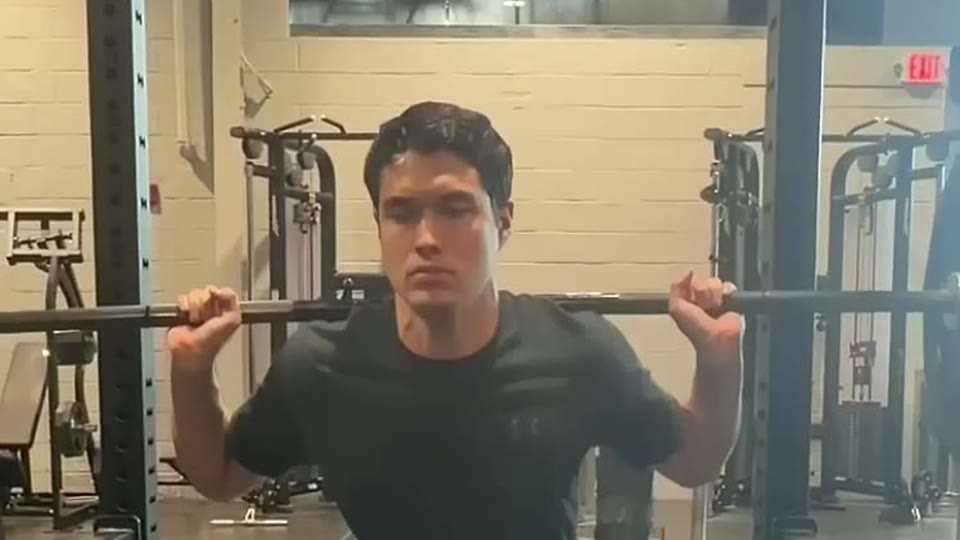
Dumbbell version: hold a dumbbell in each hand at the sides, natural grip. Barbell version: barbell in the high-bar back squat position. Begin with dumbbells for all athletes who are new to this exercise.
Execution
The drill, step by step.
Descend by bending the front knee. Not sitting back
The descent is a knee bend, not a hip-back sit. The front shin remains relatively vertical as the athlete descends. The rear leg is a balance point. It should not be bearing significant load at any point.
Lower until the front thigh is parallel or below
The target depth is the front thigh parallel to the floor: the same standard as the Back Squat. Athletes with adequate hip flexor mobility will achieve this depth without the rear knee touching the floor.
Keep the torso upright. No forward lean
The chest stays tall throughout the descent. Forward lean shifts load to the lower back and reduces the quad training stimulus. A dumbbell in each hand helps maintain an upright torso by acting as counterbalance.
Drive through the front heel. Return to standing
The ascent is driven by the front foot: specifically the heel. Drive the heel into the floor to extend the knee and return to standing. The rear leg assists with balance only.
Common Errors
What to watch for and how to correct it.
Front knee caving inward
The front knee collapses inward during the descent or ascent. This is a hip abductor weakness and quad dominance pattern. Cue: 'front knee out. Drive it over the toes.'
Excessive forward lean: torso collapsing toward the front thigh
The torso leans forward into the front thigh as the athlete reaches depth. Usually caused by tight hip flexors on the rear leg or a hip-back descent pattern rather than a knee-bend descent. Cue: 'chest tall, squeeze the rear glute.'
Rear foot loading: pushing off the box
The athlete uses the rear foot to push themselves up rather than driving through the front foot. The test: if the rear foot came off the box, could the athlete complete the rep? It should be possible. Cue: 'front foot does all the work.'
Coaching Cue
The one thing to say when you need the rep to change.
"Front knee over the toes (chest tall) drive through the heel."
This three-point cue covers the most common errors: knee alignment (front knee out, not caving), torso position (chest tall), and the drive phase (through the heel, activates the glutes and quads properly). Deliver before the first set of each leg.Progressions & Regressions
Where this drill fits in the sequence.
Regress to: if the athlete is struggling
- Split Squat (feet on the floor): same pattern with both feet on the ground, removes the balance demand
- Bodyweight Rear-Elevated Split Squat: establish the range of motion and balance before adding any load
- Reverse Lunge: lower stability demand than the rear-elevated version, good intermediate step
Progress to: once the pattern is clean
- Barbell Rear-Elevated Split Squat: higher load than the dumbbell version once the pattern is established
- Deficit Rear-Elevated Split Squat: front foot elevated 2 inches for increased range of motion
- Rear-Elevated Split Squat at tempo (three seconds down, pause, one second up) eliminates momentum
Programming Notes
When and how to use this drill in a session.
Program as a unilateral accessory movement alongside the Back Squat and Trap Bar Deadlift. Three to four sets of six to eight reps per leg with two minutes of rest between sets per leg.
Always start with the weaker leg. If significant asymmetry exists, add one extra set to the weaker side. Track the weight used on each leg separately. The goal is to reduce the asymmetry over time, not just to increase absolute load.
The rear-elevated single-leg squat is high demand and will create significant quad soreness in athletes new to unilateral loading. Introduce it progressively: bodyweight first, then light dumbbells, then progressively heavier dumbbells, then barbell.
Force Window · Ages 15–18
Power on a proven foundation.
The athlete is physically ready for high-intensity training. Speed-power, strength, and explosive work are built on what the first two windows established.
Explore the Force WindowEvery drill here comes from the book.
The Speed Window maps all three windows: what to train, when, and why.
Get the Book