Purpose
What this drill trains, and why it matters.
The lateral leg swing completes the dynamic hip mobilization sequence by adding the frontal plane. The plane that the forward/back swing does not reach. Hip abduction and adduction are the movements that control lateral cutting, shuffling, and directional change. Opening that range at the beginning of every session is not optional if the session includes any agility or lateral movement work.
The lateral swing also develops the single-leg stability of the standing leg in a different plane than the forward/back version. Maintaining a stable hip on the standing side while the other leg moves laterally activates the hip abductors and core stabilizers that are directly responsible for preventing knee valgus in landing and cutting movements.
Run this drill immediately after the forward/back swing, always. The two drills together (forward/back then lateral) address all planes of hip movement in under four minutes. They form an inseparable pair in the Neural Window warm-up system.
Setup
How to position your athlete before the first rep.
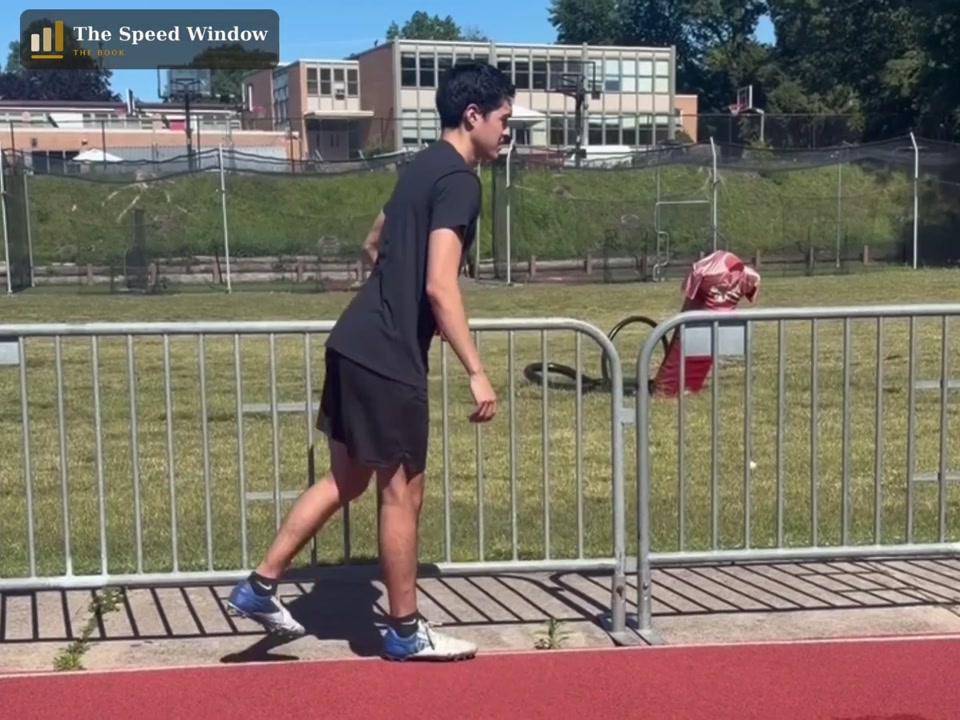
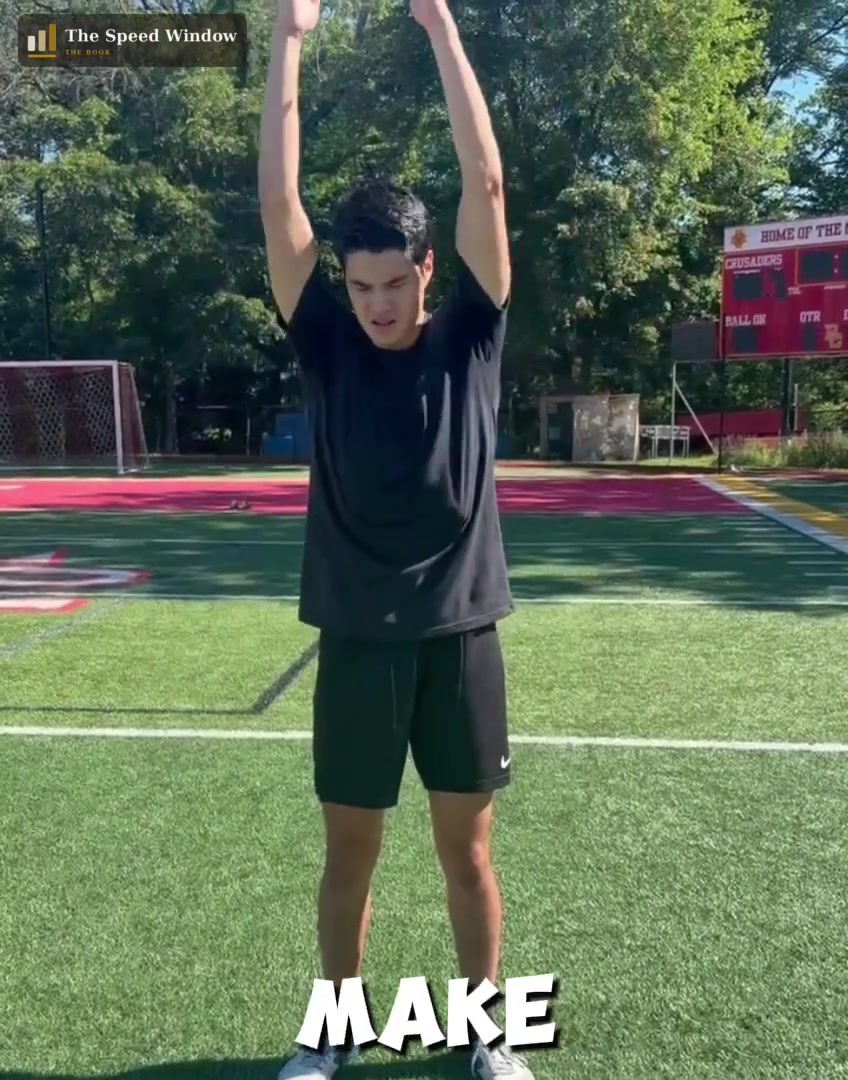
Turn 90 degrees from the wall: stand sideways to it
Place the hand closest to the wall on the wall for balance support. The swinging leg is the leg facing away from the wall. The standing leg is between the athlete and the wall.
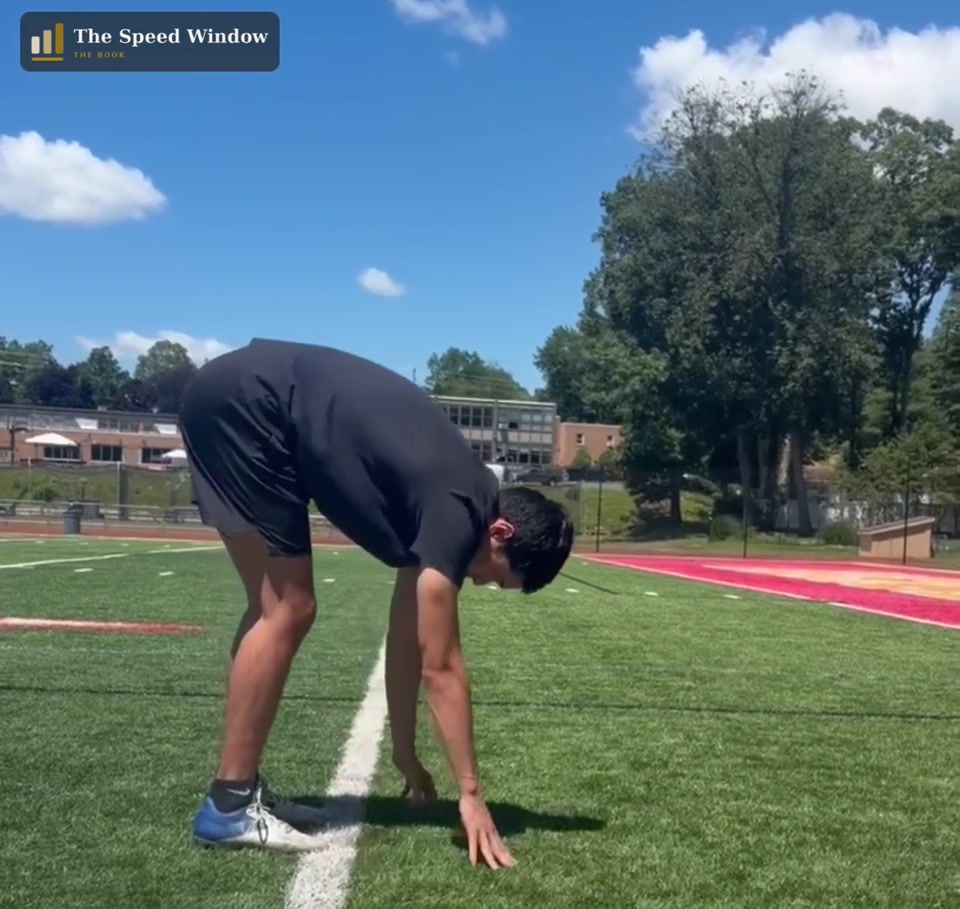
Stand with a slight knee bend on the support leg
Same as the forward/back version: slight knee bend on the standing leg to keep the pelvis mobile and prevent locking.
The swing leg is fully relaxed
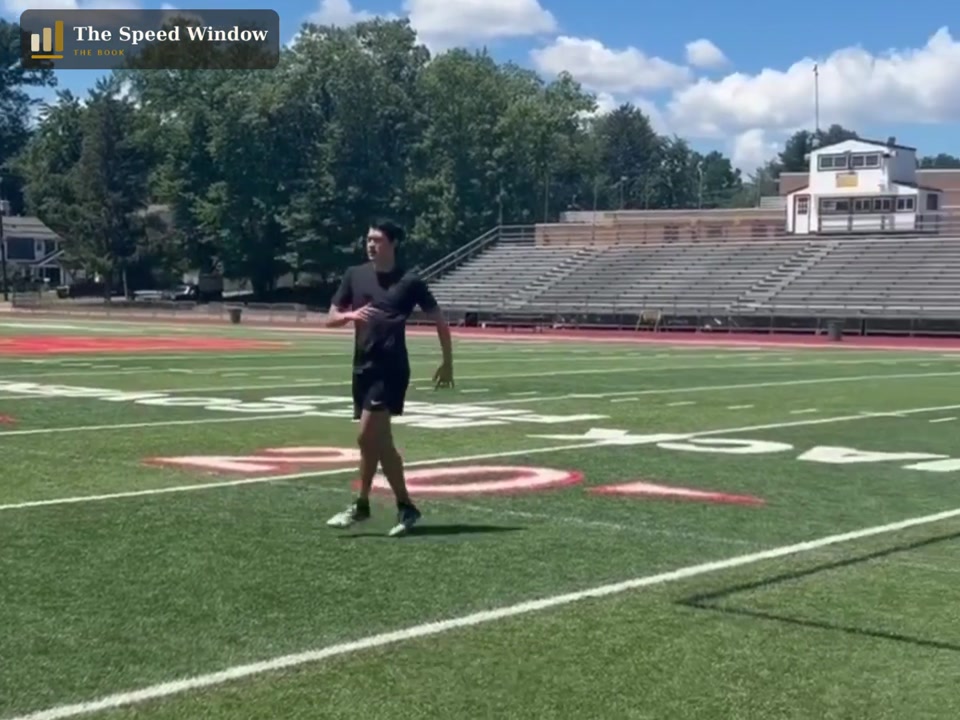
Allow gravity to take the leg across the body (adduction) and away from the body (abduction). The first two reps establish the pendulum rhythm before building amplitude.
Execution
The drill, step by step.
Swing the leg away from the body: abduction
Drive the leg out to the side, reaching the hip's natural abduction range. The hip stays level. Do not hike the hip upward to get more range. The range comes from the joint, not from compensatory trunk shift.
Let it swing back across and through: adduction
Allow the leg to swing back past center and cross in front of the standing leg. This is hip adduction: the range most neglected in youth athletic training. Let the pendulum swing fully across.
Build gradually. Start moderate, finish at full range
Same protocol as forward/back: first 5 reps at moderate amplitude, last 5 at full available range. The adduction crossing range typically requires more time to warm than abduction.
Change sides: face the other direction, repeat
Turn so the other leg is now the swing leg. 10 reps per side. Equal volume both sides.
Common Errors
What to watch for and how to correct it.
Hip hiking: raising the hip to get range
The athlete compensates for restricted abduction by lifting the hip on the swing side, which involves the lateral trunk rather than the hip joint. Cue: 'hips level. Let the leg reach out, not up.' This error often indicates IT band or hip abductor tightness that should be addressed.
Letting go of the wall and using the arm for range
The athlete pushes off the wall or swings the arm dramatically to generate lateral range. The range should come from the hip. Cue: 'light touch on the wall, only for balance, not push.'
Stopping the adduction swing. Not crossing through
The leg stops at center rather than crossing in front of the standing leg on the adduction swing. Full range means the swing leg crosses to the far side of the standing leg. Cue: 'swing it all the way through.'
Coaching Cue
The one thing to say when you need the rep to change.
"Level hips, swing all the way through."
'Level hips' prevents the most common compensation: the lateral trunk hike. 'All the way through' ensures the adduction range is fully expressed, not cut short. These two cues together define the drill's full range of motion standard.Progressions & Regressions
Where this drill fits in the sequence.
Regress to: if the athlete is struggling
- Leg Swing (Forward/Back) always precedes lateral swings in the warm-up sequence
- Standing hip abductor hold: stand on one leg and hold the other knee up and out to activate the abductors before the dynamic version
Progress to: once the pattern is clean
- Carioca: adds the hip rotation pattern that the lateral swing initiates
- Lateral Shuffle: directly applies the frontal-plane hip mechanics opened in the swing
Programming Notes
When and how to use this drill in a session.
Always follows the forward/back leg swing: never done in isolation. The pair runs in sequence: forward/back first (sagittal plane), lateral second (frontal plane). The two together mobilize the hip in every direction it moves.
10 reps per leg, no rest between sides. The total time for both swing drills combined is under 4 minutes. This is the minimum hip mobilization standard for any Neural Window session involving sprint, agility, or plyometric work.
Pay attention to asymmetry between sides on the lateral swing. Hip abductor tightness is common in young athletes and shows up most clearly in this drill. Note which side has restricted range and flag it for the coaching log.
Neural Window · Ages 7–12
The critical learning window.
Between ages 7 and 12, the nervous system acquires movement patterns faster than at any other stage of development. The drills trained here are not fitness drills. They are wiring sessions.
Explore the Neural WindowEvery drill here comes from the book.
The Speed Window maps all three windows: what to train, when, and why.
Get the Book