Purpose
What this drill trains, and why it matters.
The Joint Circles Series is the first movement of every session, regardless of age group or training window. It is not optional and it is not a placeholder while athletes gather. It is deliberate joint preparation: it lowers injury risk and gets the body ready to move before anything athletic begins.
Joint circles work by moving synovial fluid through the joint capsule: lubricating the joint surfaces and increasing range of motion before load is applied. They also serve as a proprioceptive primer: activating the sensory receptors in the joint capsule that provide the nervous system with positional awareness during athletic movement.
The sequence moves from the ground up: ankles, knees, hips, thoracic spine, shoulders. This bottom-up order follows the kinetic chain and ensures no joint is loaded before the one below it has been prepared. The whole series takes under two minutes. Skipping it is never worth the trade-off.
Setup
How to position your athlete before the first rep.
Athletes stand in a spread-out circle or line
Enough space for full arm circles without contact. No equipment needed.
Coach leads: athletes follow in real time
This is a follow-along sequence, not independent work. The coach controls the pace and counts the reps. Young athletes need the structure.
The sequence never changes: ankles, knees, hips, spine, shoulders
Do not reorder the sequence. Bottom-up is intentional: each joint prepares the one above it.
Execution
The drill, step by step.
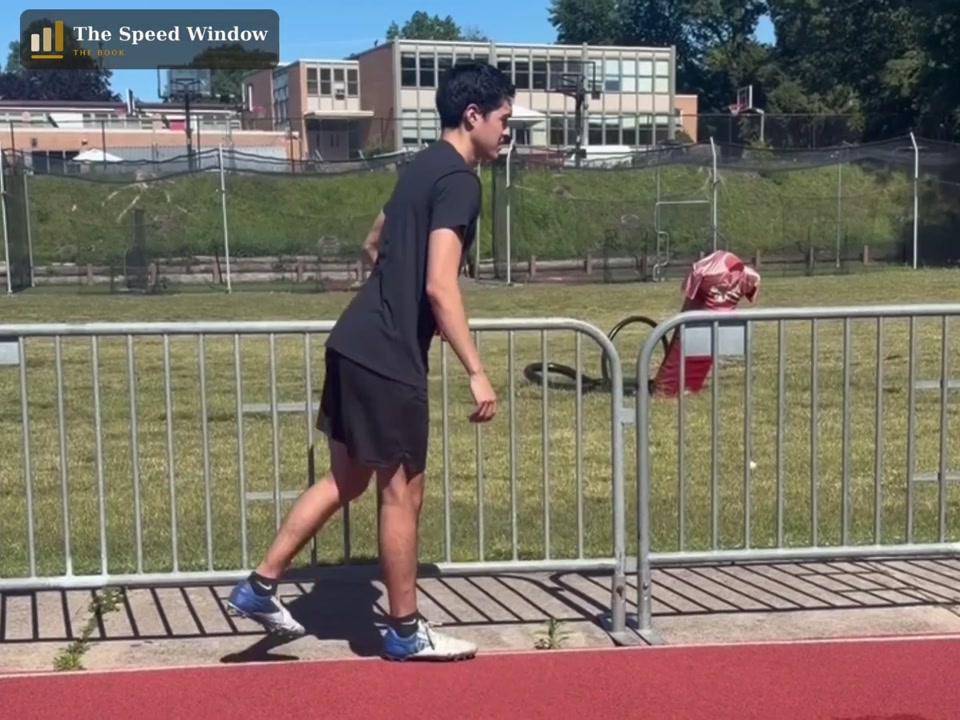
Ankles: 10 circles each direction per foot
Standing on one foot, the athlete draws slow circles with the raised foot, both clockwise and counter-clockwise. Then switches feet. Keep the circles large and controlled.
Knees: 10 circles each direction, both legs
Feet together, hands on knees, slight bend. The athlete draws circles with the knees, moving the joint through its full range. Then switches direction.
Hips: 10 circles each direction
Hands on hips, feet shoulder-width. Large hip circles in both directions. The movement should come from the pelvis, not the knees or shoulders.
Thoracic spine: 10 rotations each direction
Arms crossed over the chest, feet shoulder-width. Rotate the upper body left and right through full range of motion. The hips stay facing forward.
Shoulders: 10 arm circles each direction, then cross-body swings
Full arm circles forward and backward, then cross-body arm swings to open the shoulder capsule. Both arms simultaneously.
Common Errors
What to watch for and how to correct it.
Rushing through the sequence in 30 seconds
The series loses its purpose if completed too quickly. Each joint needs full range repetitions, not partial circles rushed to get to the 'real' workout. The coach sets the pace. Keep it deliberate.
Small, partial circles that don't reach end range
Small circles do not move the joint through the full range where injury most often occurs. Cue: 'big circles, go all the way around.'
Skipping joints
Athletes who skip the ankles and go straight to hip circles have been poorly trained. The sequence is complete or it is not done.
Coaching Cue
The one thing to say when you need the rep to change.
"Big circles, every joint, bottom to top."
Use this as the standard pre-cue before beginning the series. It communicates range ('big circles'), completeness ('every joint'), and sequence ('bottom to top') in one phrase.Progressions & Regressions
Where this drill fits in the sequence.
Progress to: once the pattern is clean
- Add dynamic hamstring swings and hip flexor sweeps after the circles
- Progress to full dynamic warm-up after joint circles are completed
Programming Notes
When and how to use this drill in a session.
The Joint Circles Series is the mandatory first 2 minutes of every single session. Neural, Stabilization, and Force Window. No exceptions. In programs that skip this step, injury rates are higher and session quality is lower.
After joint circles, move directly into the dynamic movement phase of the warm-up. The circles are preparation for movement. They should be followed immediately by something that moves the athlete forward.
Neural Window · Ages 7–12
The critical learning window.
Between ages 7 and 12, the nervous system acquires movement patterns faster than at any other stage of development. The drills trained here are not fitness drills. They are wiring sessions.
Explore the Neural WindowEvery drill here comes from the book.
The Speed Window maps all three windows: what to train, when, and why.
Get the Book