Purpose
What this drill trains, and why it matters.
The Box Jump. Step Down is the Neural Window's introduction to elevated plyometric training, with one critical rule built into the name: step down, do not jump down. The step-down instruction is not a safety shortcut. It is the teaching point. The training goal is the landing from the jump, and a controlled step-down after each rep reinforces the deceleration standard without the eccentric shock of a repeated box drop.
At ages 7 to 12, the purpose of any box jump is not to develop power. The athlete does not yet have the structural capacity to express meaningful jump power, nor the strength base to protect the joints from repeated high-impact landings. The purpose is to teach the mechanics of a safe, controlled jump landing: where does the force go when I come down, and what does my body need to do to manage it?
A box height of 6 to 8 inches is appropriate for most athletes in this age group. The height is deliberately modest. A lower box with a clean landing is always more valuable than a higher box with a crash landing.
Setup
How to position your athlete before the first rep.
Select a 6- to 12-inch box: stable and non-slip
The box must not slide on landing impact. Secure it against a wall or use a purpose-built plyo box. Avoid unstable surfaces. For athletes new to box work, begin with 6 inches.
Position the athlete 12 inches in front of the box
Starting too far back forces an overly long jump and a forward-leaning landing. Starting too close creates an awkward vertical jump straight up. Twelve inches in front of the box is the starting standard.
Demonstrate the full rep including the step-down
Show the jump, the landing, the two-second stick, and the deliberate step-down from the box one foot at a time. The step-down is part of the rep. Not an afterthought. Demonstrate it slowly.
Execution
The drill, step by step.
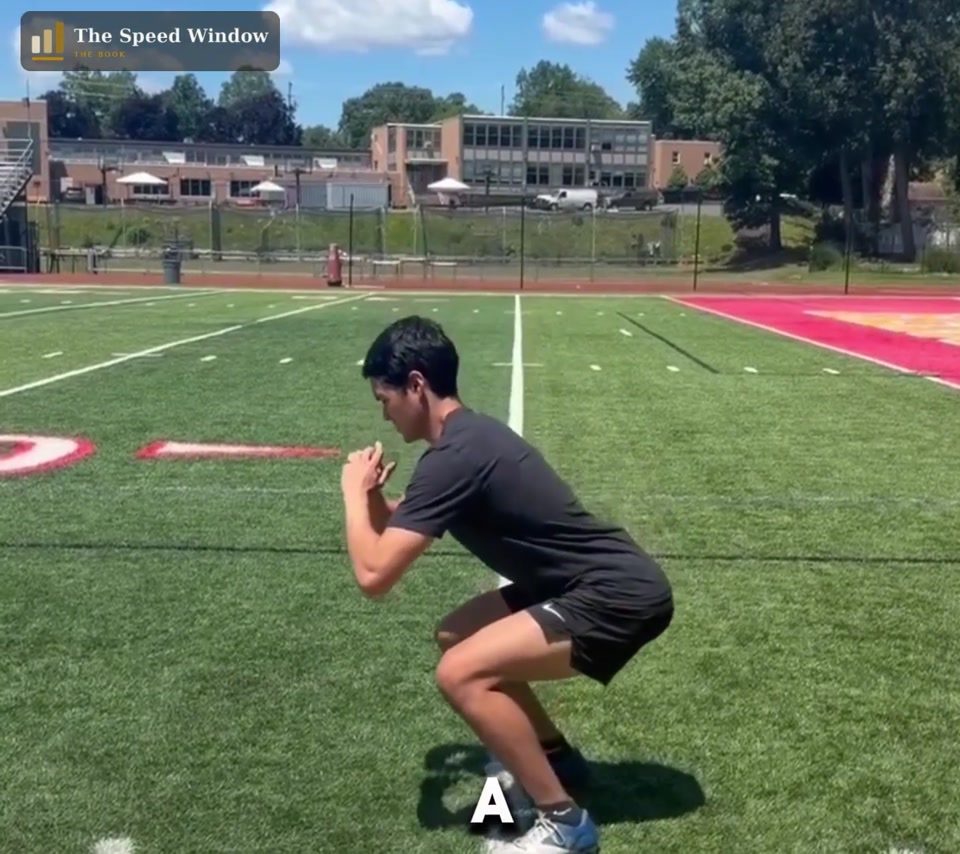
Load: hips back and down, arms swing back
Hinge at the hips, bend the knees to approximately 90 degrees, swing the arms behind the body. This is the countermovement that generates the jump. Hold the loaded position for one beat before the jump.
Jump: arms drive forward and up
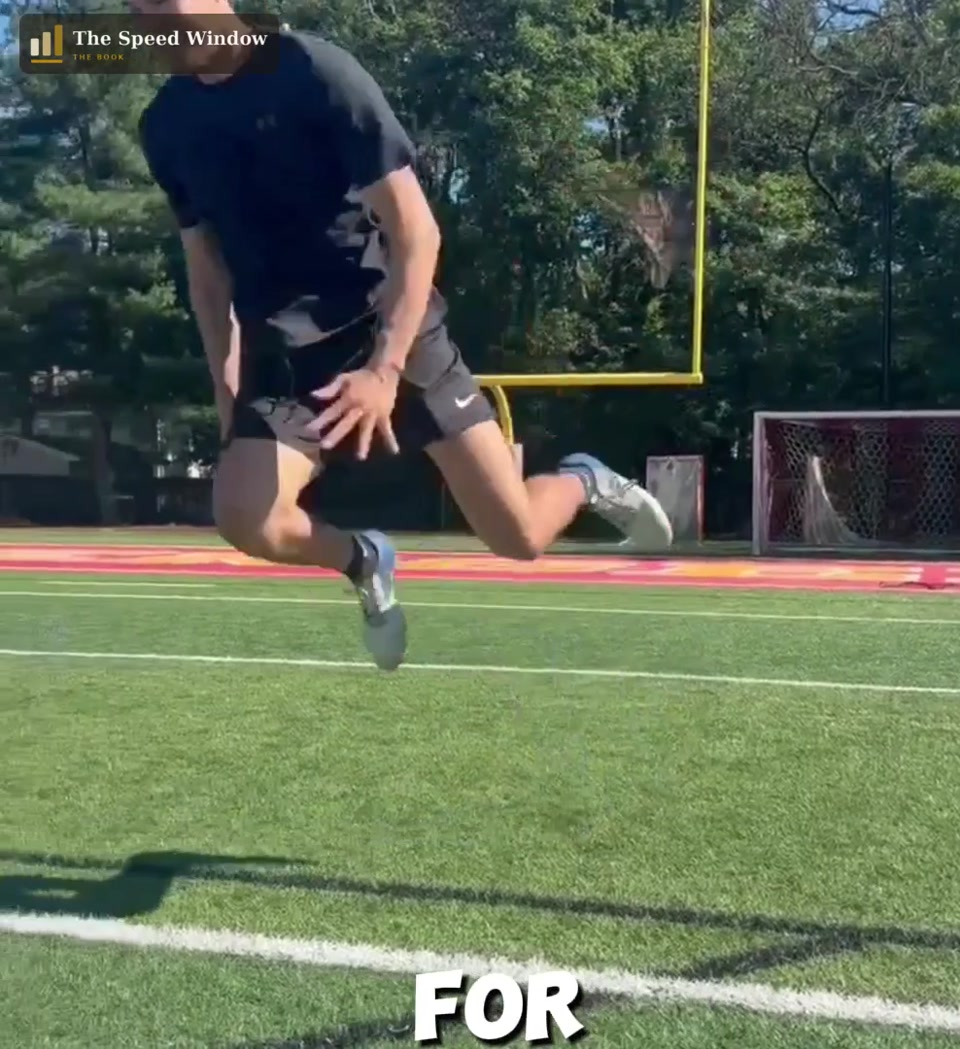
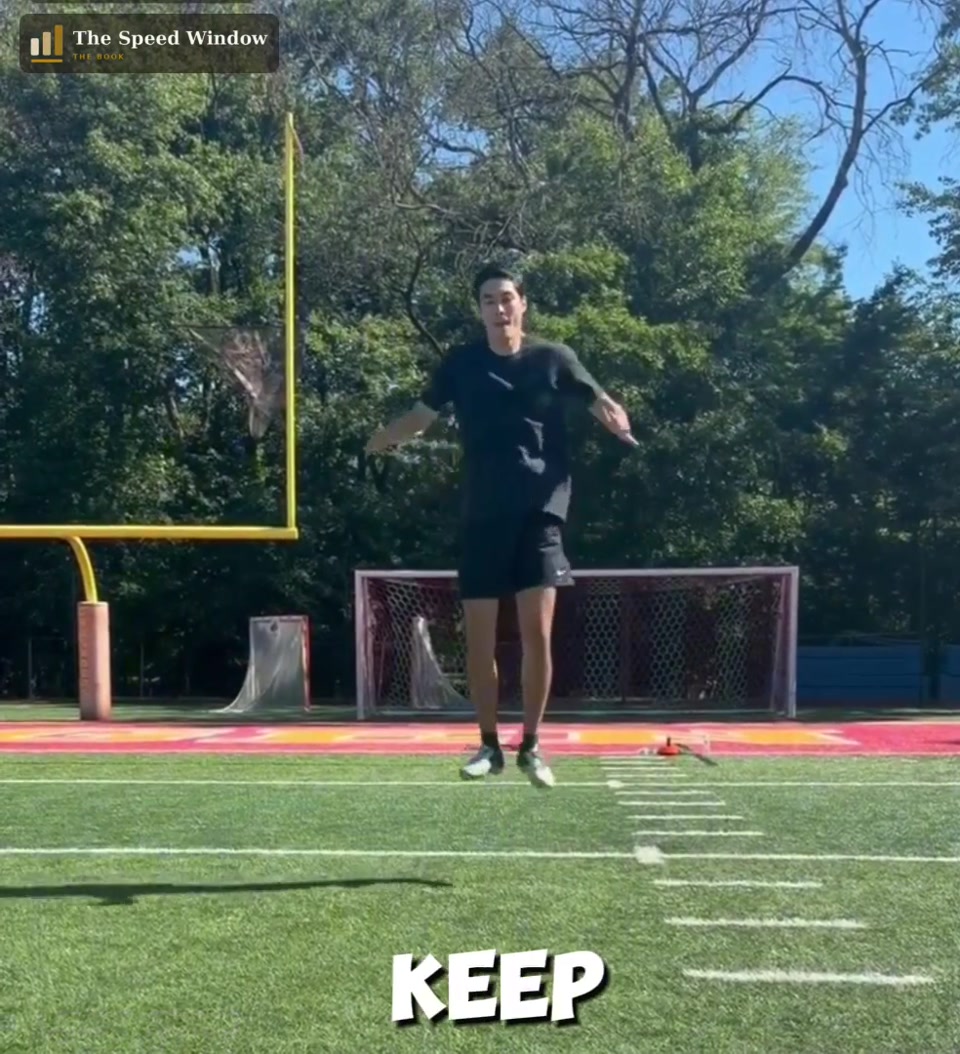
Extend through the hips, knees, and ankles simultaneously. The arms swing forward and up to add momentum. The jump is slightly forward (toward the box) not purely vertical. The feet should clear the front edge of the box cleanly.
Land (on the box) soft and centered
Land on the ball of the foot, absorbing force by bending the hips and knees simultaneously. Land centered on the box surface. Not on the front edge. The landing sound should be soft. A loud landing means force is not being absorbed correctly.
Stick: hold for two seconds
Do not immediately stand up or step down. Hold the landing position for a full two-second count: hip hinge, soft knees, shoulders over the balls of the feet. This is the learning moment.
Step down: one foot at a time
Step off the side of the box, one foot at a time, in a controlled descent. Do not jump down. The step-down prevents the eccentric overload that makes repeated box jumps problematic for this age group's still-developing skeletal structure.
Common Errors
What to watch for and how to correct it.
Stiff-leg landing on the box
The athlete lands with nearly straight knees, absorbing all impact through the ankle and knee joint. Cue: 'bend and absorb, soft landing.' Reduce box height until the athlete can land with a controlled knee bend consistently.
Landing on the front edge of the box
Feet land on or near the front edge rather than centered on the surface. This creates a tipping risk. Cue: 'land in the middle. Not the edge.' Mark the center of the box with tape if the error persists.
Jumping down instead of stepping down
The athlete hops off the box after each rep instead of stepping down. This is the most common instruction error. Remind before every set: 'step off, one foot at a time.'
Rushing the next rep. No stick
The athlete steps off the box and immediately jumps again without a stick hold. The two-second hold is the landing training. Without it, the drill trains jumping, not landing. Cue: 'stick it, then step.'
Coaching Cue
The one thing to say when you need the rep to change.
"Soft landing, stick it, step off."
This three-part cue maps the three most coached moments of the rep: the landing quality, the hold duration, and the controlled descent. Deliver before each rep. Any deviation from the step-off standard (jumping down instead) stops the drill for a demonstration reset.Progressions & Regressions
Where this drill fits in the sequence.
Regress to: if the athlete is struggling
- Broad Jump + Stick: establish ground-level landing quality before elevating
- Single-Leg Hop + Stick: develop unilateral landing control at ground level
- Box step-up with controlled step-down. Build hip control and confidence on the box surface before the jump
Progress to: once the pattern is clean
- Box Jump. Step Down with increased height (12–18 inches) in the Stabilization Window
- Box Jump (repeated effort (Force Window only)) consecutive box jumps with full rest, after a strength base is established
- Depth Jump (Force Window): drop from box and immediately jump, activates the stretch-shortening cycle at maximum intensity
Programming Notes
When and how to use this drill in a session.
Introduce after the Broad Jump + Stick and Single-Leg Hop + Stick are consistent. Place it in the plyometric section of Neural Window sessions: after warm-up and sprint/agility work, before strength work.
3 sets of 5 reps. Each rep is a complete cycle: jump, land, stick, step off, reset. Full rest between sets. Do not rush the reset. The quality of each rep is more important than completing 5 reps quickly.
Keep the box at 6 to 8 inches throughout the Neural Window. Height progression comes in the Stabilization and Force Windows after the landing mechanics and structural readiness are fully established.
Neural Window · Ages 7–12
The critical learning window.
Between ages 7 and 12, the nervous system acquires movement patterns faster than at any other stage of development. The drills trained here are not fitness drills. They are wiring sessions.
Explore the Neural WindowEvery drill here comes from the book.
The Speed Window maps all three windows: what to train, when, and why.
Get the Book