Purpose
What this drill trains, and why it matters.
The Bench Press is the Force Window's primary horizontal pushing strength exercise and the upper-body bilateral press movement. It develops the pectorals, anterior deltoids, and triceps. The pressing muscles that contribute to pass-catching stability, contact absorption, and upper-body force production across a range of sport movements.
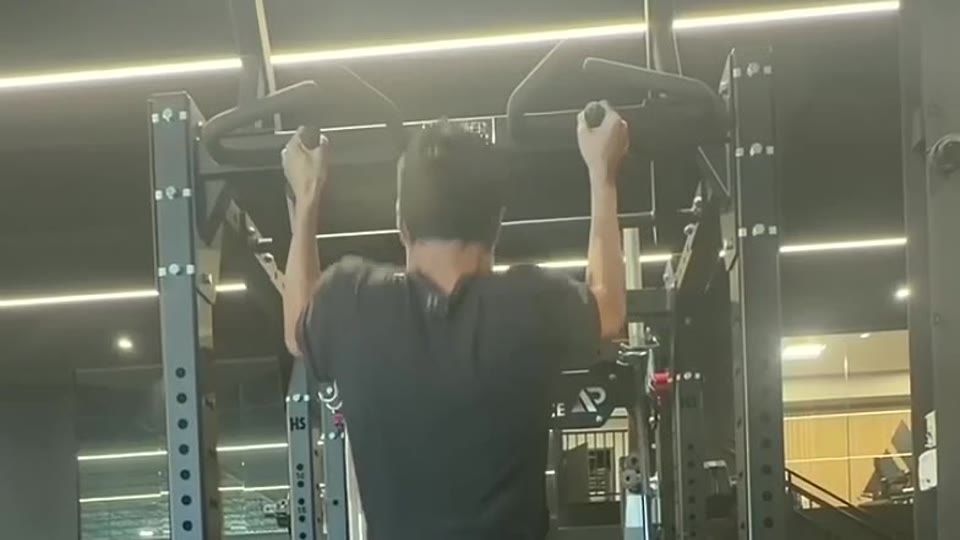
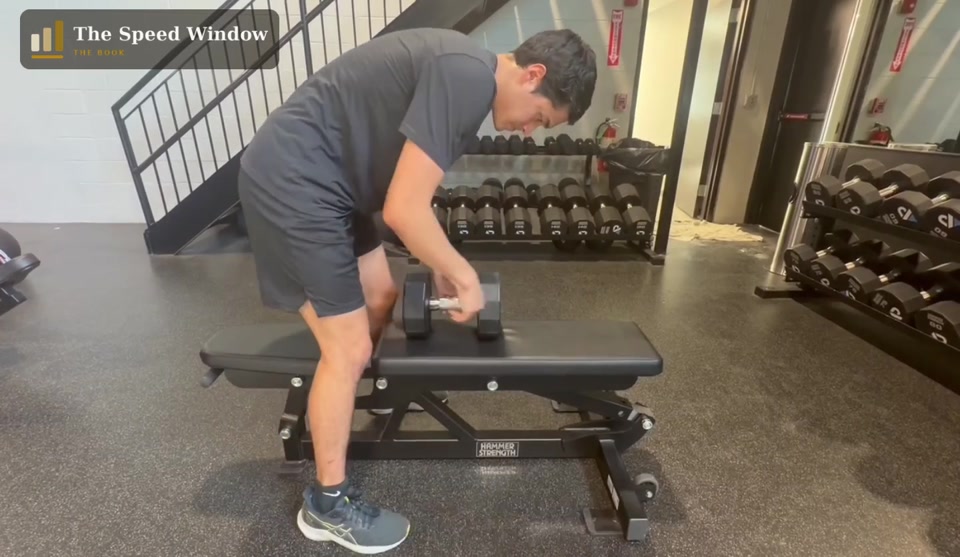
The Bench Press in this context is an athletic strength tool, not a powerlifting max or a chest development exercise in isolation. Force Window athletes bench press to build pressing strength that complements their pulling work (Pull-Up, Dumbbell Row) and to create a balanced upper-body strength base. The push-pull ratio matters: equal strength in the pressing and pulling patterns reduces shoulder injury risk.
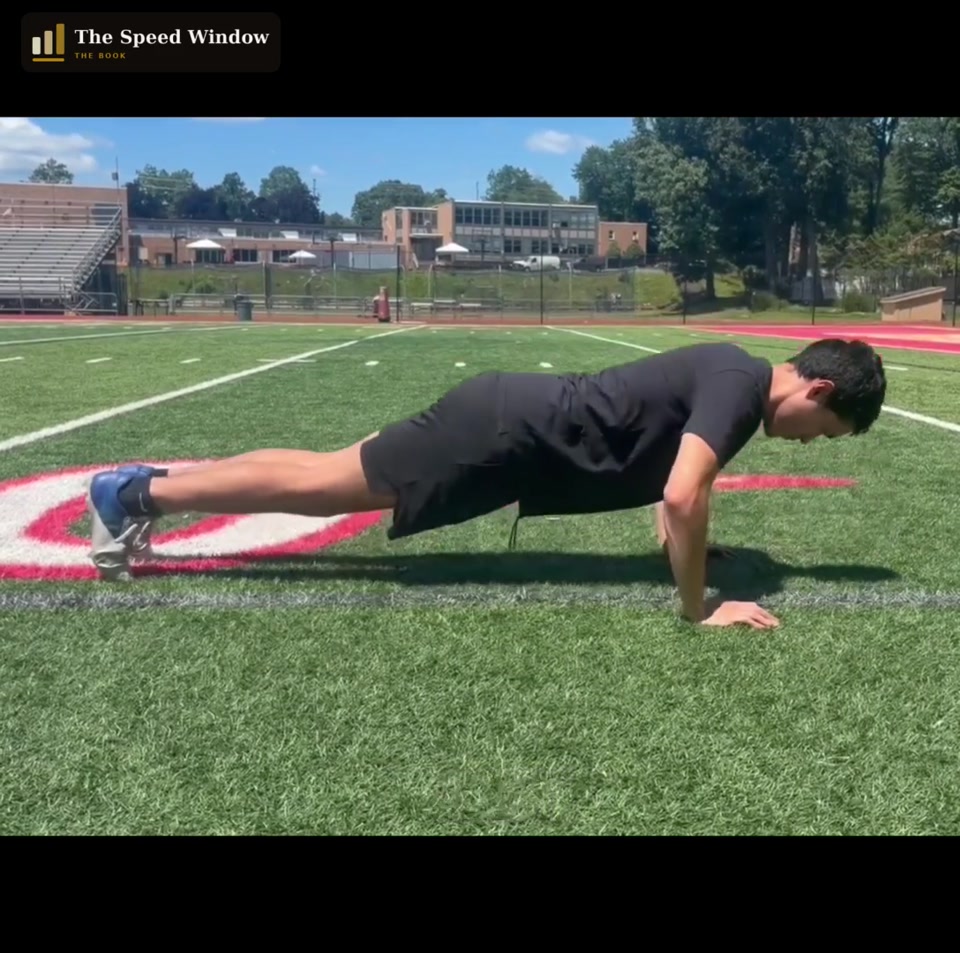
The prerequisite for the Bench Press is established shoulder stability from the Push-Up Progression and Dumbbell Row work completed in the Neural and Stabilization Windows. Athletes who cannot perform twenty strict push-ups with full range of motion and a stable shoulder position should develop that foundation before moving to the barbell bench press.
Setup
How to position your athlete before the first rep.
Set the bar at arm's length above the chest when lying down
The rack height should allow the athlete to unrack the bar with arms nearly fully extended. Not so high that it requires a stretch to unrack, not so low that the bar must be pressed before it clears the uprights.
Establish a stable base on the bench: five points of contact
Head, upper traps, and hips on the bench. Both feet flat on the floor. This creates five points of contact and a stable pressing platform. The lower back will have a natural arch. This is correct. The arch should not be so extreme that the hips lift off the bench.
Grip width: slightly wider than shoulder width
The grip is slightly wider than shoulder width, measured so that when the bar touches the chest, the forearms are vertical (or close to it). Grip too wide: shoulder stress. Grip too narrow: tricep-dominant press.
Set the shoulder blades: retract and depress before unracking
Before unracking the bar, the athlete actively retracts and depresses the shoulder blades: squeezing them together and pulling them down. This shoulder blade position is maintained throughout the set and protects the shoulder joint.
Execution
The drill, step by step.
Unrack the bar: lower to the sternum under control
Unrack by pressing straight up and walking the bar over the chest. Lower the bar in a controlled path. Not straight down, but at a slight angle toward the lower chest or sternum. The bar touches the lower chest, not the neck.
Touch the chest. No bounce
The bar touches the lower chest with a controlled stop. It does not bounce off the sternum. The pause is brief but real. This confirms full range of motion and eliminates momentum from contributing to the press.
Press in a slight arc toward the uprights
The bar returns to the starting position in a slight forward arc. Not straight up. This arc matches the natural line of force of the pectorals. The bar should finish directly over the shoulder joint, not over the sternum.
Maintain scapular retraction throughout
The shoulder blades stay retracted and depressed throughout the entire set. The moment the scapulae lose their set position, shoulder joint stress increases. Cue: 'keep the chest up against the bar.'
Common Errors
What to watch for and how to correct it.
Flaring the elbows to 90 degrees
The elbows wing out to the sides perpendicular to the body. This increases shoulder impingement risk and reduces pressing efficiency. The elbows should be 45 to 75 degrees from the torso, not 90. Cue: 'tuck the elbows. Not out to the sides.'
Bar bouncing off the chest
The athlete uses momentum by bouncing the bar off the sternum. This is a strength bypass, not a strength builder. Cue: 'touch and go, controlled touch, no bounce.'
Hips lifting off the bench
The athlete bridges the hips off the bench to shorten the range of motion. This is a powerlifting technique that is not appropriate in the Force Window athletic context. Cue: 'hips on the bench, all five points of contact.'
Coaching Cue
The one thing to say when you need the rep to change.
"Blades set (tuck the elbows) chest meets the bar."
This cue establishes the three technique elements in the order they matter: the shoulder blade position (blades set) protects the shoulder, the elbow tuck (not out to the sides) optimizes the pressing angle, and the bar path (chest meets the bar, not the bar drops to the chest) reinforces full control through the descent.Progressions & Regressions
Where this drill fits in the sequence.
Regress to: if the athlete is struggling
- Push-Up Progression. Return to the bodyweight horizontal press if shoulder position is unstable
- Dumbbell Bench Press: allows each arm to move independently, reducing bilateral compensation and joint stress
- Floor Press: reduces the range of motion and eliminates the shoulder joint stress at the very bottom of the barbell bench press
Progress to: once the pattern is clean
- Barbell Bench Press: max strength: 3 × 3 at near-maximal load
- Pause Bench Press: two-second pause at the chest, eliminates momentum and builds bottom-position strength
- Close-Grip Bench Press: narrower grip emphasizes tricep strength
Programming Notes
When and how to use this drill in a session.
Program the Bench Press on upper-body training days, paired with the Weighted Pull-Up in a push-pull superset: one set of Bench Press, rest, one set of Pull-Up, rest, repeat. This structure maintains push-pull balance and reduces training time.
Four sets of four to six reps. Progress by five pounds when six reps are achieved across all four sets. This is the same simple progressive overload structure used for the Back Squat and Trap Bar Deadlift.
Monitor the push-pull ratio. If an athlete can bench significantly more than they can perform weighted pull-ups at, the imbalance should be addressed by prioritizing pull-up development. A balanced upper body is safer and more athletically capable than a press-dominant one.
Force Window · Ages 15–18
Power on a proven foundation.
The athlete is physically ready for high-intensity training. Speed-power, strength, and explosive work are built on what the first two windows established.
Explore the Force WindowEvery drill here comes from the book.
The Speed Window maps all three windows: what to train, when, and why.
Get the Book