Purpose
What this drill trains, and why it matters.
The L-Drill is the Stabilization Window's test of transitions. The Pro Agility asks for one kind of cut, a flat plant-and-reverse. The L-Drill asks for three different ones in a row: a stop-and-go on the first leg, a tight turn around a cone, and a curved run that bends into a straight sprint. Each transition is a different problem for the hips and feet to solve, and the athlete has to solve them in order, on the move.
That is why it belongs in this window and not earlier. A twelve- to fifteen-year-old is rebuilding control around a body that keeps changing. Growth stretches the levers, and the footwork that worked at ten stops working at thirteen. The L-Drill exposes that fast. An athlete who runs it tall, wide, and late at the turns is showing you exactly where the re-coordination work needs to go.
Run it at 75 to 80 percent effort until the pattern is clean. The time comes later, in the Force Window. Here, the goal is a low hip through every turn, a short braking pattern at the first cone, and a tight line around the cones instead of a wide loop. Introduce it after the Deceleration Drill: 5-3-1 and the Pro Agility: Technical are established, since it borrows the braking from one and the plant from the other.
Setup
How to position your athlete before the first rep.
Set three cones in an L
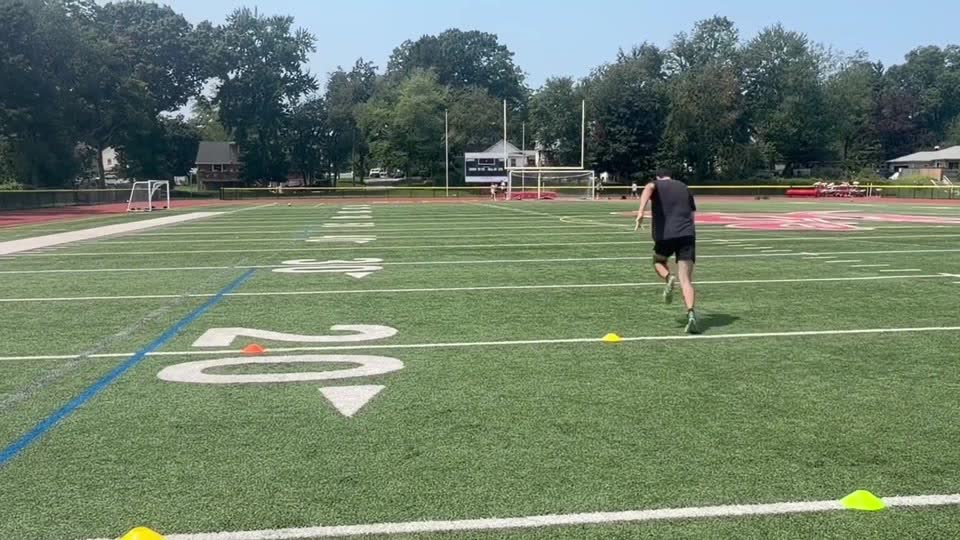
Cone 1 is the start. Cone 2 is five yards straight ahead. Cone 3 is five yards to the right of cone 2, at a right angle, so the three cones form an L. Use the yard lines on a field if you have them; the shape has to be square.
Athlete starts at cone 1 in a two-point stance
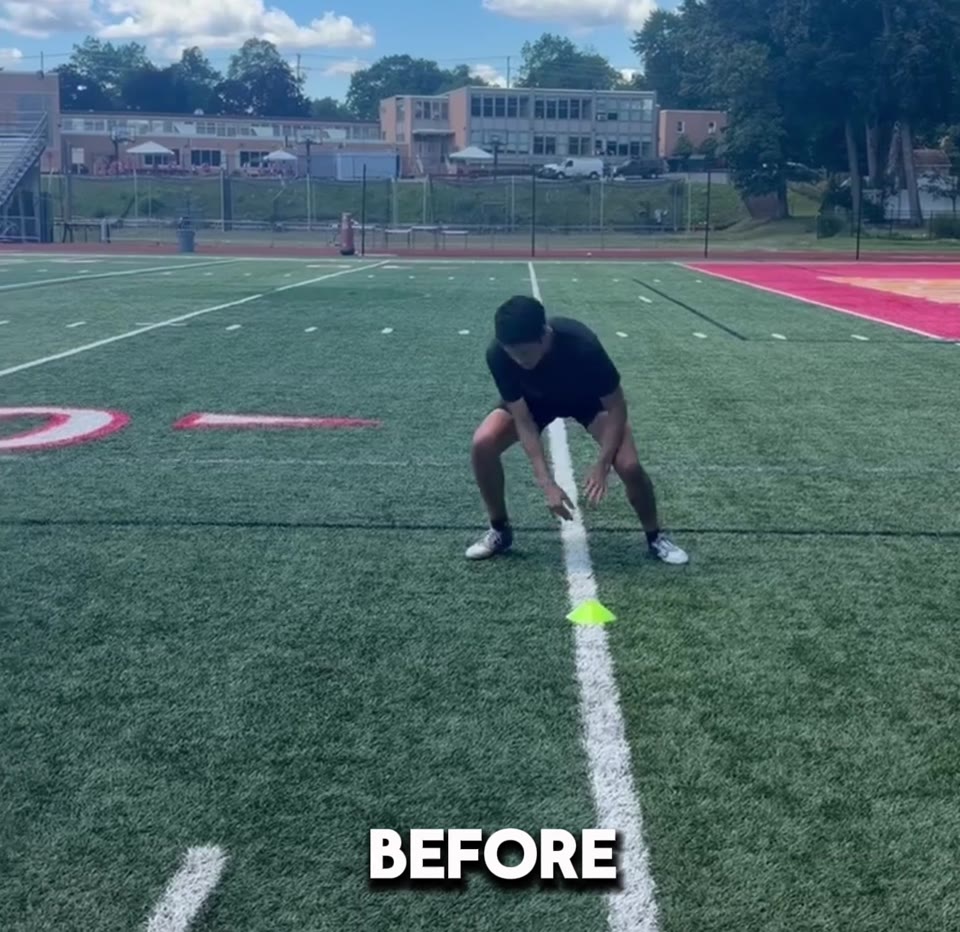
Feet staggered, weight over the front foot, facing cone 2. No crouching start. The first movement is always a straight five-yard sprint.
Walk the pattern once
Sprint to cone 2, touch, sprint back to cone 1, touch, sprint back out and around cone 2, run to cone 3 and around it, back around cone 2, and sprint home. Every athlete walks it before running it, and every athlete runs it in both directions.
Execution
The drill, step by step.
Sprint to cone 2: five yards
Drive out hard, then start braking two steps before the cone. Touch the line at cone 2 with the hand. Hips drop as the athlete brakes; the chest stays over the feet, not out in front of them.
Sprint back to cone 1 and touch
Push out of the touch with the outside foot. Short, quick steps for the first two strides, then open up. Brake again before cone 1, touch the line, and turn.
Sprint out and turn around cone 2
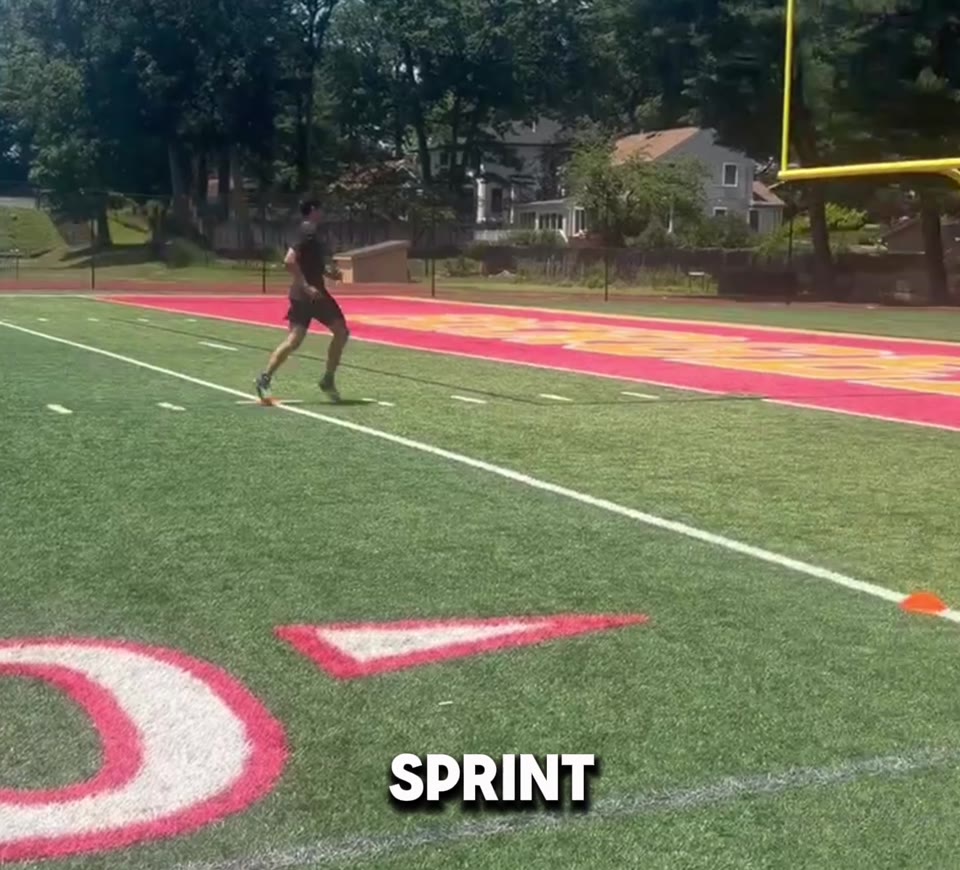
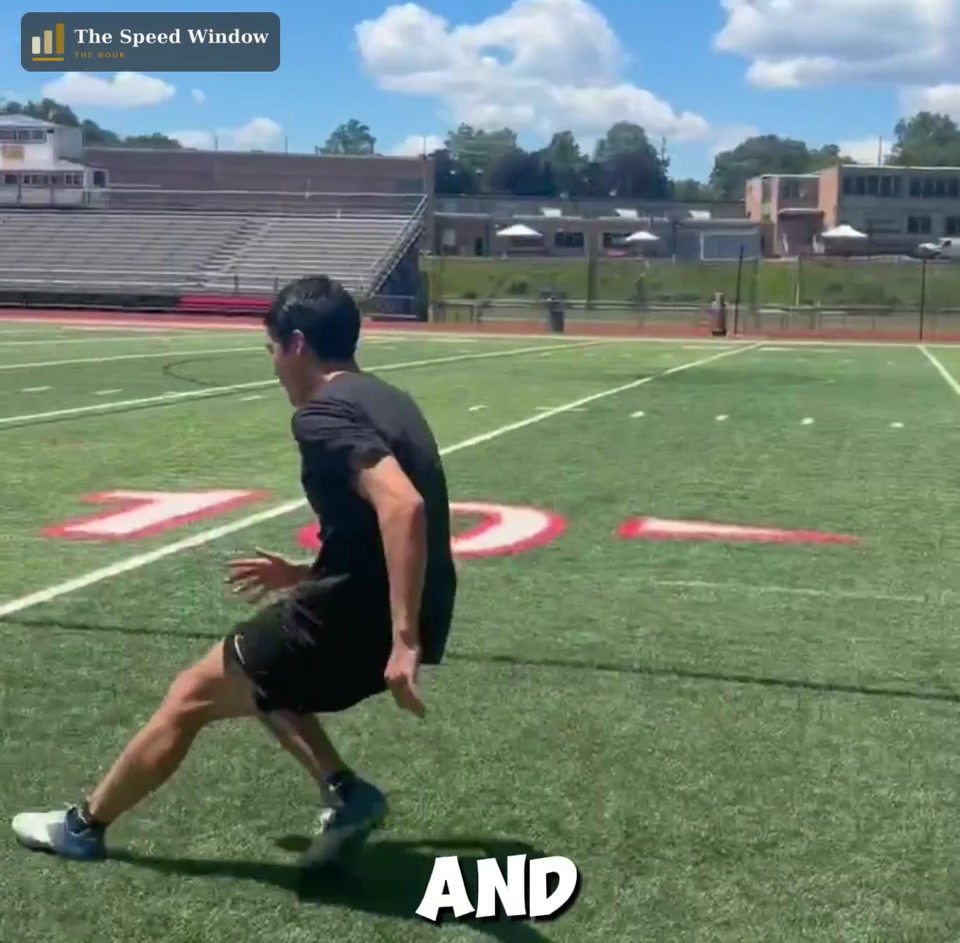
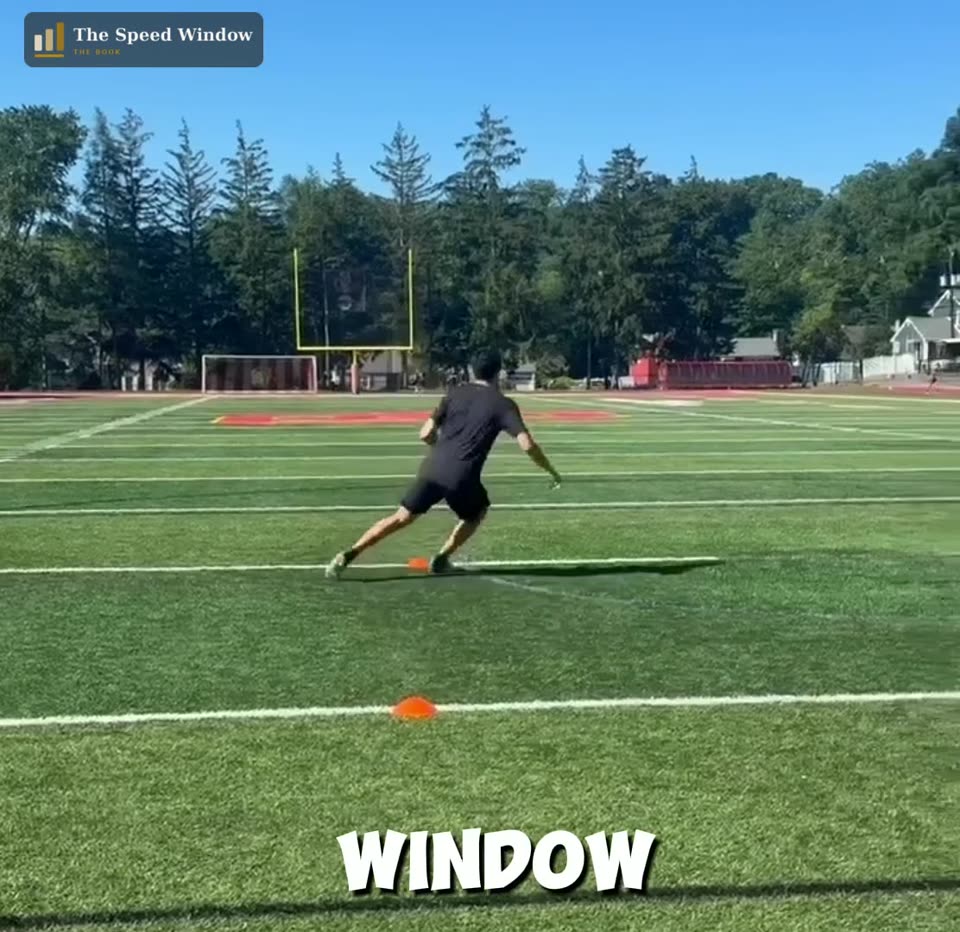
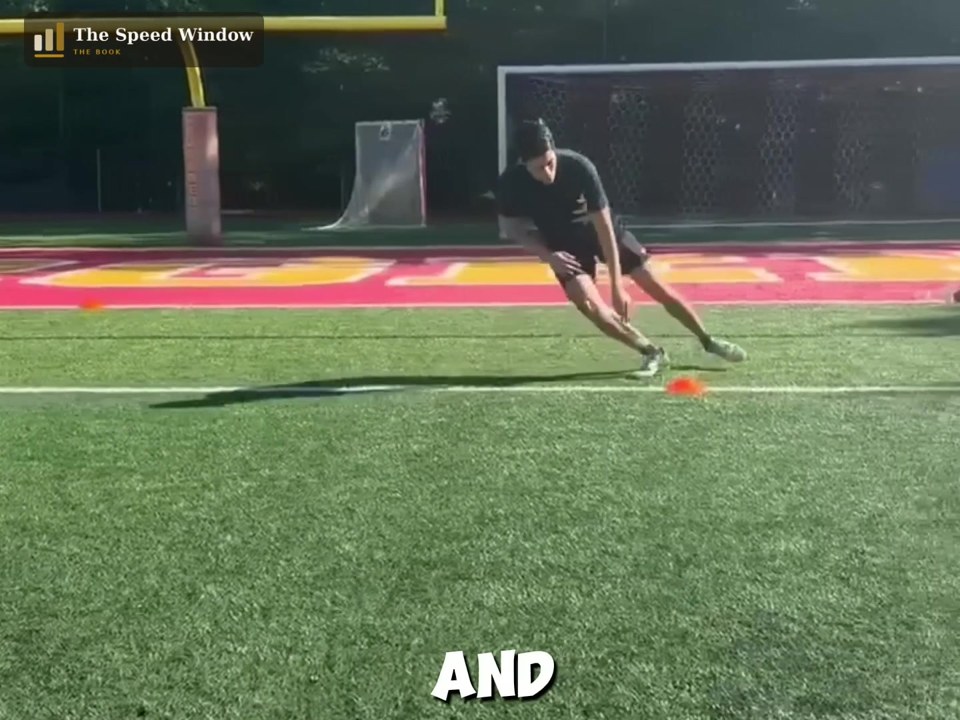
This time there is no stop. The athlete runs past cone 2 on the inside and bends around it, staying low and tight to the cone. Inside shoulder dips, outside foot pushes.
Run to cone 3 and around it
Five yards across. Turn the corner tight, same mechanics: low hips, inside shoulder down, feet close to the cone, no wide loop.
Back around cone 2 and sprint home
Round cone 2 on the far side and accelerate the final five yards to cone 1 with full arm drive. The rep ends at cone 1, upright and under control.
Reset, then run it the other way
Mirror the setup (cone 3 to the left) so the athlete turns in both directions across the set.
Common Errors
What to watch for and how to correct it.
Braking late at the first cone
The athlete sprints flat out and has to throw the body backward to stop, or overruns the line. The brake should start two steps before the cone, with the hips dropping, not the chest lurching. Cue: 'stop before the cone, not at it.'
Standing up on the touch
The athlete rises out of the athletic position to reach down and then has to sink again to push off. The center of gravity should not change at the touch. Cue: 'stay low through the touch.'
Wide loops around the cones
The athlete swings out three or four feet from the cone on the turns. The L-Drill is won inside the turns. A tight line is a low hip and an inside shoulder dip. Cue: 'hug the cone.'
Crossing the feet on the turn
The inside foot crosses in front of the outside foot coming around a cone. This is the same error as the crossover in the shuffle and it costs the same thing: balance and the next step. Push with the outside foot, follow with the inside.
Running it timed too early
The athlete trades mechanics for seconds the moment a stopwatch appears. No timer for the first two to three weeks. Mechanics first, then the clock.
Coaching Cue
The one thing to say when you need the rep to change.
"Brake early. Hug the cone."
The two mechanics that decide this drill are the braking pattern at the first cone and the line through the turns. Both failures come from the same cause, a tall posture. Say it before the first rep and again after any rep where the athlete overruns a line or swings wide.Progressions & Regressions
Where this drill fits in the sequence.
Regress to: if the athlete is struggling
- Deceleration Drill: 5-3-1 to isolate the braking pattern before adding the cones
- Pro Agility: Technical to build the plant-and-push on a flat line
- L-Drill at jog pace, walking the turns, until the line around each cone is tight
Progress to: once the pattern is clean
- L-Drill at 90 percent with a coach watching the turns only
- L-Drill timed, as a benchmark every four to six weeks, both directions charted
- Pro Agility: Max Effort and the full-speed three-cone in the Force Window
Programming Notes
When and how to use this drill in a session.
Run the L-Drill on agility days in the Stabilization Window, after the warm-up and the deceleration work and before any maximal speed. Four to six reps with full recovery, alternating direction so both turns get equal work. It is a short drill with a lot of load in the turns, so stop the set when the line around the cones starts to widen; that is fatigue showing up as mechanics, and extra reps there teach the wrong pattern.
Time it only as a benchmark, every four to six weeks, and chart both directions. An athlete who is noticeably slower turning one way has an asymmetry worth a few weeks of attention, usually on the inside-shoulder dip and the outside-foot push on that side.
For the parent running this in a backyard: three cones and a fifteen-by-ten-foot patch of grass is enough. Watch the first cone. If your kid stops cleanly there, the rest of the drill usually takes care of itself.
Stabilization Window · Ages 12–15
Re-coordination through growth.
Growth disrupts movement patterns. This window focuses on re-establishing mechanics, building foundational strength, and preparing the body for the demands of force-based training.
Explore the Stabilization WindowEvery drill here comes from the book.
The Speed Window maps all three windows: what to train, when, and why.
Get the Book